Link Wray
Type: Person
 Mauritius
Mauritius
Listen on radio stations:
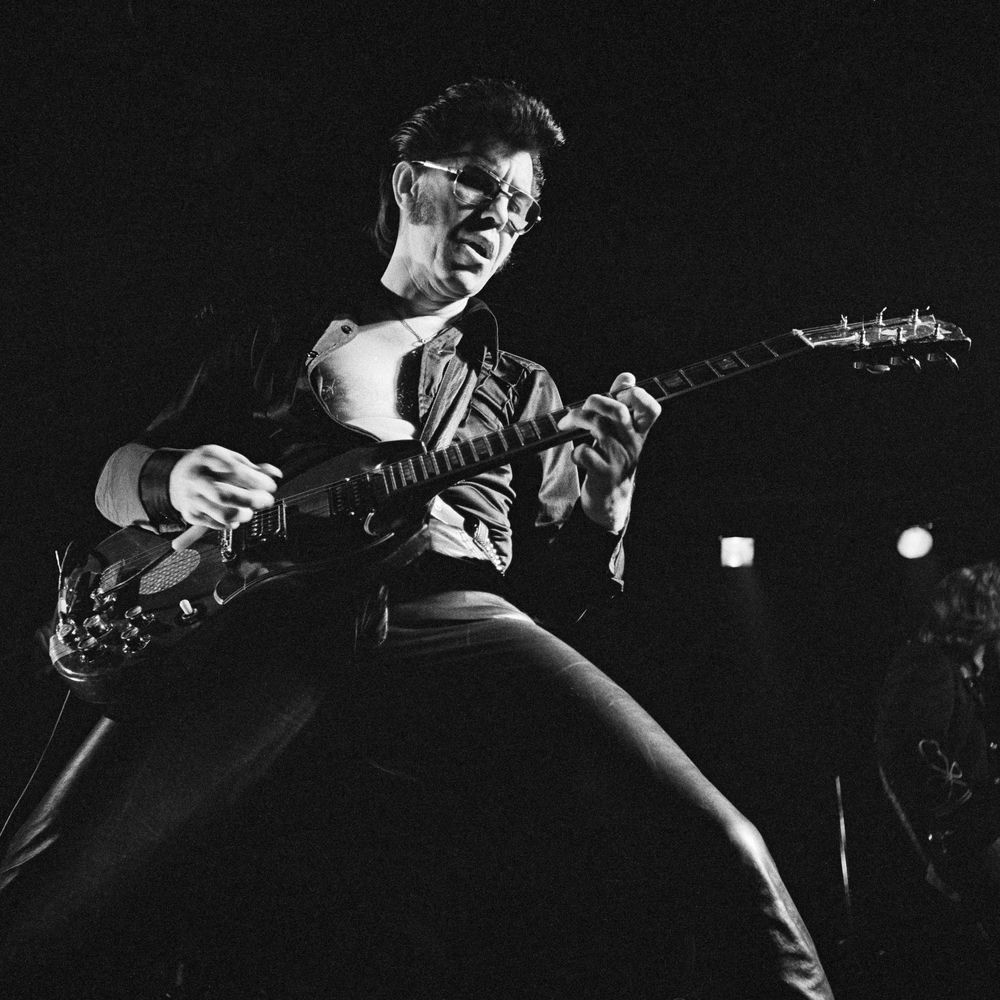
Link Wray: The Raw Power Pioneer of Rock Guitar
Link Wray was an American guitarist and songwriter whose raw, distorted sound fundamentally shaped the direction of rock music. Hailing from Dunn, North Carolina, his 1958 instrumental Rumble became a landmark record, banned from some radio stations for its menacing tone yet forever cementing his legacy as the architect of the power chord.
Early career
Born Frederick Lincoln Wray Jr. in 1929, his musical journey began in the rural South, deeply influenced by the country and blues he heard. After serving in the Korean War, which damaged his lung and affected his singing voice, he formed his band, Link Wray and His Ray Men, in the mid-1950s, initially playing a mix of rockabilly and instrumental rock and roll.
Breakthrough
Wray's career-defining moment came in 1958 with the single Rumble, released on Cadence Records. The song was a spontaneous creation, famously born from a live performance where Wray punched holes in his amplifier speakers to achieve a gritty, distorted roar. This raw energy propelled Rumble into the Billboard Top 20, a rare feat for an instrumental, and its revolutionary sound sent shockwaves through the music world.
Key tracks
Rumble - This 1958 instrumental is his seminal work, pioneering the use of distortion and power chords, influencing generations of guitarists from Pete Townshend to Jimmy Page.
Raw-Hide - Following the success of Rumble, this 1959 track further solidified his signature aggressive, reverb-drenched guitar style and relentless rhythmic drive.
Jack the Ripper - A 1960 release that continued his run of menacing, riff-based instrumentals, showcasing his unparalleled ability to create mood and tension without words.
Deuces Wild - A later-career highlight from his 1971 self-titled album, it demonstrated his enduring power and adaptability within the evolving rock landscape.
Throughout the 1960s and 70s, Link Wray continued to record for various labels, including Swan and Polydor, exploring rootsier territory on albums like 1971's Link Wray. His influence, however, far outstripped his commercial chart performance, as his primal guitar approach became a foundational blueprint for garage rock, punk, and heavy metal. He experienced a critical resurgence in later decades, performing and recording until his passing in 2005. For fans of raw, influential rock and roll, the music of Link Wray shares a foundational spirit with artists like The Sonics, who channeled similar primal energy. His direct impact on guitar heroes is heard in the work of Iggy Pop and the Stooges. The rockabilly rebellion in his early work connects to Gene Vincent. His enduring legacy is that of a true original, whose few minutes of distorted fury in 1958 changed the sound of rock guitar forever.
Similar artists