Linton Kwesi Johnson
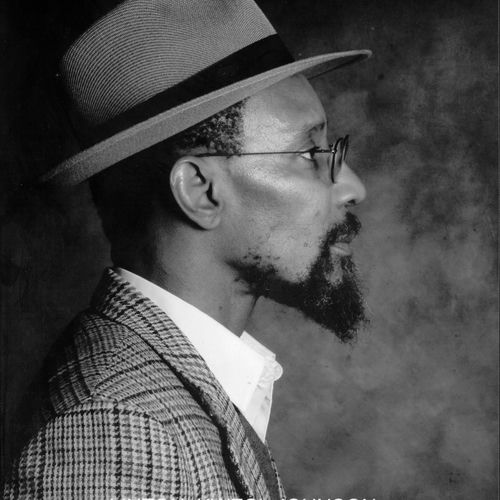
Linton Kwesi Johnson: The Voice of Dub Poetry
Linton Kwesi Johnson is a Jamaican-born British poet and musician who pioneered the genre of dub poetry, blending reggae rhythms with powerful political verse. Hailing from Kingston but forging his career in London, his major achievement is the enduring cultural impact of albums like Forces of Victory and Bass Culture, which remain seminal works in the reggae and spoken word canon.
Early career
Born in 1952 in Chapelton, Jamaica, Johnson moved to London in 1963. He became involved with the British Black Panthers in his youth and began writing poetry, joining the Black Writers' Workshop. His first published poems appeared in the journal Race Today, leading to his debut recording, Dread Beat an' Blood, on the Virgin Records subsidiary Front Line label in 1978.
Breakthrough
Johnson's breakthrough came with his second album, 1979's Forces of Victory, released on the Island Records imprint. This album, featuring his own band Dennis Bovell's Dub Band, brought dub poetry to a wider mainstream and critical audience. It was praised for its sharp social commentary and innovative fusion, solidifying his status as a unique and vital voice.
Key tracks
Inglan Is a Bitch — This classic track is a stark, empathetic portrait of the immigrant working-class experience in Britain.
Sonny's Lettah — A powerful anti-sus poem narrating a young man's letter about police brutality and wrongful imprisonment.
All Wi Doin Is Defendin — An anthem of resistance from his debut, capturing the tense political climate of 1970s Britain.
Forces of Victory — The title track exemplifies his ability to set complex, uplifting political verse to a heavy reggae groove.
Reggae Fi Peach — A tribute to Blair Peach, a man killed during an anti-racism demonstration, showcasing his role as a chronicler of injustice.
He continued his prolific output with the acclaimed Bass Culture in 1980 and Making History in 1984, the latter containing the notable track Reggae Fi Radni. Johnson founded his own label, LKJ Records, in 1981, through which he has released all his subsequent work, including 1991's Tings An' Times and 1998's More Time.
His influence extends beyond music; he is the only living poet published in the Penguin Modern Classics series. Collaborations include work with reggae producer Dennis Bovell across his entire discography and musical contributions to artists like Mick Jones of The Clash on the Big Audio Dynamite track Dial a Hitman.
Artists exploring similar terrain of politically charged reggae and spoken word include Benjamin Zephaniah. Zephaniah is another renowned British dub poet who merges social commentary with reggae and roots music. Also listen to Michael Smith. The late Jamaican poet delivered sharp social critiques in a distinct dub style, as heard on his album Mi Cyaan Believe It. For the musical reggae foundation, explore The Wailers. The iconic band led by Bob Marley provided the essential roots reggae backdrop that influenced Johnson's sound. Furthermore, Mutabaruka offers a direct parallel, as the Jamaican poet and performer is a key figure in the dub poetry movement with a similarly militant lyrical stance.
Linton Kwesi Johnson's catalog maintains a strong rotation on specialist radio formats. His tracks are staples on reggae and world music stations, as well as on public radio programs dedicated to spoken word and political music. Independent music radio stations and online cultural streams frequently feature his work for its historical significance and enduring relevance.
Listeners can hear the groundbreaking dub poetry of Linton Kwesi Johnson