Louis Amstrong
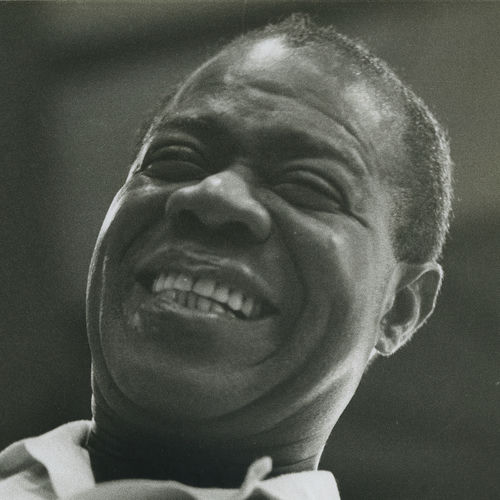
Louis Armstrong: The Founding Father of Jazz
Louis Armstrong was an American trumpeter, vocalist, and bandleader who became one of the most influential figures in the history of jazz music. Hailing from New Orleans, his innovative trumpet playing and distinctive gravelly voice propelled him to global fame, with records like "Hello, Dolly!" and "What a Wonderful World" achieving massive commercial success and enduring cultural impact.
Early career
Born in 1901 in New Orleans, Louisiana, Armstrong learned to play cornet at the Colored Waifs' Home for Boys. His professional career began in the city's bustling riverboat and club scene, leading to an invitation in 1922 to join King Oliver's Creole Jazz Band in Chicago, a pivotal move that placed him at the epicenter of the jazz world.
Breakthrough
Armstrong's breakthrough as a revolutionary soloist came with his seminal recordings in the mid-1920s with his groups the Hot Five and the Hot Seven for the Okeh label. These sessions, including tracks like "West End Blues," fundamentally shifted jazz's focus from collective improvisation to the virtuosic soloist, cementing his status as a pioneering genius.
Key tracks
West End Blues — This 1928 recording is celebrated for its groundbreaking trumpet introduction and is considered a masterpiece that elevated jazz to an art form.
Heebie Jeebies — Armstrong's 1926 recording popularized scat singing, showcasing his innovative use of the voice as an improvisational instrument.
What a Wonderful World — Released in 1967, this ballad became a global standard and his best-selling song, later certified Platinum in the UK and Gold in the US.
Hello, Dolly! — This 1964 title track knocked The Beatles from the top of the Billboard Hot 100, making Armstrong, at age 62, the oldest artist to achieve a number-one single.
Star Dust — His 1931 recording of Hoagy Carmichael's classic is a landmark example of his transformative approach to melody and phrasing.
Throughout the 1930s and 1940s, Louis Armstrong led a successful big band and became a familiar presence in Hollywood films. He later formed the smaller, more intimate All Stars ensemble, with which he toured the world as a cultural ambassador for the U.S. State Department. His collaborations spanned generations, from duets with Ella Fitzgerald to appearing on the album cover of The Beatles' Sgt. Pepper's Lonely Hearts Club Band.
For fans of Armstrong's classic jazz sound and pioneering spirit, explore similar artists like Ella Fitzgerald who shared a legendary songbook partnership with Armstrong. Duke Ellington was another peer whose sophisticated compositions defined the big band era. The virtuosic trumpet style can be heard in later players like Miles Davis, who built upon Armstrong's soloist foundation. Billie Holiday also shared a deep, emotive approach to vocal phrasing that changed popular singing.Louis Armstrong's timeless catalog is a staple on radio stations worldwide, from dedicated jazz FM channels and classic hits stations to online music streams celebrating America's musical heritage. His voice and trumpet remain instantly recognizable, ensuring his music continues to receive heavy rotation across multiple formats.
The music of Louis Armstrong, the foundational genius of jazz, can be heard on radio stations featured on our website. Listeners can discover his vast catalog and enduring influence through the classic jazz and golden oldies stations available on onairium.com.