
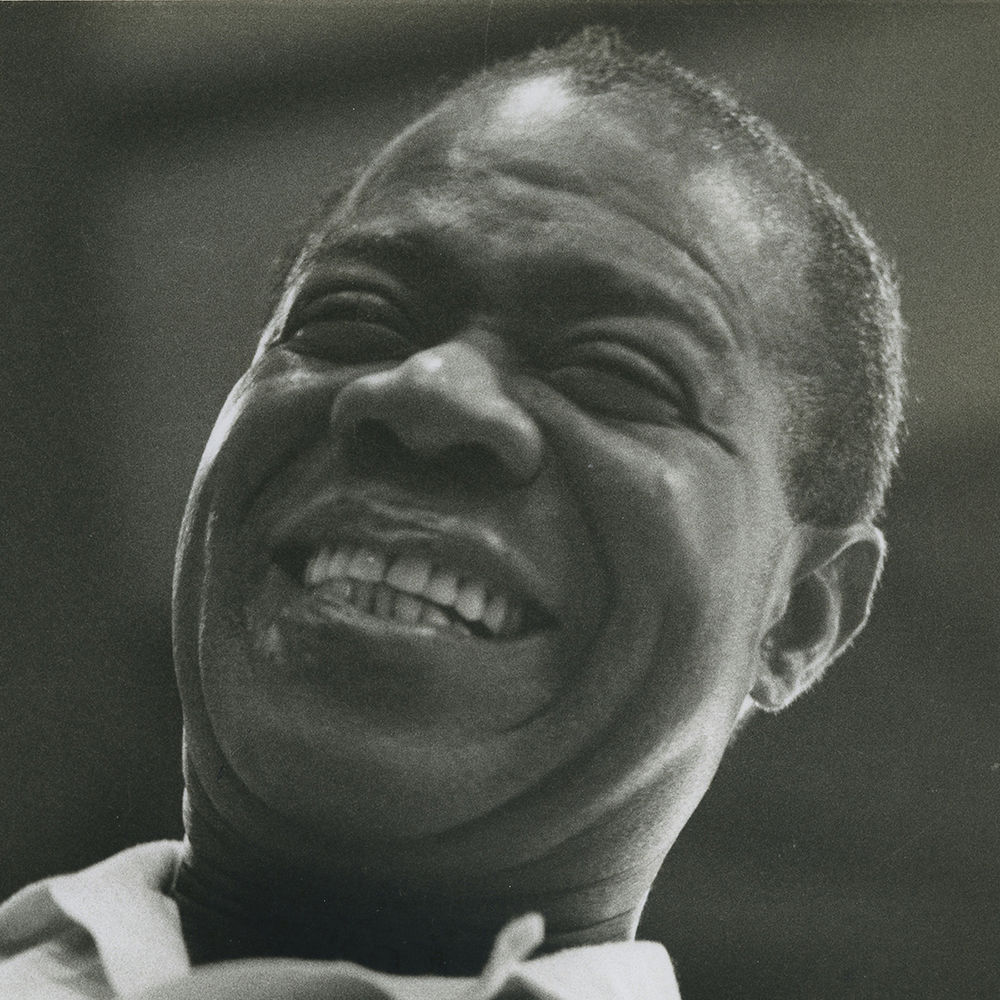
Louis Amstrong
Listen Louis Amstrong on radio stations:
Louis Armstrong: The Founding Genius of Jazz
Louis Armstrong was a pioneering American trumpeter, vocalist, and bandleader from New Orleans who fundamentally shaped the course of jazz music. His innovative trumpet style and distinctive gravelly voice led to massive commercial success, with hits like "Hello, Dolly!" and "What a Wonderful World" achieving gold status and topping charts around the world decades apart.
Early career
Born in 1901 in New Orleans, Louisiana, Armstrong learned cornet while in a boys' home, which set him on his musical path. His professional career began in the early 1920s when he joined King Oliver's Creole Jazz Band in Chicago, before moving to New York to play with Fletcher Henderson's orchestra.
Armstrong's first recordings as a leader, with his groups the Hot Five and the Hot Seven, were made for the Okeh label starting in 1925. These seminal sessions, including "Heebie Jeebies," are widely considered the blueprint for jazz as a soloist's art form.
Breakthrough
Louis Armstrong's transition from a revered musician's musician to a true pop star began in the late 1920s and solidified over decades. His 1964 single "Hello, Dolly!" released on Kapp Records, famously knocked The Beatles from the top of the Billboard Hot 100, certifying his enduring and broad popular appeal.
This mainstream breakthrough was built upon decades of relentless touring, film appearances, and a prolific recording output for major labels like Decca, where he scored earlier hits such as "Mack the Knife."
Key tracks
West End Blues — This 1928 recording is a landmark for its virtuosic trumpet introduction and is studied as a masterclass in jazz phrasing and emotional depth.
What a Wonderful World — Though not a major U.S. hit upon its 1967 release on ABC Records, it became a global standard and posthumous number-one in the UK, symbolizing Armstrong's universal message.
Hello, Dolly! — This 1964 show tune gave Armstrong his only Billboard Hot 100 chart-topper, earning a gold record and introducing him to a new generation.
Stardust — Armstrong's 1931 recording with his orchestra showcased his revolutionary approach to vocal phrasing, treating his voice like a jazz instrument.
Later career and legacy
Throughout the 1950s and 60s, Armstrong became a global ambassador for jazz, undertaking extensive international tours sponsored by the U.S. State Department. He collaborated with artists across genres, from Ella Fitzgerald on their celebrated Verve album series to Bing Crosby and even Dave Brubeck.
His later recordings for labels like Columbia and RCA Victor continued to sell, and his persona as "Satchmo" made him one of the most recognizable entertainers on the planet. Louis Armstrong passed away in 1971, leaving behind a catalog that continues to receive certifications and honors, including a 2002 Grammy Hall of Fame Award for "What a Wonderful World."
For fans of the classic New Orleans jazz sound and pioneering vocal style of Louis Armstrong, our station rotation also features King Oliver as Armstrong's early mentor and bandleader. Sidney Bechet offers another potent solo voice from the same foundational era of jazz. The joyful ensemble playing of Jelly Roll Morton provides crucial context for the music's evolution. Later disciples of his vocal approach include Billie Holiday, who cited Armstrong as a primary influence on her own phrasing.
The music of Louis Armstrong remains a staple on classic jazz and traditional pop radio stations featured on this website. His timeless recordings are programmed daily on dedicated jazz FM stations and online radio streams celebrating America's musical heritage.
Listeners can discover the vast catalog of Louis Armstrong's influential jazz music by tuning into the radio stations available on onairium.com, where his groundbreaking trumpet and voice continue to define the genre.
