Louis Armstrong
 United States
Listen Louis Armstrong on radio stations:






Louis Armstrong: The Founding Father of Jazz
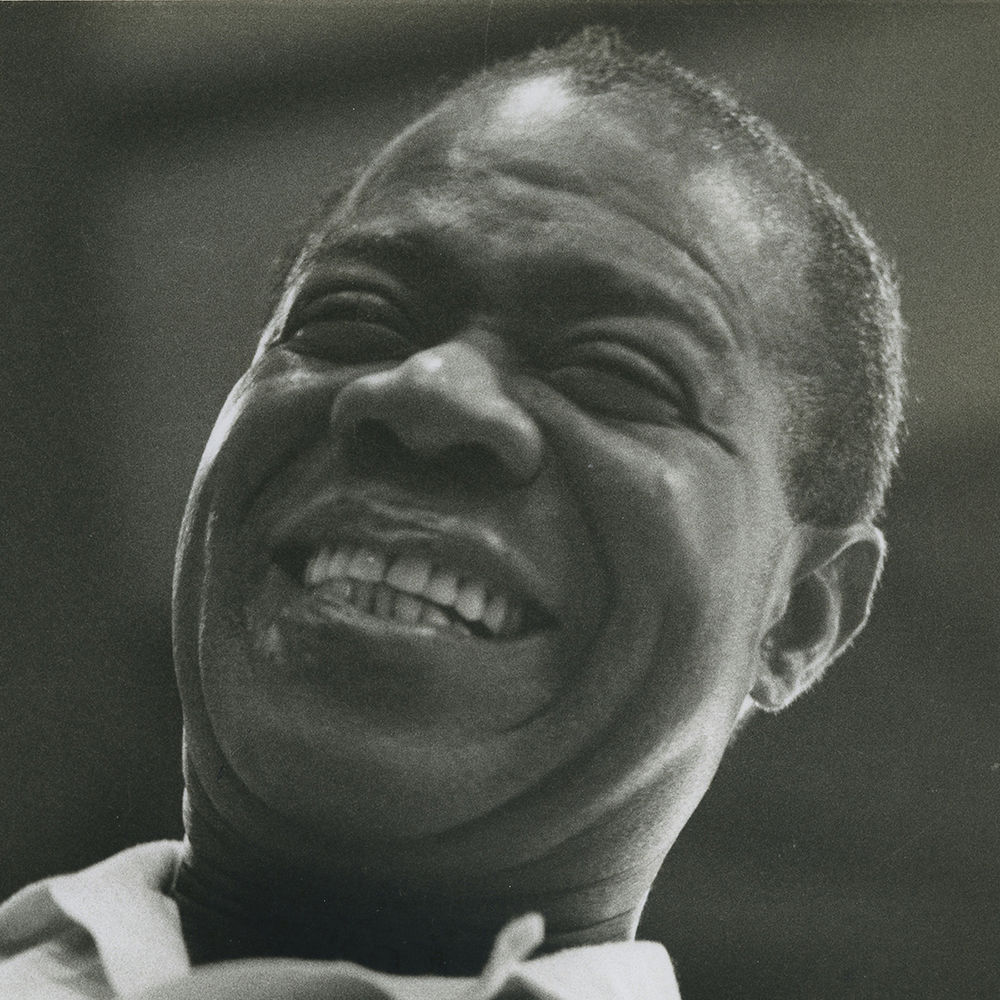
Louis Armstrong was an American trumpeter, vocalist, and one of the most influential figures in the history of jazz music. Hailing from New Orleans, his career achievements include timeless hits like What a Wonderful World and Hello, Dolly!, the latter of which knocked The Beatles from the top of the Billboard Hot 100 in 1964.
Early career
Born in 1901 in New Orleans, the birthplace of jazz, Armstrong's musical journey began in his youth. He learned to play cornet at the Colored Waifs' Home for Boys, which set the foundation for his future.
His professional start came under the mentorship of cornetist Joe "King" Oliver, leading to early recordings with Oliver's Creole Jazz Band in 1923. Armstrong soon moved to Chicago and then New York, joining Fletcher Henderson's orchestra and beginning to shape a new, soloist-driven sound in jazz.
Breakthrough
Armstrong's true breakthrough came with his series of recordings in the mid-to-late 1920s known as the Hot Five and Hot Seven sessions. These revolutionary records, made for the Okeh label, shifted jazz's focus from collective improvisation to the virtuosic soloist, with Armstrong's trumpet and scat singing at the forefront.
Tracks from this period became jazz standards and established his international reputation. His influence grew through the 1930s and 1940s as he led various big bands and became a global ambassador for the genre.
Key tracks
West End Blues - This 1928 recording is often cited as a masterpiece that redefined jazz trumpet playing with its iconic opening cadenza.
Heebie Jeebies - A 1926 recording famous for one of the first recorded examples of scat singing, showcasing Armstrong's innovative vocal style.
What a Wonderful World - Released in 1967, this ballad became his best-selling song globally, though it achieved greater commercial success posthumously.
Hello, Dolly! - This 1964 title track for a musical gave the 62-year-old Armstrong a No. 1 hit on the Billboard chart, making him the oldest artist to achieve that feat at the time.
Star Dust - Armstrong's 1931 recording of Hoagy Carmichael's classic is a landmark in jazz interpretation and vocal phrasing.
In his later career, Armstrong became known as "Ambassador Satch," touring the world extensively with his group, the All Stars. His gravelly, warm voice and instantly recognizable trumpet tone made him a beloved pop culture figure beyond the jazz world.
Artists who share Armstrong's foundational influence in jazz or his crossover appeal include Ella Fitzgerald, with whom he recorded celebrated duets. The virtuosic trumpet style of Dizzy Gillespie builds directly upon Armstrong's innovations. For the spirit of New Orleans jazz, explore Jelly Roll Morton. The vocal charm and swing of Bing Crosby was profoundly influenced by Armstrong's relaxed phrasing.
Louis Armstrong's vast catalog, spanning from early dixieland to swing and traditional pop, remains a staple on classic jazz FM stations and online jazz radio streams. His music is frequently featured on independent music radio stations dedicated to preserving America's musical heritage.
The music of Louis Armstrong can be heard on radio stations featured on our website. Listeners can discover the timeless sound of Satchmo through the jazz and classic pop radio stations available on onairium.com.