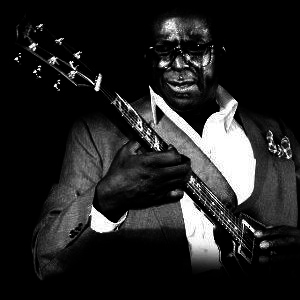

Luther Allison
Type: Person
 Mauritius
Mauritius
Listen on radio stations:




Luther Allison: The Fiery Voice of Chicago Blues and Blues Rock
Luther Allison was an American blues guitarist and singer whose impassioned live performances and searing guitar work made him a legend in the blues and blues rock genres. Hailing from Chicago, his career, which spanned over three decades, saw a remarkable resurgence in the 1990s, culminating in a W.C. Handy Blues Award for Entertainer of the Year and several critically acclaimed albums.
Early career
Born in 1939 in Widener, Arkansas, Allison moved to Chicago with his family in 1951, immersing himself in the city's vibrant blues scene. He honed his craft on the West Side, learning from greats like Muddy Waters and Howlin' Wolf, and began performing professionally with bands in the late 1950s. His first major break came in 1967 when he signed with Delmark Records, releasing his debut album, Love Me Mama, in 1969.
Breakthrough
While respected in Chicago, Allison's true breakthrough to an international audience occurred after he moved to France in the late 1970s, where he found consistent work and a devoted fanbase. His major commercial and critical renaissance, however, came with his signing to Alligator Records in 1994. The albums Soul Fixin' Man (1994) and Blue Streak (1995) were massive successes, with Blue Streak winning the W.C. Handy Award for Blues Album of the Year and featuring several radio hits.
Key tracks
Bad Love - The opening track from Blue Streak, this song became a staple on blues radio and won the W.C. Handy Award for Song of the Year in 1996.
Soul Fixin' Man - The title track from his Alligator debut reintroduced his powerful sound to America and signaled the start of his award-winning late-career peak.
Cherry Red Wine - A showcase for his gritty vocals and stinging guitar solos, this track became one of his most recognizable and frequently covered songs.
You Can't Always Get What You Want - His explosive, blues-rock cover of the Rolling Stones classic highlighted his ability to reinvent rock songs with raw Chicago blues intensity.
Allison's late-1990s output, including the live album Live in Chicago (1999), cemented his status as a premier blues act. Tragically, his career resurgence was cut short when he died from lung cancer in 1997 at the age of 57, just months after his final studio album, Reckless, was released. His legacy is carried on by his son, Bernard Allison, who is also an accomplished blues guitarist. For fans of raw, electric Chicago blues, similar artists include Buddy Guy for his fiery guitar showmanship, Magic Sam for the West Side guitar influence, Otis Rush for his passionate vocal and guitar style, and Albert Collins for a different but equally potent approach to electric blues guitar.
Similar artists