Mfsb
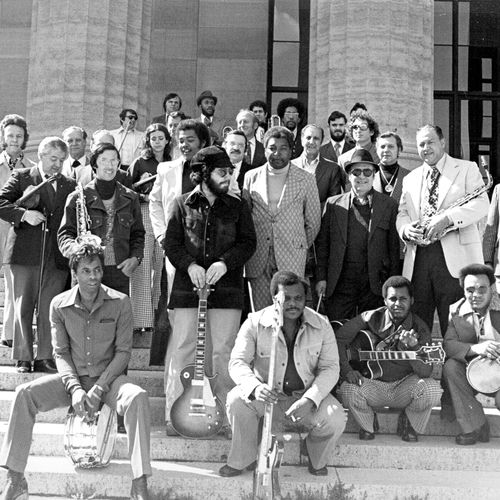
MFSB: The Pioneers of Philadelphia Soul
MFSB was the legendary house band for Philadelphia International Records, the definitive sound of the 1970s Philly Soul movement. Hailing from Philadelphia, Pennsylvania, the collective's instrumental masterpiece "TSOP (The Sound of Philadelphia)" became a cultural landmark, topping the Billboard Hot 100 in 1974 and serving as the theme for the television show "Soul Train".
Early career
The group's origins trace back to the late 1960s session musicians at Philadelphia's Sigma Sound Studios. Originally known as the Music Factory, they were the backbone for producers and songwriters Kenny Gamble, Leon Huff, and Thom Bell. Their tight, orchestral funk and soul grooves powered early hits for artists like The O'Jays and Harold Melvin & the Blue Notes before they even had a name.
Breakthrough
MFSB, which stood for "Mother, Father, Sister, Brother" (or a more colorful alternative in industry circles), achieved mainstream breakthrough with their 1973 album "Love Is the Message". The title track became an instant classic in the soul and burgeoning disco scenes. However, it was the 1974 single "TSOP (The Sound of Philadelphia)" that catapulted them to pop immortality, selling over one million copies and earning a gold certification.
Key tracks
TSOP (The Sound of Philadelphia) — This Grammy-winning track defined an era as the "Soul Train" theme and became the first television theme song to reach number one on the pop charts.
Love Is the Message — The seminal album cut became a foundational anthem in dance music history, endlessly sampled and remixed.
K-Jee — An earlier 1973 single that showcased their flawless, gritty funk instrumentation and became a favorite among beat diggers.
Sexy — A later charting single from 1975 that demonstrated the band's ability to craft sophisticated, string-laden disco instrumentals.
While the core collective numbered over thirty musicians, key figures included bassist Ronnie Baker, guitarist Norman Harris, and drummer Earl Young, known as "The Rhythm Section". The group released several albums on Philadelphia International Records throughout the mid-1970s, including "Universal Love" and "Philadelphia Freedom". Their sound, characterized by lush strings, pulsating rhythms, and impeccable musicianship, became the gold standard for studio production. Internal disputes and the changing musical landscape of the late 1970s led to the band's dissolution, but their influence remained profound.
Fans of the lush, orchestrated sound of MFSB should also explore the work of similar architects of Philadelphia soul. The sophisticated productions of The O'Jays were built directly on MFSB's rhythms. The heartfelt vocals of Harold Melvin & The Blue Notes were framed by the band's iconic arrangements. For the instrumental funk dimension, the work of The JB's, James Brown's legendary backing band, offers a grittier counterpart. The elegant soul of The Stylistics also benefited from the same Philadelphia studio ecosystem.
MFSB's music remains a staple on classic soul and disco FM stations, as well as specialist online radio streams dedicated to 1970s funk and dance music history. Their recordings are regularly featured in rotation for their historical significance and enduring groove.
You can hear the timeless sound of MFSB on radio stations featured on our website. Listeners can discover the full scope of their influential Philly Soul catalog through the dedicated stations available on onairium.com.