Mocedades
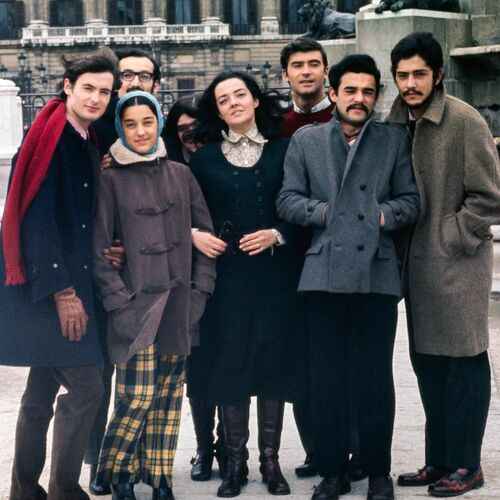
Mocedades: The Pioneers of Spanish Folk-Pop
Mocedades is a legendary Spanish vocal group renowned for their intricate harmonies and romantic folk-pop sound. Hailing from the Basque Country, the band achieved international fame with their 1973 Eurovision entry "Eres tú," a song that became a global hit and a cultural touchstone.
Early career
The group's origins trace back to 1967 in Bilbao, formed by siblings Amaya, Izaskun, and Roberto Uranga along with their cousin Javier Garay. Originally named Voces y Guitarras, they were discovered by producer Juan Carlos Calderón, who signed them to the Zafiro label and suggested the name change to Mocedades.
Their 1969 self-titled debut album established their signature sound, blending traditional Basque folk elements with contemporary pop arrangements. The early 1970s saw a steady release of successful albums in Spain, building a loyal fanbase with their polished vocal performances.
Breakthrough
Mocedades catapulted to worldwide recognition in 1973 by representing Spain in the Eurovision Song Contest with "Eres tú." While placing second in the competition, the song became a massive international success, charting across Europe and reaching No. 9 on the US Billboard Hot 100.
The track's parent album, also titled Eres tú, achieved significant sales, with certifications including gold records in several countries. This breakthrough established Mocedades as Spain's premier vocal export and a fixture on international radio.
Key tracks
Eres tú — The 1973 Eurovision entry that became a global crossover hit, defining their international career.
Tómame o déjame — A powerful 1974 ballad that became another signature song and a major hit in Latin America.
El Vendedor — A vibrant, rhythmic track showcasing their folk roots and complex vocal arrangements from their early period.
Le llamaban loca — A later hit from 1980 that demonstrated the band's enduring popularity and evolving sound.
¿Quién te cantará? — A poignant 1978 ballad highlighting the emotive depth of their harmonies and lyrical themes.
The band's lineup evolved significantly over the decades, with Amaya Uranga remaining the most constant and recognizable voice. They continued releasing albums throughout the 70s and 80s on labels like Zafiro and CBS, maintaining a strong presence on Spanish and Latin American charts with albums like La otra España and Amor de hombre.
Mocedades has seen numerous members come and go, leading to various splinter groups performing under similar names. Despite these changes, the core legacy of their harmonic folk-pop endures, with their classic recordings remaining staples on Spanish-language radio.
For fans of Mocedades' harmonious Spanish pop, explore similar artists featured on our site. Juanes carries a similar melodic sensibility in modern Latin pop. Ana Belén shares the tradition of evocative Spanish vocal performance. Vocal Sampling offers a different cultural take on intricate a cappella harmonies. La Unión represents another iconic Spanish group from the 80s pop scene.
The timeless harmonies of Mocedades feature regularly on our network's dedicated Spanish music and international pop radio stations. Their classic hits are programmed alongside contemporary Latin pop on various FM and online streams, ensuring their music reaches both nostalgic and new audiences.
Listeners can discover the rich catalog of Mocedades through the radio stations available on onairium.com, where their defining folk-pop anthems continue to resonate across the airwaves.