Mohamed Rouicha
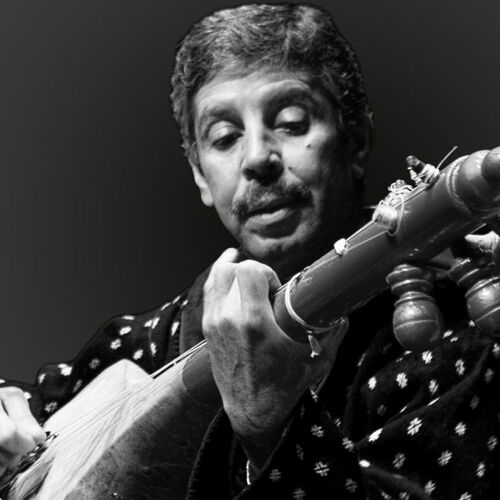
Mohamed Rouicha: The Voice of Amazigh Folk and Lute
Mohamed Rouicha was a Moroccan singer, songwriter, and master of the lotar, a traditional Amazigh lute. Hailing from the Middle Atlas region, he became a cornerstone of Moroccan folk music, selling hundreds of thousands of cassettes and albums throughout his decades-long career and achieving a rare level of national fame for an artist performing in Tamazight.
Early career
Born in 1950 in Khenifra, Rouicha was immersed in the musical traditions of the Amazigh (Berber) people from a young age. He began his artistic journey in the late 1960s, initially performing locally and honing his distinct style, which blended the poetic storytelling of Amazigh folk with the rhythmic drive of popular Moroccan chaabi music.
Breakthrough
Rouicha's major breakthrough came in the late 1970s and early 1980s with the release of a series of immensely popular cassette albums. His powerful, gravelly voice and virtuosic lotar playing resonated deeply, particularly with the working-class and rural communities. Albums like Mani Mani and Lmout became massive sellers, cementing his status without the need for major record labels or mainstream chart mechanisms, which were less accessible to Tamazight-language artists at the time.
Key tracks
Mani Mani — This iconic track is a quintessential example of Rouicha's style, addressing themes of love and social life with driving rhythm.
Lmout — A profound meditation on mortality and the human condition, showcasing the depth of his lyrical poetry.
Allah Ihenni Lik Lalla — A popular live favorite that highlights his energetic performance style and crowd connection.
Ya Benti — A song dedicated to daughters, reflecting the social narratives central to his work.
Throughout the 1990s and 2000s, Rouicha continued to record and perform to vast audiences, both in Morocco and internationally within the diaspora. He collaborated with other major figures in Moroccan music, such as the chaabi star Abdelaziz Stati, bridging cultural and linguistic divides. His later albums, including Rouicha 2000, introduced his sound to new generations.
Artists exploring the rich heritage of Moroccan Amazigh and folk music include Najat Aatabou, who shares his connection to the Atlas region and powerful vocal delivery. Houssine Kili is another master of the lotar, continuing the instrumental tradition Rouicha championed. The group Amarg Fusion takes the foundational sounds Rouicha popularized into more contemporary, fusion-oriented territory.
Mohamed Rouicha's music remains a staple on radio stations across Morocco and on international world music and North African folk channels. His songs are regularly featured on dedicated Amazigh music programs, classic Moroccan chaabi rotations, and stations specializing in global acoustic traditions.
Listeners can explore the enduring legacy of Mohamed Rouicha's Amazigh folk music on radio stations featured on onairium.com, where his timeless tracks continue to captivate audiences with their raw emotion and cultural resonance.