
Muddy: The Pioneering Voice of Modern Blues
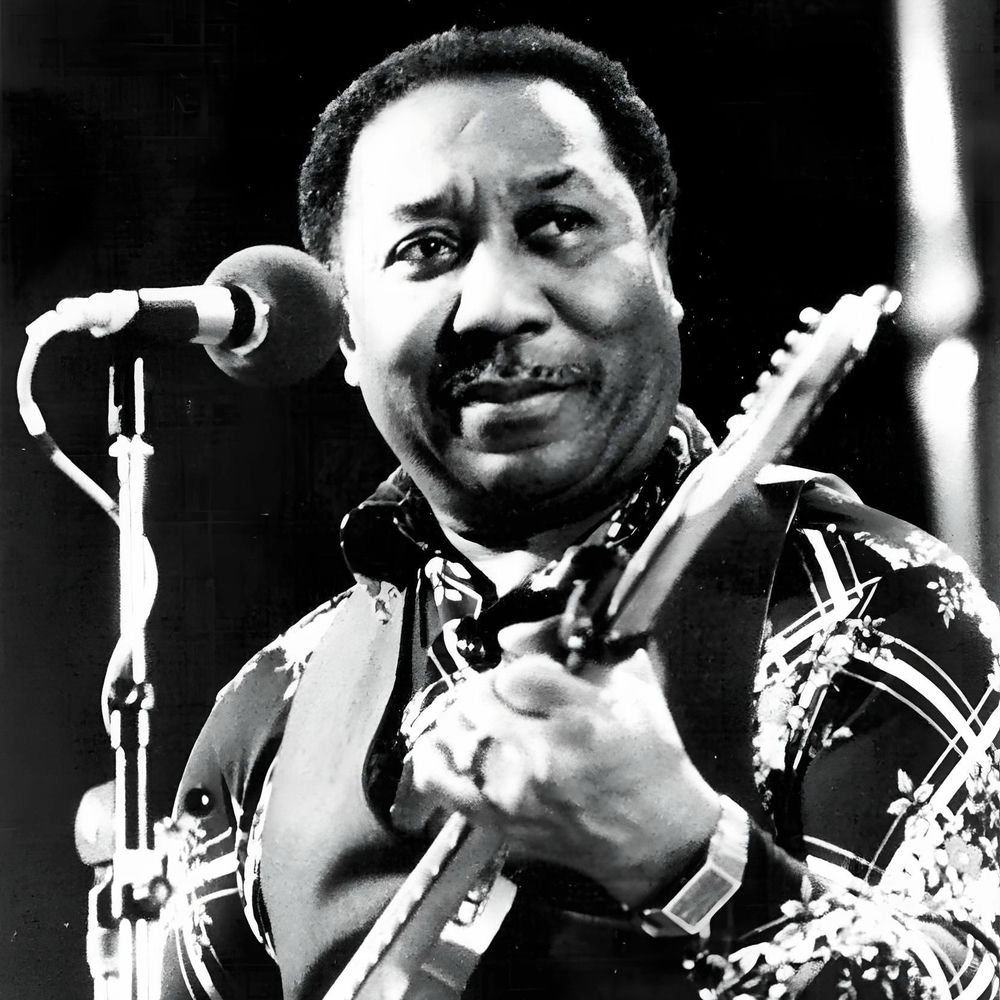
Muddy, born McKinley Morganfield, was a foundational American blues musician whose electrified sound defined the Chicago blues genre. His 1960 album "Muddy Waters at Newport" captured a legendary live performance that introduced his powerful style to a massive new audience and is widely considered a landmark recording in blues history.
Early career
McKinley Morganfield was born in 1913 in Issaquena County, Mississippi, and was given the nickname "Muddy" as a boy. He began playing music on a harmonica before switching to guitar, heavily influenced by the raw Delta blues of Son House and Robert Johnson.
He was first recorded in 1941 by archivist Alan Lomax for the Library of Congress while still living on a Mississippi plantation. Muddy moved to Chicago in 1943, switched to an electric guitar to be heard in noisy clubs, and by 1947 had secured his first commercial recordings with Aristocrat Records, which soon evolved into the famed Chess Records label.
Breakthrough
Muddy's breakthrough came in 1950 with the single "Rollin' Stone," a song that became an instant Chicago blues anthem and whose title would later inspire a famous band and magazine. This success solidified his partnership with Chess Records and his band, which included luminaries like Little Walter on harmonica, creating the template for the classic Chicago blues ensemble.
Throughout the 1950s, he dominated the R&B charts with hits like "Hoochie Coochie Man" (1954) and "Mannish Boy" (1955), songs penned by Willie Dixon that became enduring blues standards. These recordings were not major pop chart crossovers but sold consistently well, earning gold certifications over subsequent decades as their influence grew exponentially.
Key tracks
Rollin' Stone — This 1950 single was his first major hit and its cultural impact is immortalized in rock history.
Hoochie Coochie Man — A 1954 chart hit that perfectly encapsulated the swagger and mythic power of the Chicago blues style.
Mannish Boy — This 1955 reworking of Bo Diddley's "I'm a Man" became his definitive vocal showcase and a concert staple.
Got My Mojo Working — Though first recorded by Ann Cole, Muddy's 1957 version became the most famous and a relentless set-closer.
His career experienced a major resurgence in the late 1960s as young British and American rock musicians cited him as a primary influence. Albums like "Electric Mud" (1968) and the Grammy-winning "They Call Me Muddy Waters" (1971) reintroduced him to a new generation. He continued to record and perform vigorously throughout the 1970s, winning multiple Grammys and collaborating with stars like Johnny Winter, who produced his final acclaimed albums for Blue Sky Records.
Artists who share Muddy's deep blues roots and electrified approach include Howlin' Wolf His commanding presence and powerful vocals made him Muddy's great Chess label rival. B.B. King Though from a different blues tradition, his guitar-driven sound also bridged blues and rock audiences. Buddy Guy He directly followed Muddy's path from Louisiana to Chicago and expanded on his fiery guitar style. The Rolling Stones This band took their name from his song and championed his music to a global rock audience.
Muddy's catalog remains a staple on dedicated blues radio stations and classic rock FM stations that explore the genre's roots. His tracks are frequently featured on online rock radio streams and independent music radio stations celebrating American musical heritage.
Listeners can discover the enduring power of Muddy's Chicago blues on radio stations featured on onairium.com, where his classic tracks continue to define the sound of electric blues for audiences worldwide.