
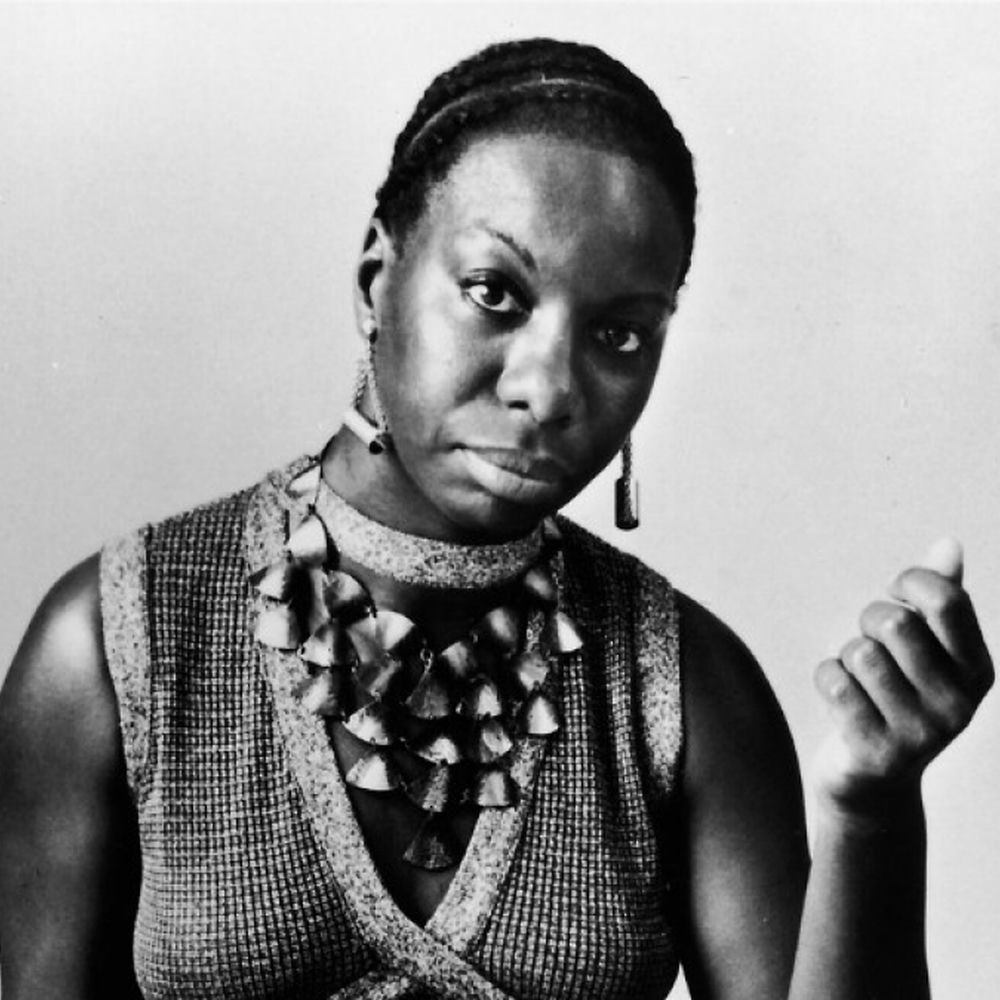
Nina Simone
Listen Nina Simone on radio stations:







Nina Simone: The High Priestess of Soul
Nina Simone was an American singer, pianist, and civil rights activist whose profound musical output blended classical, jazz, blues, and folk into a genre-defying sound often called simply "soul." Born Eunice Kathleen Waymon in Tryon, North Carolina, in 1933, her career spanned over four decades, leaving behind a legacy of powerful recordings that addressed love, protest, and the Black experience in America.
Early Career
Eunice Waymon was a classically trained pianist who aspired to become the first Black female classical concert pianist. To fund her studies at the Juilliard School in New York, she began playing piano and singing in an Atlantic City nightclub in 1954, where she adopted the stage name Nina Simone to avoid her mother's disapproval of playing "the devil's music." Her unique blend of baroque-inspired piano with jazz and blues vocals quickly garnered attention, leading to her first recording contract with Bethlehem Records in 1957.
Breakthrough
Nina Simone's breakthrough came in 1958 with her haunting rendition of "I Loves You, Porgy" from George Gershwin's opera Porgy and Bess. The single became a Top 20 hit on the Billboard pop charts, launching her into national prominence. This success led to a prolific recording period with the Colpix label, where she recorded a series of live and studio albums that showcased her eclectic tastes, from instrumental jazz to folk standards, building a dedicated following.
Key Tracks
I Loves You, Porgy - This 1958 single was Simone's only Top 40 pop hit and served as her commercial introduction to a wide audience.
Mississippi Goddam - Written in response to the 1963 Birmingham church bombing and the murder of Medgar Evers, this furious, up-tempo protest song became an anthem of the Civil Rights Movement and marked a turning point in her career towards overtly political material.
Feeling Good - Originally from the musical The Roar of the Greasepaint - The Smell of the Crowd, Simone's 1965 version on the album I Put a Spell on You is the definitive recording, a soaring declaration of liberation that has been covered by countless artists.
Sinnerman - Her epic, nearly 10-minute-long interpretation of this traditional African-American spiritual, featured on the 1965 album Pastel Blues, is a masterclass in tension and release, building from a finger-snapping groove into a frenzied crescendo.
To Be Young, Gifted and Black - Co-written in 1969 in memory of her friend, playwright Lorraine Hansberry, this song became a powerful and enduring anthem of Black pride and empowerment.
Throughout the 1960s, Nina Simone's work became inseparable from the fight for racial equality. Albums like Wild Is the Wind (1966) and Silk & Soul (1967) contained both poignant love songs and searing social commentary. She performed at the 1963 March on Washington and later at civil rights rallies, her music serving as a soundtrack to the struggle. Frustrated by the racism in America, Simone left the United States in 1973, living in Barbados, Liberia, Switzerland, and finally settling in France, where she continued to perform and record intermittently.
Nina Simone's influence is vast, touching artists across soul, jazz, rock, and hip-hop. Her intense vocal delivery, unparalleled piano skill, and uncompromising artistic integrity have cemented her status as one of the most important musical figures of the 20th century. While she did not accumulate traditional chart hits after the 1960s, her albums have experienced enduring critical and commercial rediscovery, with many being certified gold in various territories as new generations discover her work.
