Oliver Messiaen
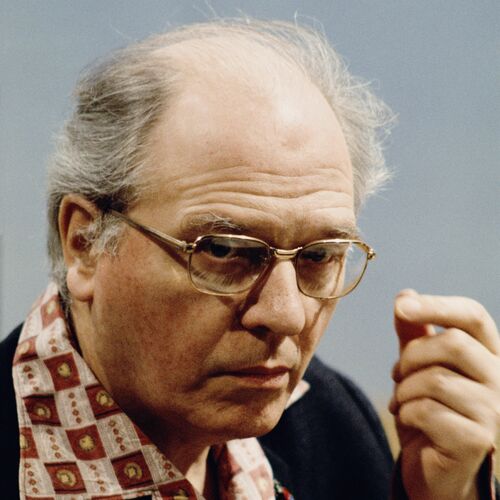
Oliver Messiaen: The Visionary Composer of 20th Century Classical Music
Oliver Messiaen was a French composer, organist, and ornithologist whose revolutionary work fundamentally reshaped modern classical music. Hailing from Avignon, France, his profound influence is cemented by masterpieces like the monumental Turangalîla-Symphonie and his tenure as organist at Paris's Église de la Sainte-Trinité for over six decades.
Early career
Born in 1908, Messiaen entered the Paris Conservatoire at the remarkably young age of 11, where he studied with renowned figures like Paul Dukas. His early compositions, such as the organ cycle L'Ascension and the orchestral work Les offrandes oubliées, quickly established his unique voice, blending complex rhythms, mystical Catholic themes, and his burgeoning fascination with bird songs.
Breakthrough
Messiaen's international breakthrough is often tied to the 1949 premiere of his Turangalîla-Symphonie, a sprawling ten-movement work for large orchestra featuring the ondes Martenot. While not achieving conventional "chart" success, its recording and performances by major orchestras worldwide solidified his status as a leading avant-garde figure. The work's publication by Durand, a leading classical music publisher, ensured its wide dissemination.
Key tracks
Quatuor pour la fin du Temps — This quartet, famously composed and premiered in a German prisoner-of-war camp in 1941, remains one of the most powerful chamber works of the 20th century.
Turangalîla-Symphonie — A symphonic masterpiece of ecstatic love and cosmic scale, it is central to the modern orchestral repertoire and showcases his complex "modes of limited transposition."
Catalogue d'oiseaux — This massive piano cycle from the 1950s meticulously transcribes the songs of French birds, demonstrating his lifelong ornithological passion.
Vingt Regards sur l'Enfant-Jésus — A monumental two-hour piano work exploring the mystery of the Incarnation through dazzling technical and spiritual depth.
Chronochromie — A later orchestral work from 1960 that represents the peak of his experimentation with complex, non-retrogradable rhythms and orchestral color.
Throughout the 1960s and 70s, Messiaen's reputation grew as a teacher at the Paris Conservatoire, mentoring a generation of pivotal composers including Pierre Boulez and Karlheinz Stockhausen. His later large-scale works, such as the opera Saint François d'Assise, premiered in 1983, confirmed his unwavering dedication to spiritual themes and sonic innovation.
For listeners captivated by Messiaen's fusion of spiritual depth and avant-garde technique, explore similar French composers. Pierre Boulez further developed serialist techniques with a razor-sharp orchestral approach. Kaija Saariaho creates similarly lush, coloristic soundscapes, though with a different spectral focus. György Ligeti shares a fascination with complex textures and micropolyphony. The work of Toru Takemitsu often mirrors Messiaen's delicate balance between Eastern and Western musical philosophy and a profound connection to nature.
RADIO ROTATION: Oliver Messiaen's groundbreaking compositions are a staple on dedicated classical music FM stations and specialized online radio streams focusing on 20th century repertoire. His major orchestral and organ works receive regular airplay, particularly on stations that feature in-depth composer profiles and thematic programming centered on modernism and sacred music.
You can experience the transcendent and complex world of Oliver Messiaen's music by tuning into the classical music radio stations featured on our platform. Listeners can discover his pivotal works, from the avian-inspired piano pieces to the colossal symphonic poems, through the curated selections available on onairium.com.