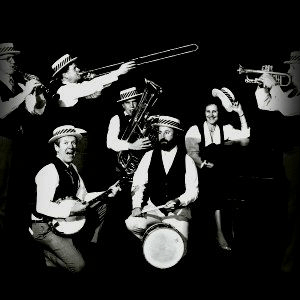
Original Dixieland Jazz Band
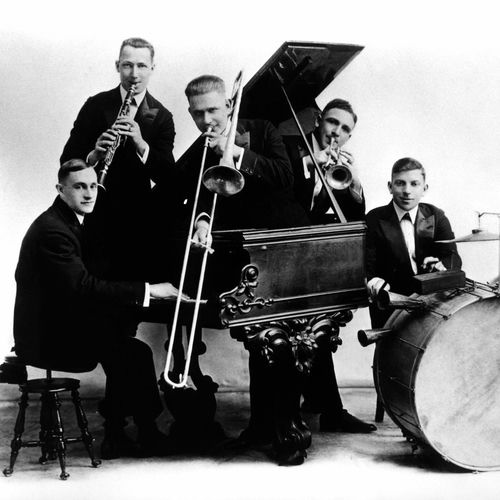
Original Dixieland Jazz Band: Pioneers of Recorded Jazz
The Original Dixieland Jazz Band was a pioneering American ensemble from New Orleans that made the first commercially released jazz recordings. Their 1917 recording of "Livery Stable Blues" became a national sensation, effectively introducing the new genre of jazz to a mass audience and sparking a cultural craze.
Early career
The group formed in New Orleans around 1916 under the leadership of cornetist Nick LaRocca. Comprising white musicians playing in the energetic, polyphonic style of New Orleans, they moved to Chicago in 1916 and then to New York City, where their novel sound quickly became a headline attraction at Reisenweber's restaurant.
Breakthrough
The band's true breakthrough occurred in February 1917 when they entered a recording studio for the Victor Talking Machine Company. The resulting disc, coupling "Livery Stable Blues" with "Dixie Jass Band One-Step," is widely recognized as the first issued jazz record. It sold phenomenally, with estimates suggesting over one million copies were eventually sold, making it arguably the first jazz record to achieve a gold record-level of sales.
Key tracks
Livery Stable Blues — This 1917 recording was the A-side of the first commercially released jazz record, famous for its barnyard animal imitations and explosive energy.
Tiger Rag — Arguably their most enduring composition, this frantic number became a jazz standard covered by countless artists in the decades that followed.
Dixie Jass Band One-Step — The B-side to their historic debut, this track showcased the band's tight ensemble playing and driving rhythm.
Skeleton Jangle — A later recording from 1918 that exemplifies the band's complex, ragtime-influenced arrangements and collective improvisation.
The band capitalized on their sudden fame with extensive touring and further recordings for Victor, including the 1918 hit "Skeleton Jangle." They even performed in England in 1919, spreading the jazz sound internationally. The original lineup disbanded in 1925, though LaRocca revived the group in 1936 for a series of new recordings and performances, aiming to reassert their place in jazz history.
For listeners who enjoy the classic New Orleans sound, explore similar foundational artists. The syncopated rhythms and collective improvisation of King Oliver directly influenced the Chicago jazz scene. The sophisticated compositions of Jelly Roll Morton expanded on the early jazz template with greater complexity. The fiery trumpet and vocal style of Louis Armstrong forever transformed the music the ODJB helped popularize. For a later revivalist approach, the music of Firehouse Five pays direct homage to the energetic dixieland tradition.
The groundbreaking recordings of the Original Dixieland Jazz Band remain a staple on traditional jazz and classic American music radio stations. Their historic tracks are frequently featured on specialty programs dedicated to early jazz history and the roots of 20th-century popular music across our network of online radio streams.
The music of the Original Dixieland Jazz Band, the group that kicked off the jazz age on record, can be heard on various radio stations featured on our website. Listeners can discover the foundational sounds of this pioneering ensemble through the dedicated traditional jazz and historical music stations available on onairium.com.