Oscar Peterson
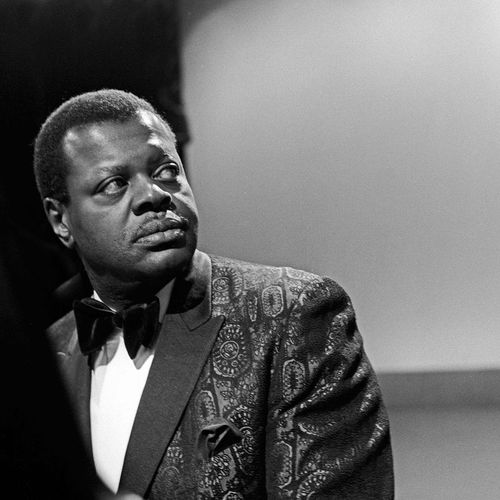
Oscar Peterson: The Virtuoso of Jazz Piano
Oscar Peterson was a Canadian jazz pianist and composer whose technical mastery and prolific output made him one of the most celebrated musicians in the genre's history. Hailing from Montreal, Quebec, his career spanned over six decades and produced a staggering discography, including the multi-platinum, Grammy-winning album The Trio with bassist Ray Brown and guitarist Herb Ellis.
Early career
Born in Montreal in 1925, Oscar Peterson was a child prodigy who trained in classical piano before being captivated by jazz. His professional career began in the mid-1940s, and a 1949 performance at Carnegie Hall, arranged by impresario Norman Granz, launched him onto the international stage and led to his signing with Granz's labels, including Clef and Verve.
Breakthrough
Peterson's formidable reputation was cemented in the 1950s through his work with Norman Granz's "Jazz at the Philharmonic" touring package and the formation of his classic piano-guitar-bass trios. His 1959 album Oscar Peterson Trio with Sonny Stitt, Roy Brown and Jo Jones won a Grammy Award, solidifying his commercial and critical standing during the genre's peak popularity.
Key tracks
Hymn to Freedom — This Peterson original became an enduring anthem of the Civil Rights Movement and one of his most recognizable compositions.
C Jam Blues — A staple of his live performances, this track showcases Peterson's incredible improvisational speed and deep swing feel within the trio format.
You Look Good to Me — Featured on the 1964 album We Get Requests, this track highlights his elegant, lyrical approach to ballads and the album's commercial success.
Night Train — The title track from his 1962 Verve album became a signature tune, renowned for its driving, blues-inflected piano riff and powerful groove.
Wheatland — An original composition that demonstrates his virtuosic, orchestral approach to the piano, blending technical flurries with profound musicality.
Throughout the 1960s and 70s, Peterson recorded extensively for labels like MPS and Pablo Records, often collaborating with jazz giants including Ella Fitzgerald, Louis Armstrong, and Count Basie. His 1975 album The Trio with Joe Pass and Niels-Henning Ørsted Pedersen won a Grammy for Best Jazz Performance by a Group.
Later in his career, Peterson faced health challenges but continued to perform and record, earning eight Grammy Awards in total and a Juno Award for Best Mainstream Jazz Album in 1991. His final studio album, 2002's A Night in Vienna, received a Grammy nomination, capping a legacy defined by relentless artistic evolution.
For fans of Oscar Peterson's technically brilliant and harmonically rich piano style, the work of Art Tatum was his primary early influence and a benchmark for virtuosity. The elegant swing of Nat King Cole parallels Peterson's trio work and sophisticated vocal phrasing at the keyboard. Listeners may also appreciate the modern piano mastery of Chick Corea, who expanded upon the rhythmic and harmonic foundations Peterson helped solidify. The lyrical Canadian jazz sensibility is also evident in the work of Diana Krall, a pianist and vocalist from a later generation.
Oscar Peterson's vast catalog remains a cornerstone of programming for jazz radio stations and dedicated online jazz streams. His recordings, from early trio sessions to later big band collaborations, are essential listening on stations that celebrate piano mastery and the classic jazz canon.
You can hear the timeless music of jazz piano legend Oscar Peterson on radio stations featured on our website. Explore and listen to his iconic recordings through the curated jazz stations available on onairium.com.