

Ossian: The Heart of Hungarian Folk Rock
Ossian is a foundational Hungarian rock band that has championed a unique blend of hard rock and traditional Magyar folk music for over four decades. Hailing from Budapest, the group is celebrated as one of the nation's most successful rock acts, with a career defined by consistent album sales, sold-out arena tours, and a dedicated fanbase that spans generations.
Early career
Ossian was formed in 1983 by guitarist and primary songwriter János "Joci" Kóbor, who sought to create a distinctly Hungarian rock sound. The band's early years were spent honing their style within the vibrant yet state-controlled Hungarian music scene of the 1980s, releasing their self-titled debut album "Ossian" in 1986 on the state-owned Hungaroton label.
This initial period established their signature formula: driving guitar riffs, anthemic choruses, and lyrical themes deeply rooted in Hungarian history, mythology, and national identity. Their second album, "Üzenet" (Message) in 1987, further solidified their core audience, setting the stage for a major commercial breakthrough.
Breakthrough
The band's national breakthrough arrived in 1989 with their third studio album, "A Hét Elveszett Lovag" (The Seven Lost Knights). Released as Hungary's political system underwent dramatic change, the album's powerful, folk-tinged hard rock resonated powerfully with the public. It achieved significant commercial success, eventually earning gold certification and establishing Ossian as a top-tier domestic act.
Following this success, the band signed with the private label PolyGram, gaining greater production resources and distribution. The 1990s saw them release a string of successful albums, including "Lélegzet" (Breath) in 1992 and "A Szabadság Színe" (The Color of Freedom) in 1995, each reinforcing their status and often achieving gold status.
Key tracks
A Hét Elveszett Lovag — The title track from their breakthrough album became an enduring anthem and a staple of their live performances.
Üzenet — This early track perfectly encapsulates their mission to merge hard rock with meaningful, historically conscious lyrics.
Lélegzet — A key hit from their peak 90s era, showcasing a refined and powerful production style.
Álmodtam Egy Országot — A later-era ballad that demonstrates their skill with emotionally resonant, folk-inspired songwriting.
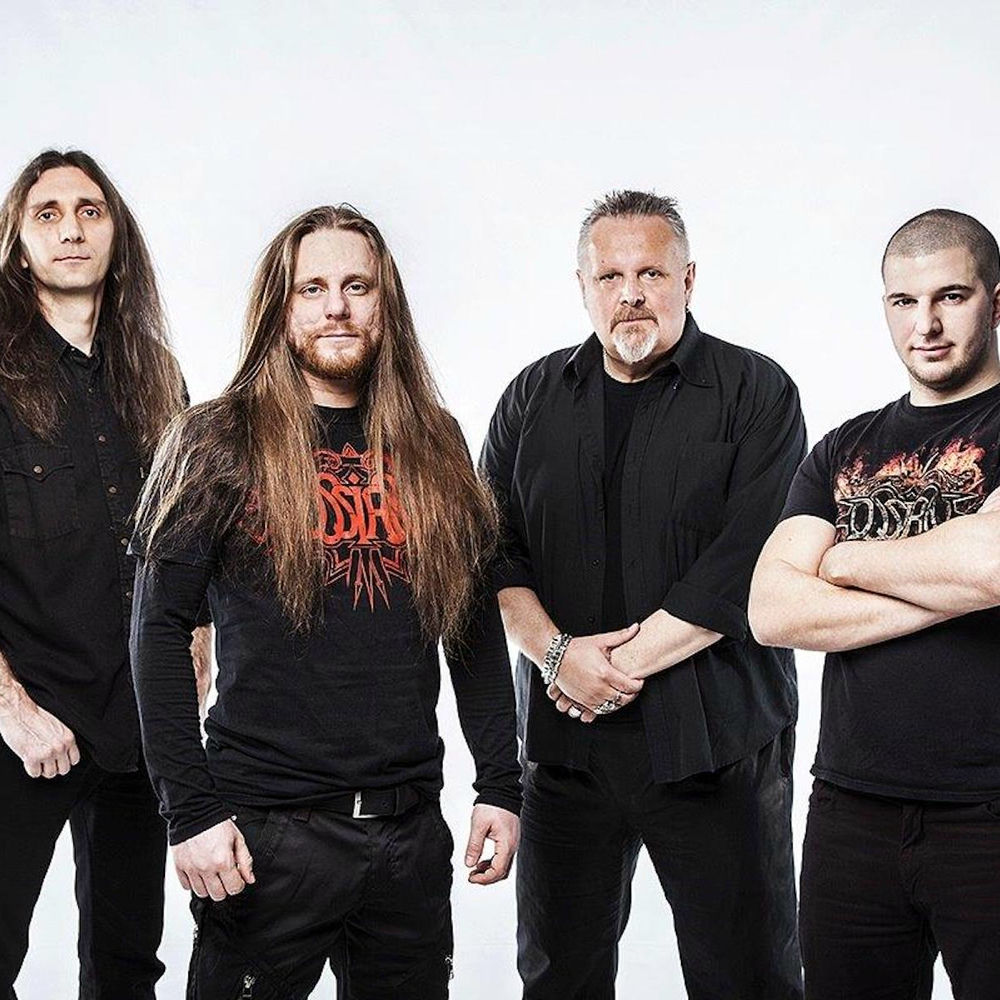
The band's lineup has remained notably stable, with frontman János Kóbor and bassist Zoltán Tátrai serving as consistent creative forces. Their prolific output continued into the 2000s and 2010s with albums like "Fény És Árnyék" (Light and Shadow) in 2004 and "Testamentum" in 2016, each reliably topping the Hungarian album charts. Their consistent draw is most evident in their legendary annual New Year's Eve concerts in Budapest, which regularly sell out the city's largest arenas, a testament to their enduring popularity. For fans of Hungarian folk rock, exploring similar artists is rewarding. Edda shares a similar historical trajectory and anthemic, guitar-driven style. Pokolgép offers a heavier, more speed-metal influenced take on national themes. Korál represents another pillar of the classic Hungarian rock scene with a focus on melodic songcraft.
Ossian's music maintains a strong presence on radio, particularly on Hungarian national rock stations, classic rock FM stations, and dedicated online rock radio streams that cater to European audiences. Their extensive catalog of hits ensures they are a regular feature in rotations that celebrate guitar-driven music with cultural depth.
Listeners can discover the powerful sound of Ossian and similar acts through the curated rock and folk rock stations available on onairium.com, where their anthems are a fundamental part of the programming dedicated to guitar-driven European music.
