Philip Glass Ensemble
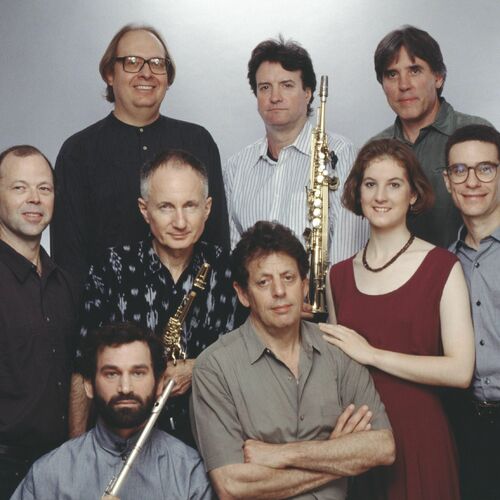
Philip Glass Ensemble: Pioneers of Minimalist Music
The Philip Glass Ensemble is the definitive performing group for the groundbreaking minimalist compositions of American composer Philip Glass. Founded in New York City in 1971, the ensemble has been the primary vehicle for presenting Glass's signature repetitive structures and amplified sound, achieving global recognition through landmark operas and film scores that have defined a genre.
Early career
The ensemble was formed by Philip Glass following his studies with Nadia Boulanger and collaborations with Ravi Shankar. Their earliest performances were in the downtown New York art lofts and galleries of the early 1970s, operating independently from the traditional classical music establishment. The group's first recordings, like "Music in Twelve Parts," were initially released on Glass's own private label, Chatham Square Productions.
Breakthrough
The ensemble's international breakthrough came with the 1976 opera "Einstein on the Beach," created in collaboration with Robert Wilson. This four-and-a-half-hour work, which bypassed conventional opera houses for a performance at New York's Metropolitan Opera, propelled Glass and his ensemble to the forefront of contemporary music. The subsequent recording, released on CBS Masterworks in 1979, brought their radical sound to a vast audience.
Key tracks
Koyaanisqatsi — The 1982 film score piece that popularized Glass's hypnotic style for mainstream cinema audiences.
Glassworks - Opening — This accessible 1982 album track was specifically composed to be played on the radio, introducing minimalism to a broader public.
Einstein on the Beach - Knee Play 1 — A foundational work showcasing the ensemble's early, rigorous process of additive repetition and amplified woodwinds.
Mishima - Closing — This 1985 film score segment demonstrates the ensemble's powerful emotional range within a minimalist framework.
Music in Similar Motion — An early piece exemplifying the relentless, phase-shifting patterns that became the ensemble's trademark.
The ensemble's later career is deeply intertwined with Glass's prolific output, including the operas "Satyagraha" and "Akhnaten," which form a celebrated portrait trilogy. Major film scores for "The Hours" and "Notes on a Scandal" further cemented their cultural impact, with the soundtrack for "The Hours" achieving gold certification in several countries. Their recordings have moved through labels including CBS, Nonesuch, and Orange Mountain Music, the latter founded to manage Glass's extensive catalog.
For listeners captivated by the Philip Glass Ensemble's transformative patterns, exploring similar artists is rewarding. Steve Reich is a fellow American minimalist pioneer whose ensemble works also use intricate rhythmic phasing. John Adams shares a foundation in minimalism but expands it into large-scale orchestral and operatic works. Terry Riley is a key innovator whose early compositions like "In C" directly influenced the minimalist movement. Laurie Anderson operates in a similar New York avant-garde sphere, blending narrative and experimental sound.
The music of the Philip Glass Ensemble maintains a strong presence on radio stations featured on this website. Their influential works are staples on dedicated classical modernism programs, alternative and art rock streams, and stations focusing on film score composition. The ensemble's recordings are frequently featured in thematic blocks exploring 20th-century avant-garde or contemporary orchestral innovation.
You can hear the pioneering minimalist music of the Philip Glass Ensemble on the radio stations available on onairium.com. Tune in to discover their vast catalog of operatic and cinematic works that continue to shape contemporary composition.