Planxty
Planxty: The Pioneers of Irish Folk Revival
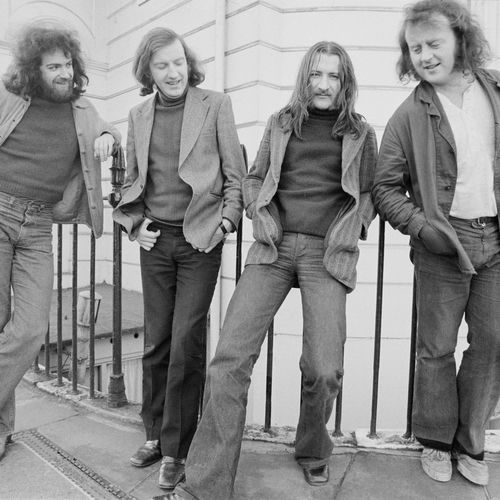
Planxty is a seminal Irish folk band whose innovative fusion of traditional music with contemporary energy fundamentally reshaped the genre. Formed in Dublin in 1972, the group is celebrated for landmark albums like "The Well Below the Valley" and for launching the careers of several legendary Irish musicians.
Early career
The band's genesis was the 1972 self-titled debut album by Christy Moore, which featured instrumental backing from three exceptional musicians: Dónal Lunny, Andy Irvine, and Liam O'Flynn. Recognizing their potent chemistry, the quartet officially formed Planxty in 1973, taking their name from an old Gaelic harp tune. Their raw, powerful sound was immediately captured on their first album, simply titled "Planxty," released that same year on Polydor Records.
Breakthrough
Planxty's arrival was a cultural event, and their 1973 debut album became an instant classic, achieving significant sales in Ireland and beyond, though formal certifications were uncommon for the genre at the time. The band's sophisticated arrangements and masterful instrumentation, particularly O'Flynn's uilleann pipes, brought traditional Irish music to a new, younger audience and set a new standard. Their rapid succession of influential albums, including "The Well Below the Valley" (1973) and "Cold Blow and the Rainy Night" (1974), cemented their status as leaders of the folk revival.
Key tracks
Raggle Taggle Gypsy / Tabhair Dom Do Lámh — This medley from their debut album showcases their dynamic range, moving from a frenetic instrumental to a beautiful slow air.
The Well Below the Valley — The title track from their second album is a haunting, lengthy ballad that exemplifies their deep dive into the darker corners of the tradition.
As I Roved Out — A stunning showcase for Christy Moore's vocal delivery and the band's intricate, driving accompaniment on this classic folk song.
Only Our Rivers Run Free — A powerful political ballad written by Mickey MacConnell that became an anthem and a staple of their live performances.
The original lineup fragmented in late 1974, with members pursuing solo projects, but the band reconvened in 1979 with guitarist and singer Paul Brady replacing Christy Moore. This iteration produced the acclaimed album "After The Break" (1979) on the Tara Records label, followed by "The Woman I Loved So Well" (1980). Planxty's activity has been intermittent since the 1980s, marked by celebrated reunion tours and recordings, most notably the 2004 album "Live 2004," which captured their enduring power for a new generation.
Fans of Planxty's intricate, rhythm-driven folk will also appreciate the work of The Bothy Band, another fiery Irish folk group featuring former Planxty member Dónal Lunny. The rich vocal and instrumental harmonies of The Dubliners provided a foundational influence for the Irish folk scene. For more contemporary interpretations of the tradition, explore Lúnasa, an instrumental group known for its modern arrangements. The solo work of Christy Moore, of course, carries forward the passionate songcraft he honed with the band.
Planxty's influential catalog remains a cornerstone of programming on dedicated folk and traditional music radio stations, as well as on eclectic public radio streams that champion timeless acoustic music. Their tracks are regularly featured in special programming blocks celebrating Celtic music and the foundational artists of the 1970s folk revival era.
Listeners can explore the groundbreaking sound of Planxty on radio stations featured on our website. Tune in to the folk and traditional music channels available on onairium.com to hear their essential recordings and discover the legacy of Irish folk music.