
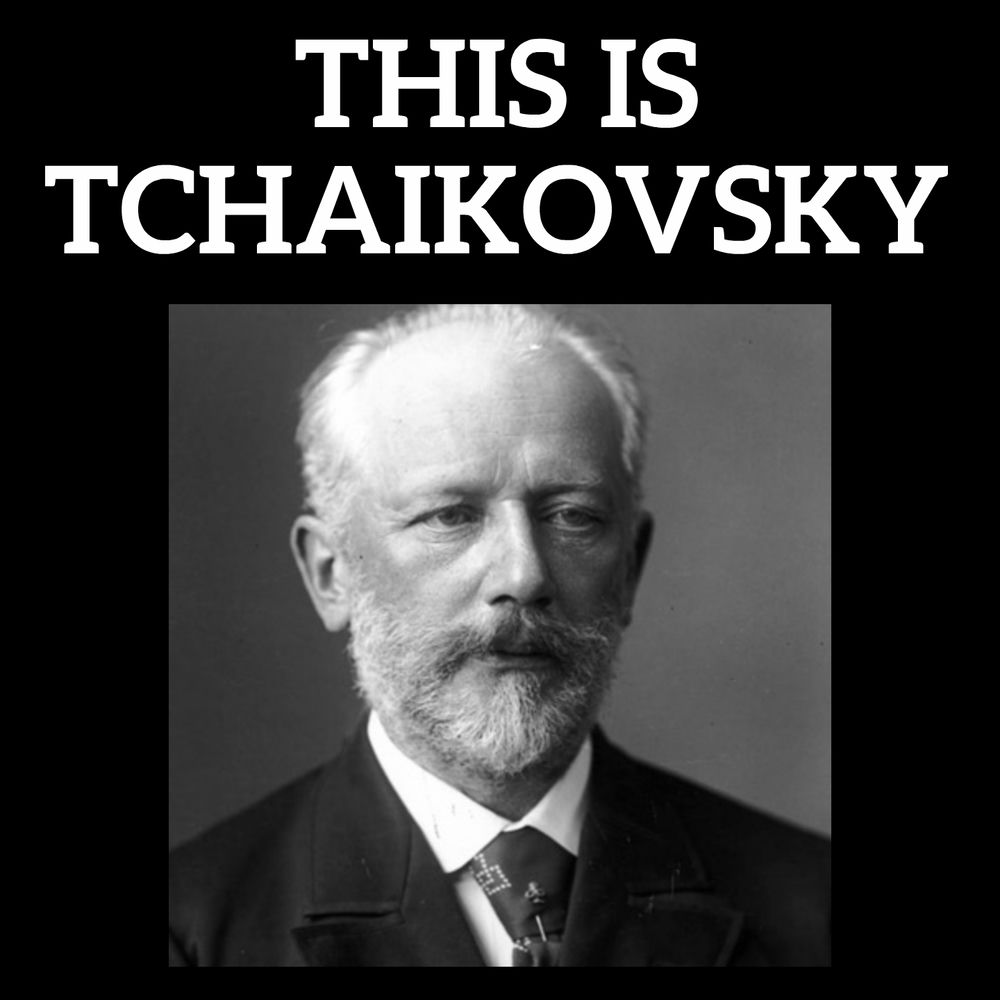
Pyotr Ilyich Tchaikovsky
Listen Pyotr Ilyich Tchaikovsky on radio stations:

Pyotr Ilyich Tchaikovsky: The Heart of Russian Romanticism
Pyotr Ilyich Tchaikovsky was a Russian composer of the Romantic era whose works are among the most popular in the classical repertoire. Hailing from Votkinsk, Russia, his major achievements include iconic ballets like Swan Lake and symphonies that achieved global recognition, cementing his status as a pivotal figure in Western classical music.
Early Career
Born in 1840, Tchaikovsky initially studied law and worked as a civil servant before dedicating himself to music. He enrolled at the newly founded Saint Petersburg Conservatory in 1862, studying under Anton Rubinstein, and upon graduation in 1865, he began teaching at the Moscow Conservatory while composing his first symphonies and operas.
Breakthrough
Tchaikovsky's breakthrough to wider international acclaim came with the composition of his fantasy overture Romeo and Juliet in 1869, revised in 1870 and 1880. While his early operas and symphonies gained attention in Russia, it was the 1875 Piano Concerto No. 1 and the ballet Swan Lake (premiered 1877) that began to solidify his fame, despite Swan Lake's initially mixed reception.
Key Tracks
1812 Overture - This celebratory overture, written in 1880, became one of his most famous and frequently performed works, known for its dramatic cannon fire and bell chimes.
Swan Lake, Op. 20 - Although its 1877 premiere was not a success, this ballet score later became central to his legacy, defining the genre of Russian ballet music.
Piano Concerto No. 1 in B-flat minor, Op. 23 - This concerto's grand opening theme became instantly recognizable, overcoming initial criticism to become a staple of the piano repertoire.
Symphony No. 6 in B minor, "Pathétique," Op. 74 - His final symphony, premiered just days before his death in 1893, is renowned for its profound emotional depth and tragic finale.
The Nutcracker, Op. 71 - The ballet suite from this 1892 work contains some of his most beloved and melodious pieces, consistently popular during the holiday season.
Throughout the 1880s and until his death in 1893, Tchaikovsky produced a stream of major works, including the opera Eugene Onegin, the Violin Concerto in D major, and his later symphonies. He achieved significant success with tours across Europe and a celebrated visit to the United States in 1891 for the opening of Carnegie Hall, conducting his own works. The music of Pyotr Ilyich Tchaikovsky endures for its powerful melodic invention and emotional intensity, hallmarks of the Romantic genre. His compositions for ballet fundamentally transformed the art form, elevating the music from mere accompaniment to a central narrative force.
Listeners who appreciate the Romantic genre of Tchaikovsky may also enjoy the works of other Russian composers such as Nikolai Rimsky-Korsakov, known for his brilliant orchestration in works like Scheherazade. The dramatic and nationalistic operas of Modest Mussorgsky, including Boris Godunov, also share a similar Russian character. The passionate and lyrical symphonies of Antonín Dvořák, while Czech, offer a comparable Romantic sensibility.
