

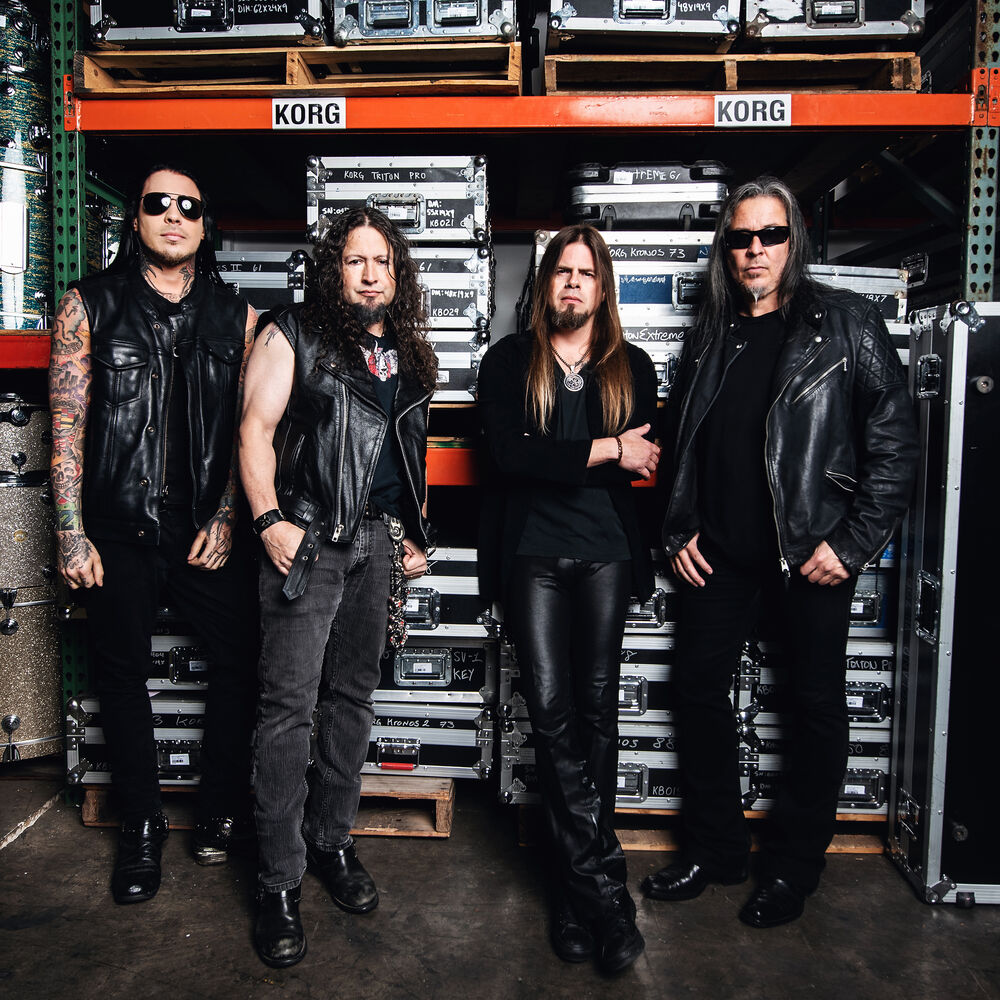
Queensryche
Listen Queensryche on radio stations:





Queensryche: Progressive Metal Pioneers
Queensryche is an American progressive metal band that emerged from Bellevue, Washington in the early 1980s. The group achieved mainstream success with their 1990 concept album Operation: Mindcrime and the 1991 hit single "Silent Lucidity," which earned them a Grammy nomination and multi-platinum certifications.
Early career
The band originally formed in 1981 under the name The Mob, featuring guitarist Chris DeGarmo and vocalist Geoff Tate. After changing their name to Queensryche, they self-released a four-song demo in 1982 that caught the attention of the newly formed 206 Records, leading to their first EP, 1983's Queensrÿche.
Their full-length debut, The Warning, arrived in 1984 on EMI America, showcasing a sophisticated blend of heavy metal and progressive rock. The 1986 follow-up Rage for Order saw the band further developing their conceptual and sonic ambition, setting the stage for a major commercial breakthrough.
Breakthrough
Queensryche's commercial peak arrived with the 1988 concept album Operation: Mindcrime, a dark rock opera that became a landmark in progressive metal. The album was certified platinum and its success was amplified by their opening slot on Metallica's 1989 Damaged Justice tour, exposing them to massive audiences.
The band's popularity soared even higher with 1990's Empire, which reached number seven on the Billboard 200 and was certified triple platinum. The album's power ballad "Silent Lucidity" became a top ten single on the Billboard Hot 100 and received heavy rotation on MTV, earning the band two Grammy nominations.
Key tracks
Queen of the Reich — This explosive 1983 EP track announced the band's technical prowess and became an early fan favorite.
Eyes of a Stranger — The climactic finale of the Operation: Mindcrime album perfectly encapsulates the record's narrative and musical intensity.
Silent Lucidity — This orchestral ballad brought the band unprecedented mainstream radio and MTV success in 1991.
Jet City Woman — A hard-rocking staple from Empire that highlights the band's melodic songwriting and thematic focus on their Pacific Northwest roots.
I Don't Believe in Love — A key track from Operation: Mindcrime that showcases Geoff Tate's powerful vocal range and the band's dynamic composition.
The 1990s saw further albums including 1994's Promised Land, which debuted at number three on the Billboard 200, but internal tensions and shifting musical trends presented challenges. Significant lineup changes began in the 2000s, most notably the departure of longtime vocalist Geoff Tate in 2012, after which former Crimson Glory singer Todd La Torre joined the band.
This new iteration of Queensryche has released several well-received albums, including 2019's The Verdict and 2022's Digital Noise Alliance, reaffirming their commitment to complex, guitar-driven progressive metal. The band continues to tour extensively, maintaining a legacy built over four decades.
Fans of Queensryche's intricate compositions and thematic depth often appreciate the work of similar American progressive metal acts. Dream Theater shares a dedication to musical virtuosity and epic song structures. Fates Warning emerged in the same era, pioneering a similarly thoughtful and technical approach to metal. Tool explores complex time signatures and philosophical themes, appealing to a similar audience. Operation Mindcrime, Geoff Tate's post-Queensryche project, continues the conceptual album tradition he helped define.
Queensryche's catalog remains a fixture on rock radio formats, from classic rock stations that champion "Silent Lucidity" to dedicated metal and hard rock channels that feature the heavier nuances of <
