



Rick Wakeman: The Maestro of Progressive Rock Keyboards
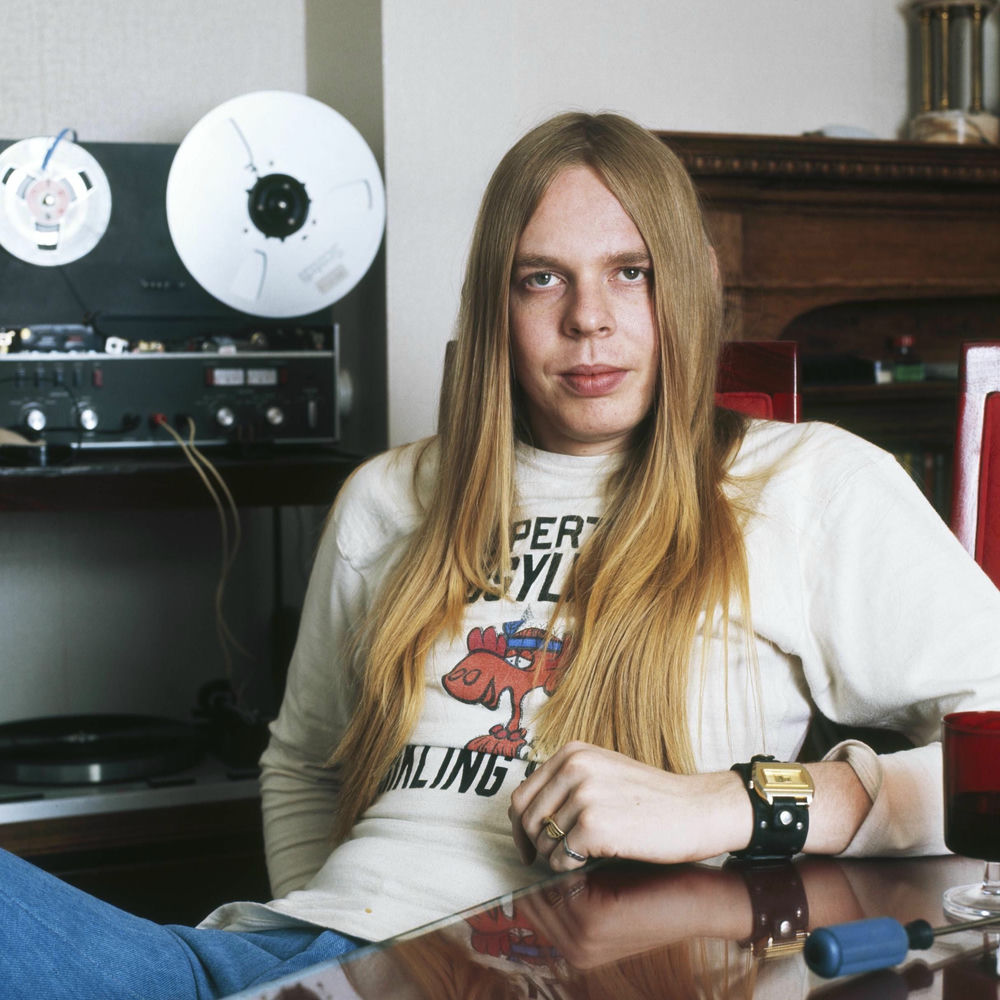
Rick Wakeman is a virtuoso keyboardist and composer from England, renowned for his flamboyant stage presence and complex synthesizer work. His primary musical achievement is his integral role in the progressive rock band Yes, alongside a prolific solo career that has produced over 100 solo albums.
Early career
Born in 1949 in London, Richard Christopher Wakeman began his musical journey as a classically trained pianist at the Royal College of Music. His early professional work included session playing for artists like David Bowie on Space Oddity and Cat Stevens, before he joined the folk-rock band The Strawbs in 1970.
Breakthrough
Wakeman's breakthrough came in 1971 when he joined Yes, contributing his iconic keyboard textures to the band's landmark album Fragile. His first solo album, 1973's The Six Wives of Henry VIII, was a major commercial success, reaching No. 7 on the UK Albums Chart and achieving gold certification, establishing him as a formidable solo artist.
Key tracks
Journey to the Centre of the Earth - This 1974 live adaptation of Jules Verne's novel topped the UK Albums Chart and won Wakeman an Ivor Novello Award.
The Myths and Legends of King Arthur and the Knights of the Round Table - The ambitious 1975 album spawned a legendary ice-skating arena show at Wembley and became another UK chart-topper.
Roundabout - As a key member of Yes, his intricate keyboard solos on this track from Fragile became a defining sound of the progressive rock genre.
Merlin the Magician - A central, fan-favorite piece from the King Arthur album showcasing his narrative compositional style and synth mastery.
Jane Seymour - A powerful instrumental from The Six Wives of Henry VIII that highlights his ability to translate historical themes into compelling musical portraits.
Throughout the 1980s and beyond, Wakeman balanced recurring work with Yes, further solo projects often blending rock and classical themes, and a successful career as a television and radio presenter. His collaborations are extensive, including notable work with Black Sabbath on Sabbra Cadabra and his own bands like The English Rock Ensemble.
Artists exploring similar territories of complex, keyboard-driven British progressive rock include Yes, the band where he forged his legendary status. Emerson, Lake & Palmer were contemporaries known for similar technical virtuosity and classical rock fusion. Mike Oldfield shares an affinity for lengthy, thematic compositions and multi-instrumental prowess. Steve Hackett, another progressive rock stalwart, often creates music with a comparable narrative and cinematic scope.
Rick Wakeman's distinctive fusion of classical training, rock energy, and thematic ambition continues to resonate, securing his legacy as a pivotal and endlessly creative figure in music history.