Roland Kirk
Roland Kirk: The Visionary Multi-Instrumentalist of Jazz
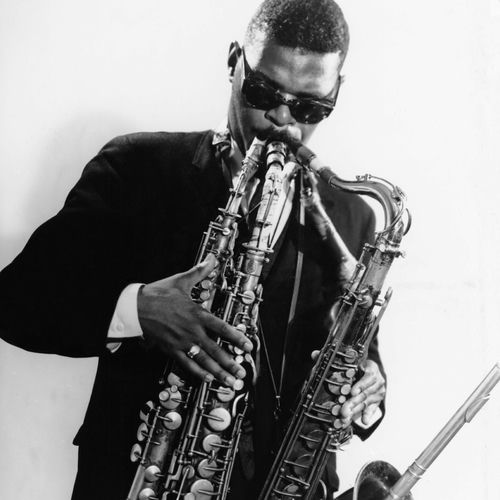
Roland Kirk was an American jazz virtuoso renowned for his ability to play multiple wind instruments simultaneously and for his boundless musical innovation. Hailing from Columbus, Ohio, his career, though tragically shortened, produced a prolific and influential catalog of recordings for labels like Mercury, Limelight, and Atlantic.
Early career
Born Ronald Theodore Kirk in 1935, he became blind as a young child and began studying music at the Ohio State School for the Blind. By his late teens, he was a professional musician, and after a dream, he adopted the name Rahsaan Roland Kirk. His early albums, such as 1960's "Introducing Roland Kirk" on the Argo label, showcased his emerging talent and his unique multi-horn approach.
Breakthrough
Kirk's signing to the major label Mercury Records in 1961 marked a significant step, but his true artistic and commercial breakthrough came with his move to Atlantic Records later in the decade. Albums like 1965's "Rip, Rig and Panic" and 1967's "Now Please Don't You Cry, Beautiful Edith" solidified his reputation as a fearless avant-garde experimenter who could also deliver soulful, accessible melodies.
Key tracks
Serenade to a Cuckoo — This flute-driven piece, from his 1964 album "I Talk with the Spirits," became famously covered by the rock band Jethro Tull, introducing Kirk to a wider rock audience.
Volunteered Slavery — The title track from his 1969 album is a powerful, gospel-infused anthem that encapsulated his spirited live performances and social consciousness.
The Inflated Tear — A poignant and beautiful composition from the 1967 album of the same name, it is considered one of his most personal and lyrical musical statements.
Bright Moments — This joyful, audience-participation staple became the title of his acclaimed 1973 live double album, capturing the communal energy of his concerts.
Despite suffering a major stroke in 1975 that paralyzed one side of his body, Kirk retaught himself to play and continued performing until his death in 1977. He left behind a legacy of over 30 albums as a leader, blending hard bop, free jazz, soul, and humor into a singular sound. His work with musicians like Charles Mingus and his own group, The Vibration Society, remains highly influential.
For fans of Roland Kirk's adventurous spirit in jazz, explore similar artists featured on our site like Eric Dolphy, another boundary-pushing multi-instrumentalist. Charles Mingus, with whom Kirk collaborated, shared a similar intensity and compositional ambition. The inventive flute work of Hubert Laws also finds a precursor in Kirk's style. Sun Ra paralleled Kirk in creating a unique, spiritually charged universe of sound.The dynamic recordings of Roland Kirk are a staple on our curated jazz and eclectic music radio stations. His tracks frequently feature on our specialty jazz streams, from classic hard bop channels to programs dedicated to avant-garde and spiritual jazz explorations.
You can experience the groundbreaking music of Rahsaan Roland Kirk on the radio stations featured here on onairium.com. Tune in to discover his vast catalog and hear why his innovative approach continues to resonate with listeners today.