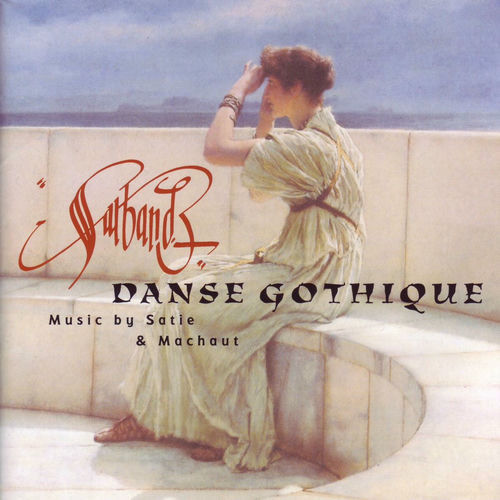
Sarband
Sarband: Masters of Early Music and Cross-Cultural Dialogue
Sarband is a German-based ensemble celebrated for its innovative fusion of early European classical music with traditional sounds from the Ottoman Empire and the Middle East. Founded and directed by Dr. Vladimir Ivanoff, the group has achieved global recognition through extensive touring and a prolific, award-winning discography that redefines historical musical connections.
Early career
Sarband was formed in Munich, Germany, in 1986 by the Bulgarian-born musicologist and conductor Vladimir Ivanoff. The ensemble's name, meaning "connection" or "link" in Persian, perfectly encapsulated its mission from the outset: to creatively bridge the musical worlds of East and West. Their early work focused on meticulous research and reconstruction, leading to their first recorded projects for the German label Christophorus in the late 1980s and early 1990s.
Breakthrough
The ensemble's international breakthrough came with the 1999 album "Sacred Women, Women as Composers and Performers of Sacred Music," which garnered critical acclaim for its scholarly yet accessible approach. This success was solidified by their ambitious project "Al-Andalus," initiated in the early 2000s, which traced the musical legacy of medieval Spain across Christian, Jewish, and Muslim cultures. These concept-driven albums, often released on the prestigious label Deutsche Harmonia Mundi, established Sarband as a leading force in world and early music circles.
Key tracks
Mecmua — This piece from the "Al-Andalus" project exemplifies their signature style, weaving together Sephardic, Arabic, and Spanish Renaissance melodies into a seamless tapestry.
Whirling — A dynamic track showcasing the ensemble's mastery of Ottoman classical forms combined with Western instrumentation, often a highlight in their live performances.
Sacred Women — The title track from their breakthrough album is a powerful representation of their dedication to unearthing and performing forgotten repertoire from female composers and performers across cultures.
Fantasia — This work demonstrates their intricate improvisational skills, rooted in both the classical *taqsim* tradition and Western early music practices.
Throughout the 2000s and 2010s, Sarband expanded its collaborative network, working with institutions like the Istanbul State Turkish Music Ensemble and performing at prestigious venues from the Concertgebouw to the Beijing Music Festival. Their album "Sultan's Court" further explored the opulent musical exchanges at the Ottoman court, while projects like "Byzantium" continued their journey along historical cultural crossroads.
Fans of Sarband's scholarly yet vibrant fusion may also appreciate the work of Hesperion XXI under Jordi Savall, which similarly revitalizes early music with a pan-Mediterranean spirit. The cross-cultural explorations of Kronos Quartet share a parallel adventurousness in repertoire. For the Ottoman and Sufi music influences, listeners can explore Mercan Dede, who blends traditional Turkish instruments with electronic music.
Sarband's unique catalog is a staple on specialized radio programming, finding a home on classical crossover stations, world music FM channels, and online streams dedicated to historical and global sounds. Their recordings are frequently featured in thematic programs exploring Renaissance music, Ottoman history, or intercultural dialogue.
The music of Sarband, a pioneering ensemble in early and world music, can be discovered and enjoyed on the curated radio stations available on onairium.com, where their cross-cultural symphonies resonate with a global audience.