Schubert, Franz
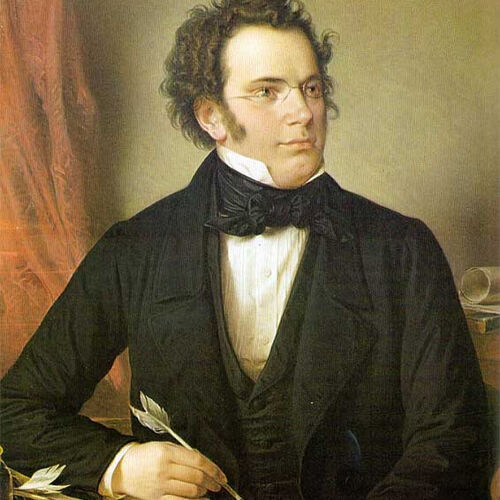
Franz Schubert: The Prolific Master of Romantic Art Song
Franz Schubert was an Austrian composer of the late Classical and early Romantic eras whose vast musical output defined the German art song, or Lied. Despite a tragically short life, his melodic genius produced over 600 songs, symphonies, and chamber works that achieved posthumous fame and enduring popularity, with his music now a cornerstone of classical repertoire worldwide.
Early career
Born in 1797 in Vienna, Schubert displayed extraordinary musical talent from childhood, becoming a choirboy in the Imperial Court Chapel. He began composing prolifically as a teenager while training as a schoolteacher, but soon dedicated himself entirely to music, circulating his early songs and chamber works among a close-knit circle of friends in Vienna known as the "Schubertiads."
Breakthrough
While public recognition was limited during his lifetime, his 1821 publication of the song Erlkönig marked a significant moment, drawing wider attention to his dramatic and innovative setting of Goethe's poem. His major breakthrough, however, came after his death in 1828, with the 1839 discovery and first performance of his Great Symphony in C Major cementing his legacy as a symphonic thinker.
Key tracks
Erlkönig — This intense 1815 Lied established Schubert's reputation for powerful musical storytelling and remains one of his most famous works.
Ave Maria — Originally titled "Ellens dritter Gesang," this 1825 setting became universally known as a sacred work, showcasing his gift for sublime melody.
Winterreise — This 1827 song cycle is a monumental, bleakly beautiful masterpiece that profoundly expanded the emotional depth of the Lied genre.
Symphony No. 8 "Unfinished" — Its two mesmerizing movements, first performed in 1865, revolutionized symphonic form with their lyrical Romanticism.
String Quintet in C Major — Composed in the final months of his life, this chamber work is often cited as the pinnacle of his instrumental writing.
The final years of Schubert's career were marked by astonishing productivity despite declining health, yielding masterpieces like the song cycle Winterreise and his last three piano sonatas. His music, published by firms like Diabelli & Co., gradually gained international traction, with composers like Robert Schumann becoming vocal champions of his work in the decades following his death at age 31.
For listeners exploring the world of Romantic composition, the music of Robert Schumann shares Schubert's lyrical intensity and innovation in song cycles. Johannes Brahms continued the Viennese tradition of melodic richness and structural mastery championed by Schubert. The dramatic Lieder of Hugo Wolf build directly upon the artistic foundation Schubert established for the art song.
Franz Schubert's compositions are a staple on dedicated classical music radio stations, featured regularly on programming that spans from early Romantic masters to full-length symphony broadcasts. His Lieder are essential listening on vocal and art song specialty shows, while his symphonies and chamber works anchor daytime and evening playlists on public radio and dedicated online classical streams.
The timeless works of Franz Schubert can be heard on the classical radio stations featured on our website. Listeners can discover the depth of his catalog, from beloved melodies to profound late works, through the curated stations available on onairium.com.