

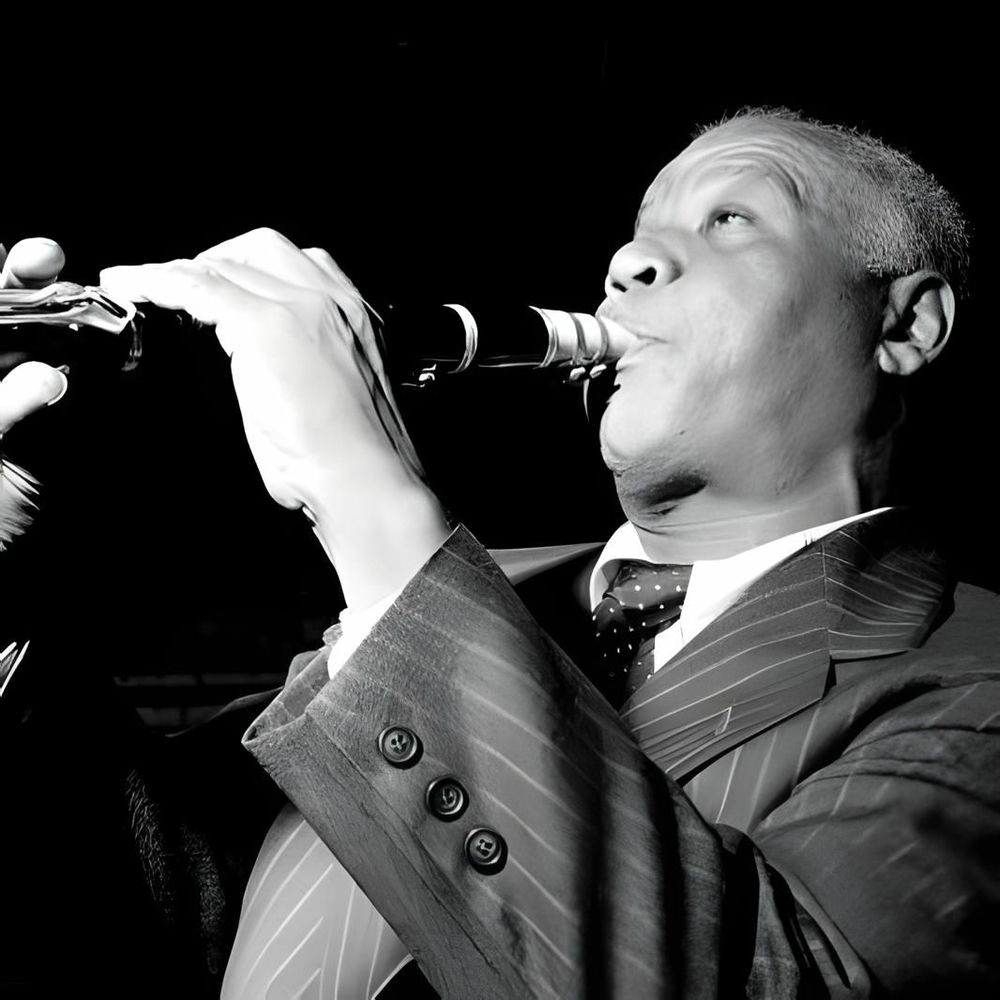
Sidney Bechet: The Pioneering Voice of Early Jazz
Sidney Bechet was a foundational American jazz musician and composer, a virtuoso of the soprano saxophone and clarinet. Hailing from New Orleans, his powerful, vibrato-rich sound and pioneering recordings in the 1920s and 1930s established him as one of the first great soloists in jazz history.
Early career
Born in 1897 in New Orleans, Sidney Bechet began playing clarinet as a child, learning alongside legendary figures like Freddie Keppard. His immense talent was evident early, and by his teens he was performing with various marching and dance bands. Bechet left New Orleans in his late teens, touring with traveling shows before moving to Chicago and then to Europe in 1919 with Will Marion Cook's Southern Syncopated Orchestra, where his playing astonished classical conductor Ernest Ansermet.
Breakthrough
Sidney Bechet's true recording breakthrough came in the early 1920s. His 1923 session with Clarence Williams's Blue Five for the Okeh label produced the powerful "Wild Cat Blues" and "Kansas City Man Blues." These tracks, particularly "Wild Cat Blues," are landmark recordings, showcasing Bechet's commanding soprano saxophone as a lead voice and helping to define the potential of the instrument in jazz.
Key tracks
Wild Cat Blues — This 1923 Okeh recording was a landmark, featuring one of the first great soprano saxophone solos on record and announcing Bechet's arrival as a major force.
Summertime — His 1939 rendition of the Gershwin classic for the Victor label became a signature piece, demonstrating his ability to transform a popular standard with profound emotional depth.
Blue Horizon — A masterful 1944 clarinet blues recorded for the Blue Note label, it is a six-minute tour de force of mood and melodic invention.
Les Oignons — This lively, later-period composition became a staple of his repertoire, perfectly blending New Orleans tradition with his own exuberant style.
Petite Fleur — A composition he recorded in the 1950s, it later became an international instrumental hit for the British group Chris Barber's Jazz Band, cementing his legacy as a composer.
In the late 1940s and 1950s, Sidney Bechet found a new peak of popularity, particularly in France, where he settled in 1951. He recorded extensively for the French Vogue label and became a celebrated figure, his music embraced as both authentically American and deeply appealing to European audiences. His collaborations during this era ranged from sessions with fellow New Orleans expatriates to notable meetings with modernists like Charlie Parker.
For listeners exploring the roots of jazz, Sidney Bechet's style shares the melodic invention and driving rhythm of Louis Armstrong, another New Orleans pioneer who revolutionized jazz soloing. His clarinet work connects to the earlier tradition of Johnny Dodds, known for his expressive, blues-drenched playing in King Oliver's Creole Jazz Band. The lyrical swing of his later French recordings finds a parallel in the work of trumpeter Rex Stewart, who brought a distinctive, vocalized style to the Duke Ellington Orchestra.
Sidney Bechet's music remains a cornerstone of programming on traditional jazz and classic blues radio stations. His recordings are regularly featured on dedicated early jazz FM stations and online streams that specialize in the foundational sounds of the 20th century, ensuring his pioneering work continues to reach new generations of listeners.
The vibrant music of Sidney Bechet, a giant of early jazz, can be heard on radio stations featured on our website. Listeners can discover his influential catalog through the classic jazz and historical music radio stations available on onairium.com.

