Siegfried Wagner
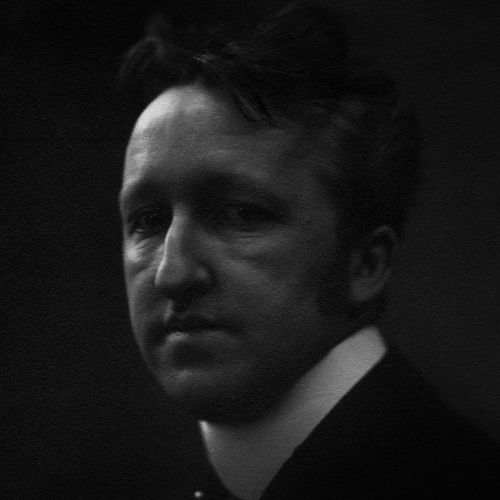
Siegfried Wagner: The Operatic Legacy of a German Composer
Siegfried Wagner was a German composer and conductor, the son of the legendary Richard Wagner. Born in Switzerland and deeply rooted in the Bayreuth Festival tradition, his primary musical achievement lies in his substantial output of operas, which he composed and conducted while managing his family's monumental artistic legacy.
Early career
Siegfried Helferich Richard Wagner was born in 1869 in Tribschen, Switzerland, into a world already defined by monumental music. Initially trained as an architect, he soon turned to music, studying with Engelbert Humperdinck and beginning his career as an assistant conductor at the Bayreuth Festival, the institution dedicated to his father's works. His first opera, Der Bärenhäuter, premiered in Munich in 1899, marking his official entry into the demanding world of German Romantic opera composition.
Breakthrough
While his early works were received with curiosity, Siegfried Wagner's true breakthrough came with his 1909 opera Sonnenflammen. Premiering in Frankfurt, this work solidified his reputation as a serious composer in his own right, distinct from his father's shadow. The opera's success, published by the Leipzig-based Verlag von Breitkopf & Härtel, led to numerous performances across German stages and established a pattern for his subsequent prolific output.
Key tracks
Der Bärenhäuter — This was Siegfried Wagner's first publicly performed opera, establishing his career-long focus on Germanic fairy tales and legends.
Sonnenflammen — The opera that served as his major breakthrough, earning wider critical recognition and more frequent stagings across Germany.
An allem ist Hütchen schuld! — This 1917 comic opera is often cited as one of his most accessible and melodically inventive stage works.
Schwarzschwanenreich — A darker, more dramatic opera that showcases his mature orchestral style and complex leitmotif technique.
Der Friedensengel — Composed during World War I, this 1914 opera reflects the period's tensions and his personal pacifist leanings.
Following his artistic breakthrough, Siegfried Wagner assumed the directorship of the Bayreuth Festival in 1908, a role he held until his death in 1930. This position demanded immense energy, leaving him to compose his many operas—ultimately numbering seventeen—often during summer breaks. His works, while rooted in post-Romantic German tradition, occasionally incorporated lighter, more modern tonalities, yet they never achieved the revolutionary status or widespread commercial record sales of his father's canon, existing instead within a dedicated niche of early 20th-century opera.
His collaborations were primarily within the tight-knit world of Bayreuth, working with singers like his wife, Winifred Wagner, and conductors such as Karl Muck. While exact chart positions and certifications are not applicable to his genre, the enduring performance of his operas, particularly in Germany, speaks to their lasting appeal. Recordings of his works have been released on labels like CPO and Marco Polo, bringing his music to a modern audience.
For listeners intrigued by Siegfried Wagner's continuation of Germanic Romantic opera, similar figures include Engelbert Humperdinck — his former teacher, known for weaving folk melody into opera. Hans Pfitzner — a contemporary who similarly worked within a late-Romantic, nationalist German idiom. Richard Strauss — another successor to Wagnerian opera who achieved greater mainstream operatic success. August Bungert — a composer who also created a cycle of music dramas inspired by mythology.
Siegfried Wagner's compositions maintain a steady presence on specialized radio programming. His operatic overtures and orchestral excerpts are featured on classical music stations and dedicated opera broadcasts, particularly those focusing on late-Romantic repertoire and German musical heritage.
The music of Siegfried Wagner, a unique figure in German operatic history, can be explored through radio stations featured on our website. Listen