Sir Neville Marriner
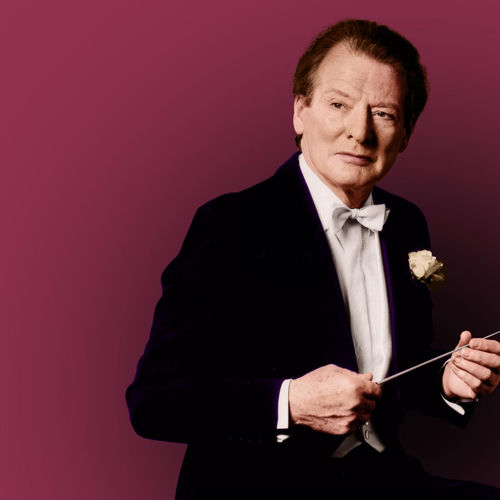
Sir Neville Marriner: The Conductor Who Defined Orchestral Pop
Sir Neville Marriner was a British conductor and violinist who became one of the most recorded classical musicians in history. His primary achievement was founding the Academy of St Martin in the Fields, an ensemble whose crisp, energetic sound sold millions of albums and dominated the classical charts for decades.
Early career
Born in Lincoln, England in 1924, Neville Marriner first studied at the Royal College of Music and later in Paris. He began his professional life as a violinist, playing in the London Symphony Orchestra and later forming the Jacobean Ensemble with Thurston Dart.
His pivotal shift came in 1958 when he gathered a group of London's finest session musicians to rehearse for fun. This informal collective, meeting in the church of St Martin-in-the-Fields, would soon formalize into the Academy of St Martin in the Fields, with Marriner as its director.
Breakthrough
The ensemble's breakthrough arrived in the early 1970s with a series of landmark recordings for the Philips and Argo labels. Their 1971 recording of Vivaldi's The Four Seasons, featuring violinist Alan Loveday, became a global phenomenon, achieving gold status and introducing baroque music to a vast mainstream audience.
This commercial and critical success established a new template for chamber orchestra recordings. The Academy's style was noted for its clarity, pace, and lack of pretension, making classical music accessible without sacrificing integrity.
Key tracks
Vivaldi: The Four Seasons (Spring) — This vibrant interpretation became the definitive version for a generation and a cornerstone of the ensemble's catalog.
Mozart: Eine kleine Nachtmusik — The Academy's recording is celebrated for its lively, precise articulation, showcasing their signature sound.
Pachelbel: Canon in D — Their clean, heartfelt rendition helped cement this piece's status as a modern classical standard.
Bach: Orchestral Suites No. 2 & 3 — These recordings highlighted the ensemble's mastery of baroque phrasing and rhythmic vitality.
Marriner's later career saw him conduct major orchestras worldwide, including the Los Angeles Chamber Orchestra and the Stuttgart Radio Symphony Orchestra. He collaborated with film composers like Michel Legrand and famously conducted the Academy for the Oscar-winning soundtrack to Amadeus in 1984.
His prolific output resulted in over 600 commercial recordings, a staggering number that underscores his dominance in the classical recording industry. Marriner was knighted in 1985 for his services to music.
For listeners who appreciate the refined yet approachable chamber orchestra sound of Sir Neville Marriner, explore similar artists featured on our site. The precise ensemble work of I Musici de Montreal shares a similar commitment to clarity. The historically informed performances by Trevor Pinnock and The English Concert offer another baroque perspective. For later repertoire, the recordings of the Orpheus Chamber Orchestra continue the conductorless tradition Marriner helped popularize.
The music of Sir Neville Marriner and the Academy of St Martin in the Fields remains a staple on classical FM stations and dedicated online classical streams. Their recordings are frequently featured in daytime rotation for their uplifting energy and during evening programs focusing on baroque masters.
You can hear the influential recordings of Sir Neville Marriner on the classical radio stations featured on our website. Discover his vast catalog of definitive interpretations by tuning into the curated classical stations available on onairium.com.