

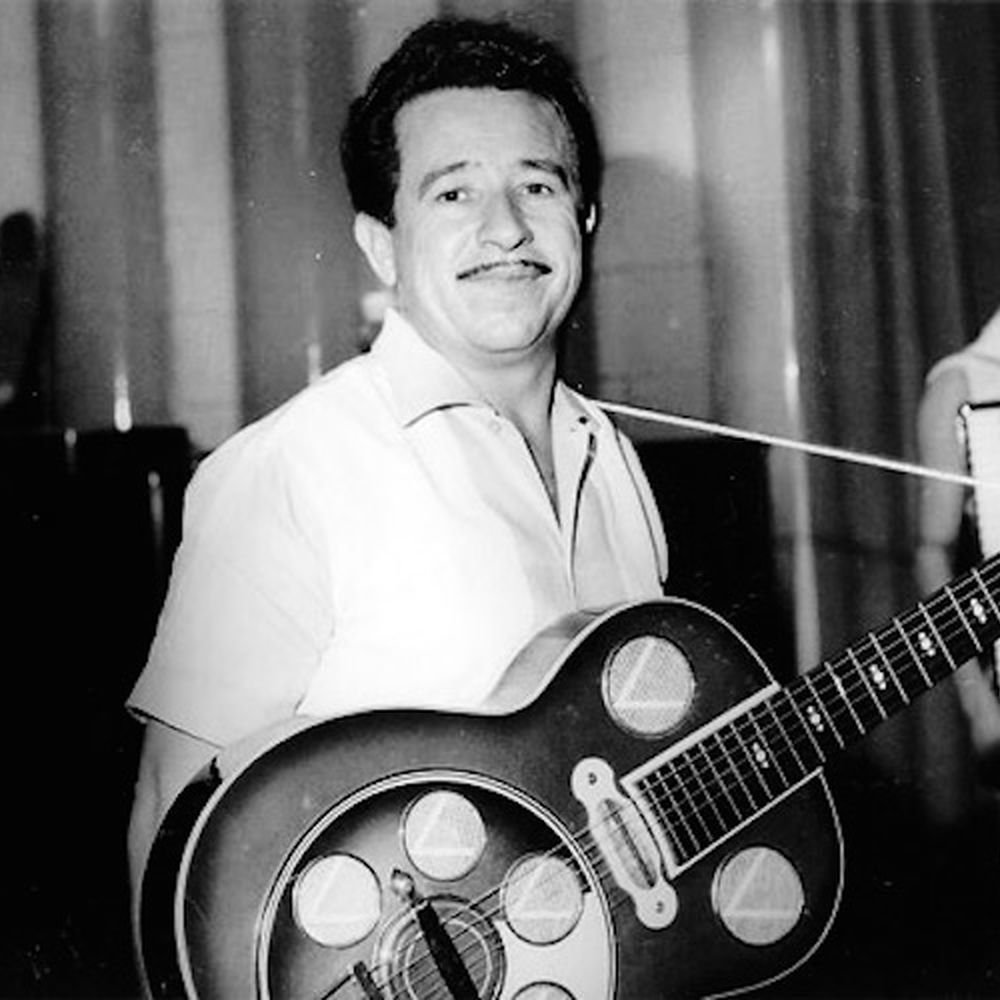
Teixeirinha
 Brazil
Listen Teixeirinha on radio stations:

Teixeirinha: The King of Gaúcho Music
Teixeirinha was a Brazilian singer, composer, and cultural icon who became the most successful recording artist in the history of Rio Grande do Sul. Hailing from the southern Brazilian state, he sold millions of records by popularizing the regional gaúcho music genre, a folk style rooted in the traditions of the southern plains.
Early career
Born Vitor Mateus Teixeira in 1927 in the city of Rolante, his life was marked by hardship from an early age. He began his artistic life performing in circuses and on radio programs, eventually adopting the stage name Teixeirinha and writing songs that directly narrated the stories, struggles, and pride of the gaúcho people.
His first major recording came in 1960 with the album "Teixeirinha e Suas Modas de Viola" on the Continental label. This release established his signature style: a clear, narrative vocal delivery accompanied by the viola (a Brazilian guitar) and accordion, telling tales that resonated deeply with the local population.
Breakthrough
Teixeirinha's national breakthrough arrived in 1963 with the monumental success of his song "O Grito do Bando." The track, a dramatic narrative about a cattle drive, became a cultural phenomenon across southern Brazil. The album of the same name, released through Chantecler, achieved extraordinary sales, with estimates suggesting it sold over one million copies, a staggering figure for a regional artist at the time.
This success cemented his status and led to a prolific output. Throughout the 1960s and 1970s, he consistently released multiple albums per year, many achieving gold and platinum certifications in the regional market, though official national charts of the era often overlooked regional genres.
Key tracks
O Grito do Bando — This 1963 epic song was his commercial breakthrough, defining the narrative gaúcho song and selling over a million copies.
Céu, Sol, Sul, Terra e Cor — An anthem celebrating the land and culture of Rio Grande do Sul, it remains one of his most beloved and recognizable hymns.
Máquina de Costura — A poignant story-song about family and sacrifice, showcasing his masterful skill as a musical storyteller.
Galope de Baitaca — An energetic instrumental piece that highlights the traditional musical foundations of his work.
Coração de Luto — A classic sertaneja-influenced ballad that demonstrated the emotional range within his catalog.
His career spanned over three decades, resulting in more than 50 albums and an estimated 20 million records sold, primarily in the southern Brazilian market. Teixeirinha collaborated with other major figures of regional music, such as Pedro Ortaça and Liu e Léu, further solidifying the gaúcho genre's community. He founded his own label, RBS Discos, in the 1970s, gaining greater control over his prolific recordings.
Artists like Pedro Ortaça shared the stage and recording studio with Teixeirinha, championing the same traditional gaúcho folk narratives. The duo Liu e Léu followed a similar path, achieving massive regional success with humor and storytelling in the gaúcho music style. Later artists such as Renato Borghetti modernized the instrumental aspects of the genre while honoring its roots, much like Teixeirinha did in his era.
Radio Rotation
Teixeirinha's vast catalog remains a staple on traditional Brazilian radio stations, particularly the AM and FM stations across Rio Grande do Sul that specialize in regional gaúcho and sertaneja music. His narrative songs are also featured on online streams dedicated to Brazilian folk history and classic regional hits, ensuring his voice continues to reach new generations of listeners.
Listeners can explore the enduring legacy of Teixeirinha's music through the radio stations featured on our website. Tune into the dedicated regional Brazilian channels available on onairium.com to hear the classic storytelling and traditional sounds that made him a legend.
