Tim Buckley
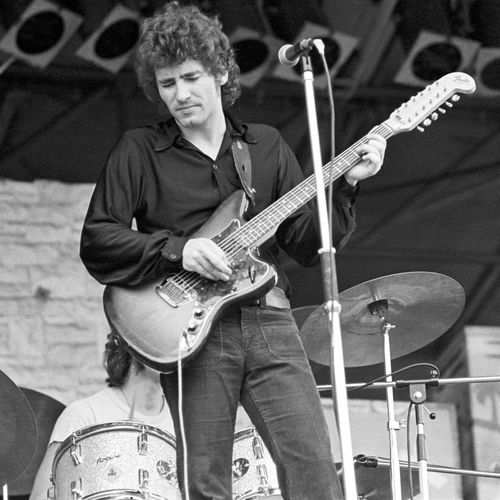
Tim Buckley: The Ethereal Voice of Folk Rock and Jazz Fusion
Tim Buckley was an American singer-songwriter and guitarist whose innovative fusion of folk, jazz, and psychedelia left an indelible mark on music. Hailing from Washington D.C. and raised in Southern California, his primary achievement was a prolific and exploratory nine-album career between 1966 and 1974, culminating in the avant-garde masterpiece Starsailor.
Early career
Born in 1947, Buckley began his musical journey in the folk clubs of Los Angeles alongside his high school friend, lyricist Larry Beckett. His prodigious talent and striking multi-octave voice quickly led to a deal with Elektra Records, which released his self-titled folk-rock debut album in 1966.
This was swiftly followed by Goodbye and Hello in 1967, an ambitious sophomore record that showcased his early songwriting evolution with Beckett. The album's baroque arrangements and social commentary set him apart from the simpler folk scene of the era.
Breakthrough
While never a mainstream chart sensation, Buckley's artistic breakthrough is widely considered to be the 1969 album Happy Sad. This record marked a decisive turn towards jazz-inspired improvisation and longer, moodier compositions, earning him critical acclaim and a dedicated following.
He moved to Straight Records, an imprint of Frank Zappa's Bizarre Records, for the experimental Blue Afternoon and the radical Starsailor. The latter, released in 1970, featured his most extreme vocal explorations and avant-garde instrumentation, polarizing audiences but cementing his legacy as a fearless innovator.
Key tracks
Song to the Siren — This haunting ballad, co-written with Larry Beckett, became his most famous song after being covered by This Mortal Coil and many others.
Once I Was — A poignant folk-rock staple from Goodbye and Hello that remains a touchstone for his melodic early period.
Buzzin' Fly — From Happy Sad, this track perfectly encapsulates his shift into jazzy, hypnotic folk with its intricate 12-string guitar work.
Starsailor — The challenging title track from his most avant-garde album showcases the extreme limits of his vocal range and experimental ambition.
Morning Glory — A later-career highlight from the 1970 album Lorca, blending folk intimacy with free-jazz vocal phrasing.
In the early 1970s, Tim Buckley shifted gears again, moving towards a more accessible, funk-inflected rock sound on albums like Greetings from L.A. (1972) and Sefronia (1973). This period saw him signed to Discreet Records and exploring themes of carnal desire over the abstract poetry of his earlier work.
His final studio album, Look at the Fool, was released in 1974. Tragically, Tim Buckley died of a heroin and morphine overdose in June 1975 at the age of 28, cutting short a relentlessly searching musical journey.
Fans of Tim Buckley's poetic lyricism and adventurous vocal style should also explore Jeff Buckley, his son, who inherited his extraordinary vocal instrument. The melancholic folk of Nick Drake shares a similar introspective spirit from the same era. For the jazz-folk fusion of his middle period, listen to John Martyn. The experimental song structures can be heard in the work of Scott Walker.
Tim Buckley's eclectic catalog maintains a steady presence on radio stations that celebrate music's pioneers. His songs are regularly featured on specialty shows across classic rock FM stations, dedicated folk programs, and online radio streams focused on psychedelic and avant-garde rock history.
The music of Tim Buckley, from his folk beginnings to his jazz fusion experiments, can be heard on radio stations featured on our website. Listeners can discover his influential work through the curated classic rock, folk, and alternative radio stations available on onairium.com.