Tommy Dorsey
 United States
Listen Tommy Dorsey on radio stations:


Tommy Dorsey: The Sentimental Gentleman of Swing
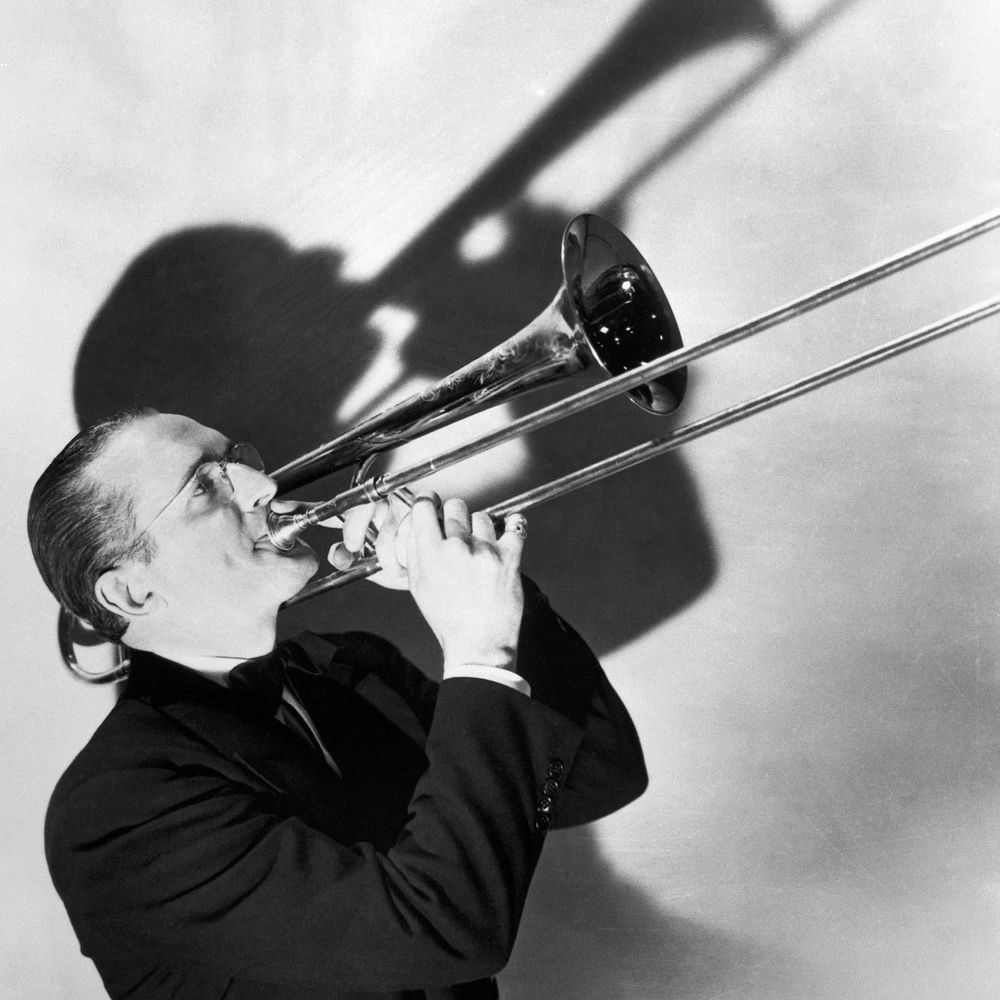
Tommy Dorsey was an American trombonist, bandleader, and composer who became one of the defining figures of the big band and swing era. Hailing from Pennsylvania, his orchestra achieved massive commercial success in the 1930s and 1940s, producing numerous chart-topping hits and selling millions of records.
Early career
Born in 1905, Thomas Francis Dorsey Jr. and his older brother Jimmy were musical prodigies from Shenandoah, Pennsylvania. Tommy initially established himself as a respected, technically brilliant trombonist for hire, playing in the orchestras of Jean Goldkette and Paul Whiteman. His first major foray as a co-leader was the Dorsey Brothers Orchestra, formed with Jimmy in 1934, but the siblings' famously volatile relationship led to a dramatic on-stage split in 1935.
Breakthrough
Tommy Dorsey formed his own orchestra immediately after the split, and his meticulous, smooth-sounding ensemble quickly found its audience. The band's major breakthrough came with the 1937 recording of Song of India, an adaptation of a Rimsky-Korsakov melody that showcased the band's precise, powerful sound. Signed to RCA Victor's Bluebird label, the Tommy Dorsey Orchestra began a remarkable run of chart success, with over 200 appearances on the Billboard charts between 1937 and 1953.
Key tracks
I'm Getting Sentimental Over You — This 1935 recording became the band's signature theme and earned Dorsey his enduring nickname, "The Sentimental Gentleman of Swing."
Song of India — This instrumental powerhouse was a major commercial hit and remains one of the most recognizable big band recordings of all time.
I'll Never Smile Again — Featuring the vocal group The Pied Pipers with a young Frank Sinatra, this 1940 ballad spent 12 consecutive weeks at number one on the Billboard chart.
Opus No. 1 — A later hit from 1944, this Sy Oliver arrangement is a quintessential swing chart still performed by bands worldwide.
There Are Such Things — Another 1942 number-one record featuring Sinatra, it cemented the singer's star power and the commercial potency of the Dorsey-Sinatra partnership.
Dorsey's orchestra was a hit-making machine, known for its polished "sweet" style on ballads and driving swing on uptempo numbers. A key to its success was Dorsey's eye for talent, most notably hiring a young Frank Sinatra in 1940 from the Harry James band. Sinatra's tenure with Dorsey, which lasted until 1942, was crucial to the singer's development and resulted in era-defining hits like In the Blue of Evening and This Love of Mine. The band also featured legendary drummer Buddy Rich and arranger Sy Oliver, whose work gave the group a harder-swinging edge.
In 1953, the Dorsey brothers reconciled professionally, forming the "Fabulous Dorseys" orchestra and hosting a popular television variety show. Tommy Dorsey's career was cut short when he died in 1956 at age 51. His influence, however, endured through his vast catalog of recordings and the many musicians he nurtured. The Tommy Dorsey Orchestra continued to perform under various leaders for decades after his passing.
Fans of the classic big band sound should also explore Glenn Miller, whose orchestra rivaled Dorsey's in popularity with a similarly polished, reed-heavy sound. Artie Shaw led another premier American swing band known for its musical sophistication and hit records. Benny Goodman, the "King of Swing," brought the genre to national prominence with his fiery clarinet and legendary 1938 Carnegie Hall concert. Lastly, Jimmy Dorsey, Tommy's brother, led a highly successful competing orchestra famous for hits like Amapola and So Rare.
The timeless swing of the Tommy Dorsey Orchestra remains a staple on classic big band and nostalgia radio stations. His music is regularly featured on dedicated swing era programs and American music history channels across the radio dial.
Listeners can discover the rich catalog of Tommy Dorsey and experience the magic of the swing era on the classic big band and nostalgia radio stations available on onairium.com. Tune in to hear why his meticulously crafted sound continues to captivate audiences generations later.