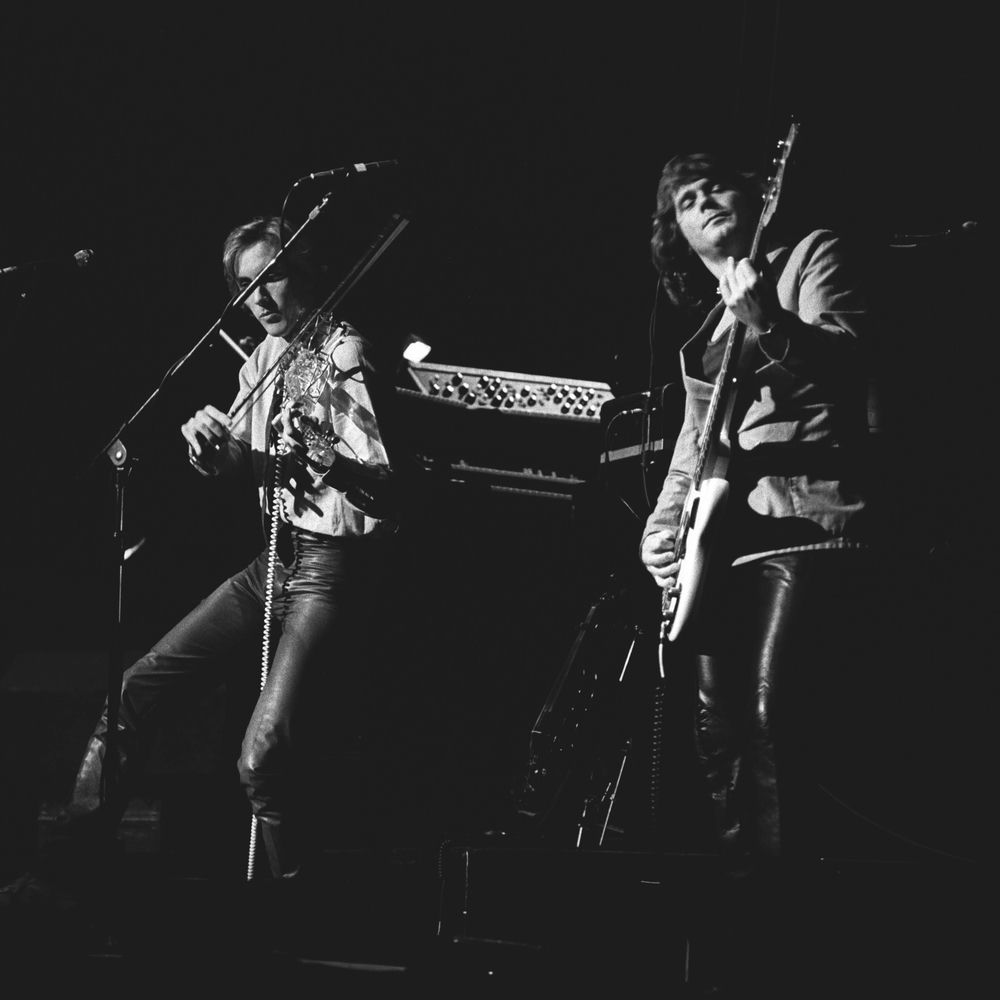
U.K.
Listen on radio stations:
U.K.: The Pioneering Progressive Rock Supergroup
U.K. was a British progressive rock supergroup formed in 1977, known for its sophisticated blend of art rock, jazz fusion, and complex musical structures. Despite a brief existence, the band left a significant mark on the progressive rock genre with two acclaimed studio albums before disbanding in 1980.
Early career
The band was assembled in 1977 by former King Crimson and Roxy Music drummer Bill Bruford and keyboardist/violinist Eddie Jobson, alongside bassist/vocalist John Wetton, also ex-King Crimson, and guitarist Allan Holdsworth from Soft Machine. This formidable lineup of established session and progressive rock musicians promised a potent fusion of their respective backgrounds in complex rock and jazz.
Breakthrough
U.K.'s self-titled debut album, U.K., was released in 1978 on Polydor Records and was immediately hailed as a masterwork of late-1970s progressive rock. The album successfully merged accessible songcraft with virtuosic instrumental passages, finding a niche audience eager for sophisticated rock music amidst the rising punk and disco movements.
Key tracks
In the Dead of Night - This multi-part suite opened the debut album, showcasing the band's dynamic range from Wetton's powerful vocals to complex instrumental interplay.
Night After Night - The title track from their 1979 live album became a concert staple, highlighting the group's tight, improvisational prowess on stage.
Rendezvous 6:02 - A track from their second album, it exemplified the more streamlined, yet still intricate, direction the band pursued.
Alaska - An instrumental piece from the first album that featured Eddie Jobson's iconic synthesizer and violin work, underlining the jazz fusion influence.
Nothing to Lose - A song from the final "Danger Money" lineup, illustrating the band's evolving sound with a more direct rock approach.
Following the debut, Allan Holdsworth and Bill Bruford departed, leading to a reshuffled trio format with Terry Bozzio on drums for the 1979 album Danger Money. This album presented a somewhat leaner sound but maintained the group's core identity. The band toured extensively, releasing the live album Night After Night in 1979 before creative differences and the shifting musical climate led to their dissolution in 1980.
For fans of U.K.'s intricate and fusion-influenced style, similar artists in the progressive rock realm include King Crimson, whose alumni formed the core of U.K. and shared a focus on complex, evolving compositions. Yes also explored lengthy, technically ambitious rock suites, particularly in the era featuring Bill Bruford. Emerson, Lake and Palmer represented another key progressive rock supergroup known for virtuosic keyboard-driven music. Lastly, Soft Machine pioneered the jazz-rock fusion that significantly influenced U.K.'s musical approach.
The music of U.K. remains a staple on classic rock and dedicated progressive rock radio stations, celebrated for its musicianship and ambitious scope. Listeners can explore the sophisticated art rock of U.K. through the curated playlists of progressive and classic rock stations featured on our platform.
Similar artists