Vivaldi
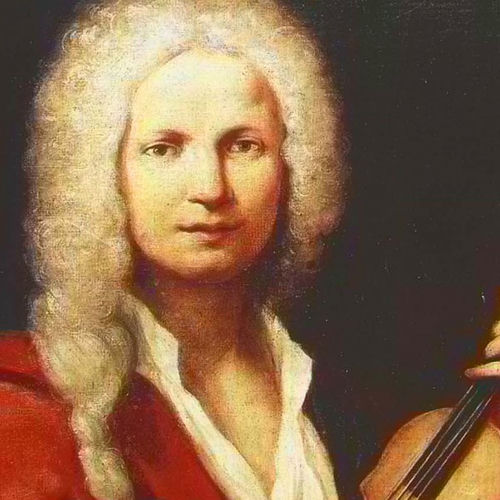
Vivaldi: The Baroque Virtuoso of Venice
Antonio Vivaldi was an Italian Baroque composer, virtuoso violinist, and Catholic priest whose prolific output defined an era of music. From his base in Venice, he composed hundreds of concertos, operas, and sacred works, with his set of violin concertos The Four Seasons achieving global, multi-platinum sales status centuries after his death.
Early career
Born in Venice in 1678, Antonio Vivaldi was ordained as a priest in 1703, though he soon ceased saying Mass due to health issues. That same year, he was appointed maestro di violino at the Pio Ospedale della Pietà, a Venetian orphanage for girls renowned for its exceptional musical training, where he composed much of his instrumental and sacred music for the students.
His first major publication, Opus 1, a set of twelve trio sonatas, appeared in 1705. His reputation grew rapidly with subsequent collections of sonatas and concertos, establishing his signature style of rhythmic vitality and melodic invention that would become synonymous with the Italian Baroque.
Breakthrough
Vivaldi's international breakthrough was solidified with the publication of his Opus 3, L'estro armonico (Harmonic Inspiration), in 1711. This collection of twelve concertos was published in Amsterdam by the prestigious firm of Estienne Roger and circulated widely across Europe, profoundly influencing composers including Johann Sebastian Bach.
While he was celebrated during his lifetime, his most famous work, the set of four violin concertos known as The Four Seasons, was published in 1725 as part of his Opus 8, Il cimento dell'armonia e dell'inventione. These programmatic concertos have since become some of the most recorded and recognizable classical pieces in history, achieving diamond-level certifications in multiple countries for modern recordings.
Key tracks
The Four Seasons (Spring) — This concerto's instantly recognizable opening theme has made it a cornerstone of classical music and a ubiquitous presence in global culture.
Gloria in D Major, RV 589 — This sacred choral work remains a staple of the Christmas and concert repertoire for choirs worldwide.
L'estro armonico, Op. 3 No. 6 — A key concerto from his breakthrough publication, showcasing his innovative use of ritornello form and dramatic contrasts.
Concerto for Two Trumpets in C Major, RV 537 — A brilliant and festive piece that highlights Vivaldi's ability to write for wind instruments with dazzling virtuosity.
Stabat Mater, RV 621 — A deeply expressive sacred work demonstrating his mastery of vocal writing and poignant harmonic language.
Vivaldi was also a prolific opera composer, managing Venice's Teatro Sant'Angelo for a period and producing over 50 operas, though many scores are now lost. His later career saw him travel to cities like Rome and Prague to stage his works, and he eventually moved to Vienna, likely seeking patronage from Emperor Charles VI.
He died in Vienna in 1741, and his music fell into obscurity for nearly two centuries before a major revival in the 20th century. The discovery of many of his manuscripts in the 1920s and 1930s led to a comprehensive reassessment, cementing his position as a master of the Baroque genre.
For listeners captivated by Vivaldi's vibrant Italian Baroque style, the music of Arcangelo Corelli provides a foundation of the concerto grosso form. Georg Philipp Telemann shared Vivaldi's prolific output and cosmopolitan style. Tomaso Albinoni, another Venetian composer, worked in a similarly expressive and melodic Baroque vein. The intricate counterpoint of Johann Sebastian Bach, who transcribed several Vivaldi concertos, shows the Italian's direct influence.
Vivaldi's energetic concertos are a mainstay on classical music radio