

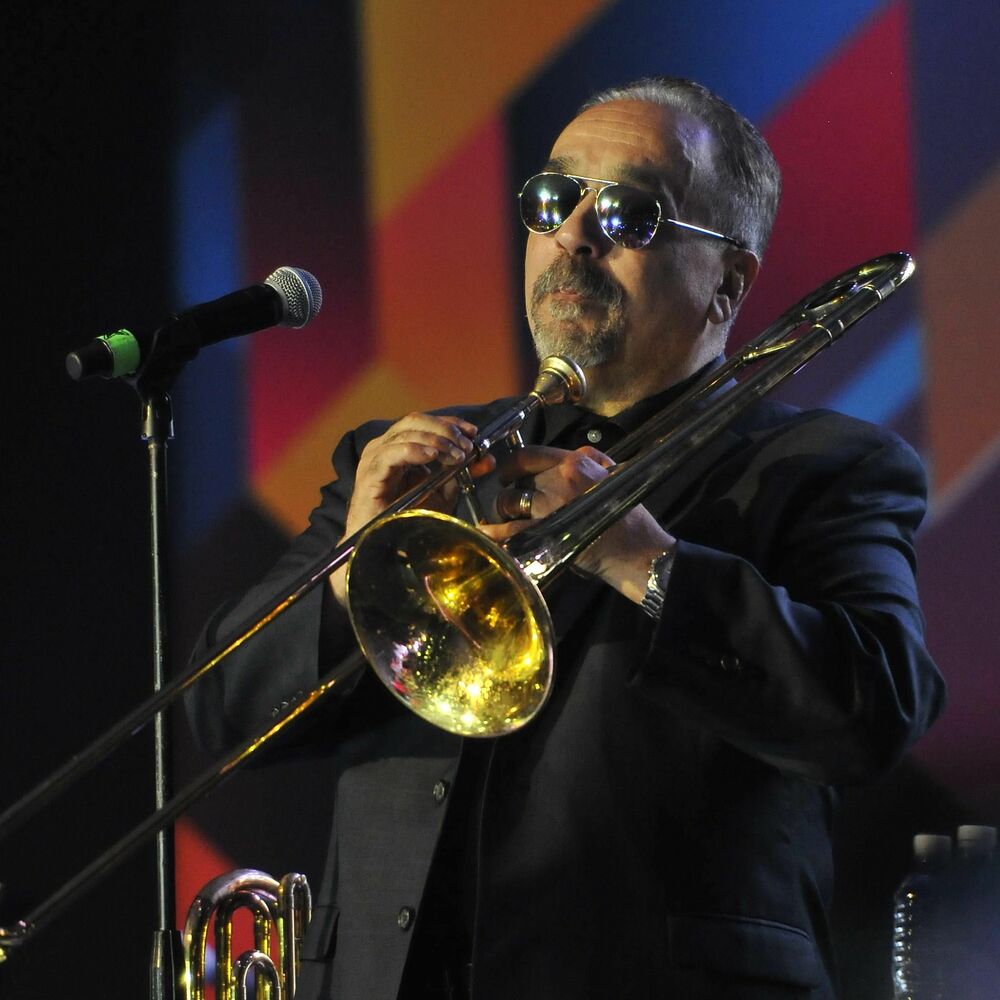
WILLIE COLON
Listen WILLIE COLON on radio stations:






WILLIE COLÓN: The Revolutionary Force of Salsa
Willie Colón is an American trombonist, singer, composer, and producer from the Bronx, New York, who became a foundational architect of the salsa genre. His prolific partnership with vocalist Héctor Lavoe in the late 1960s and 1970s produced a string of classic albums that defined the Nuyorican sound and sold millions of records globally.
Early career
Born in 1950 in the South Bronx to Puerto Rican grandparents, Colón picked up the trombone as a teenager. He signed with the fledgling Fania Records label at just 17 years old, a move orchestrated by the label's co-founder Johnny Pacheco.
His 1967 debut album, El Malo, introduced his signature sound: a raw, streetwise blend of Cuban rhythms with jazz and rock influences, fronted by the young, charismatic singer Héctor Lavoe.
Breakthrough
The Colón-Lavoe partnership achieved massive commercial and critical success throughout the 1970s. Their 1971 album La Gran Fuga (The Big Break) was a major hit, certified Gold and solidifying Fania's dominance.
This period established Colón not just as a musician but as a visionary producer, shaping the sound of salsa with complex arrangements and socially conscious lyrics that resonated deeply with Latino communities in New York and beyond.
Key tracks
El Malo — The title track from his debut established his band's bold, rebellious image and innovative trombone-heavy sound.
La Murga — This Panamanian-inspired anthem from the album Cosa Nuestra became a timeless salsa classic, famous for its driving percussion and horn fanfares.
El Día De Mi Suerte — A poignant Lavoe-sung ballad co-written by Colón that became one of salsa's most enduring and covered songs.
Aguanilé — A powerful track showcasing Colón's evolution, blending Afro-Caribbean religious themes with sophisticated salsa arrangement.
Idilio — A later hit from his successful collaboration with Celia Cruz, proving his ability to craft hits with the genre's biggest stars.
After his historic run with Lavoe, Colón continued to innovate and collaborate with major artists. He produced and performed with salsa queen Celia Cruz on the platinum-selling album Sólo Ellos in 1981.
His work also expanded into solo singing, acting, and political activism. Colón's later albums, like Fantasma in 1993, continued to explore fusion, incorporating elements of jazz, Brazilian music, and rock while maintaining his salsa roots.
Artists who share Colón's innovative spirit and foundational role in salsa include Héctor Lavoe His iconic voice was the perfect match for Colón's groundbreaking early arrangements. Rubén Blades Colón's collaboration with Blades on the album Siembra created a landmark of socially conscious salsa. Fania All-Stars As a key member, Colón helped drive this supergroup's legendary live performances and albums. Ray Barretto Another Fania legend whose pioneering fusion of Latin rhythms with jazz parallels Colón's own journey.
RADIO ROTATION: Willie Colón's extensive catalog remains a staple on Latin music radio formats, from classic salsa stations to contemporary tropical channels. His timeless hits are featured in daily rotations, special artist spotlight hours, and weekend throwback programs that celebrate the golden age of the genre.
The music of Willie Colón, a titan of salsa, continues to resonate on airwaves worldwide. You can discover the revolutionary sound of Willie Colón by tuning into the dedicated Latin music and classic salsa radio stations available right here on onairium.com.
