Xavier Cugat
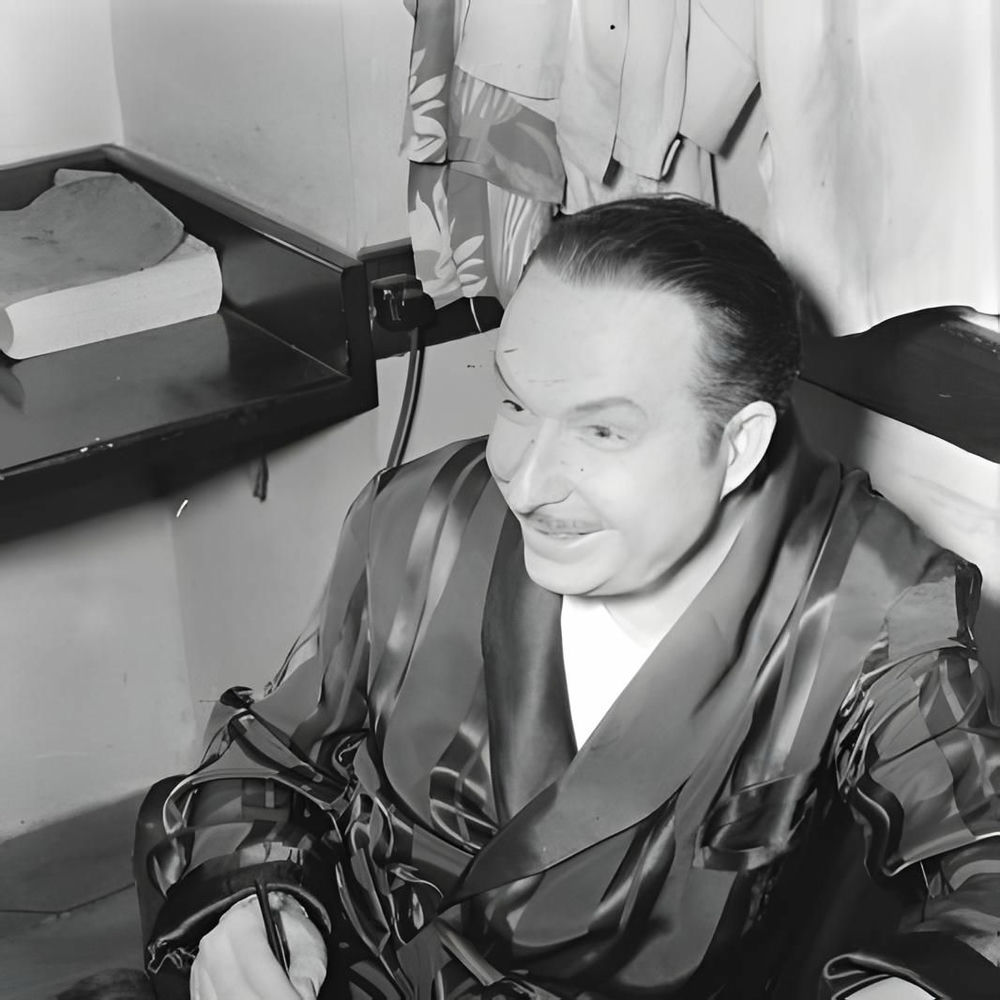
Xavier Cugat: The King of Rumba and Latin Pop
Xavier Cugat was a Spanish-born Cuban bandleader who became a defining force in popularizing Latin music for American audiences. His decades-long career, marked by chart-topping records and Hollywood fame, cemented his legacy as a pioneer who brought rumba, cha-cha-cha, and mambo into the mainstream.
Early career
Born in 1900 in Girona, Spain, Cugat moved to Cuba as a child where he was immersed in its musical culture. A violin prodigy, he performed with the New York Symphony Orchestra before shifting his focus to dance music, forming his first band, the Gigolos, in the late 1920s.
His early engagement at the prestigious Coconut Grove in Los Angeles and a residency on Rudy Vallée's national radio show provided a crucial platform. These appearances built a foundation for introducing his sophisticated, danceable sound to a wide public.
Breakthrough
Cugat's major breakthrough came in the 1930s and 1940s as the "rumba" craze swept the United States. His orchestra became a fixture at the Waldorf-Astoria in New York and starred in numerous Metro-Goldwyn-Mayer musical films, making his face and music nationally recognizable.
He signed with RCA Victor, releasing a prolific stream of successful 78 rpm records. Albums like Cugat's Rhumba and Mambo sold consistently, with singles like "Perfidia" and "Brazil (Aquarela do Brasil)" becoming jukebox staples and frequent entrants on the Billboard charts.
Key tracks
Perfidia — This 1941 instrumental, later with lyrics, became his signature tune and a massive hit that defined the romantic Latin sound for a generation.
Brazil (Aquarela do Brasil) — Cugat's 1943 recording was instrumental in popularizing the samba outside of Brazil and remains a classic of the genre.
Babalu — While associated with Desi Arnaz, Cugat's version was a major hit and a staple of his live performances, highlighting the Afro-Cuban rhythms he championed.
The Breeze and I — Adapted from a classical theme, this 1940 hit showcased his skill at adapting diverse material into a successful Latin dance format.
Miami Beach Rhumba — This 1946 track exemplifies his talent for crafting catchy, geographically-themed tunes that captured the exotic allure of Latin music.
Throughout the 1950s and 1960s, Cugat adapted to new trends, successfully incorporating the cha-cha-cha and mambo into his repertoire. He was a master discoverer of talent, with his band serving as a launchpad for vocalists like Miguelito Valdés and, most famously, Abbe Lane and Charo.
His influence extended beyond music into visual pop culture; his caricatures, often featuring him with a tiny Chihuahua, were a trademark. Cugat continued performing and recording into the 1970s, leaving behind a vast catalog for RCA Victor and other labels that chronicles the evolution of Latin pop.
For fans of Xavier Cugat's stylish brand of Latin dance music, the sounds of Perez Prado offer a more explosive, brass-driven mambo experience. Desi Arnaz brought a similar big-band Latin energy to television and music. The elegant arrangements of Edmundo Ros defined the British Latin scene. Meanwhile, Tito Puente represents the authentic, complex Afro-Cuban jazz and salsa that followed Cugat's pioneering commercial wave.
RADIO ROTATION: The timeless recordings of Xavier Cugat remain in steady rotation on dedicated Latin jazz and classic pop radio stations. His infectious rhythms are a staple on specialty shows focusing on mid-century dance music and exotica, as well as on online streams celebrating the golden age of the big band.
You can explore the vibrant catalog of Xavier C