Yasuaki Shimizu
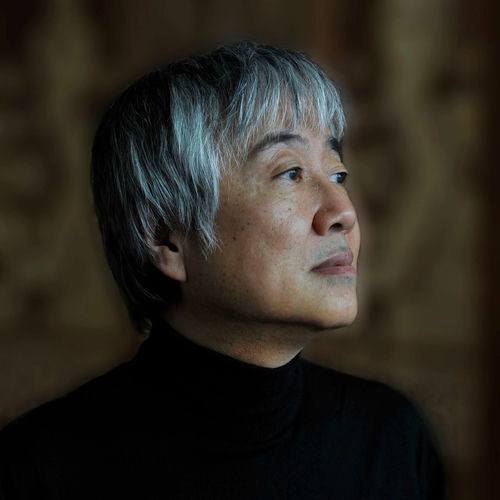
Yasuaki Shimizu: The Avant-Garde Architect of Japanese Jazz and Pop
Yasuaki Shimizu is a pioneering Japanese saxophonist, composer, and producer whose genre-defying career spans experimental jazz, minimalist pop, and global fusion. Emerging from Tokyo's vibrant 1970s scene, he is best known internationally for his groundbreaking 1982 album Kakashi and his influential work reinterpreting Johann Sebastian Bach's cello suites on the saxophone.
Early career
Born in 1954 in Fuji, Shizuoka, Yasuaki Shimizu began his musical journey studying the saxophone before moving to Tokyo. His professional career launched in the late 1970s with the formation of his band, the Saxophonettes, a versatile unit that became his primary vehicle for exploring the boundaries of his instrument. Early albums like Slowboat (1978) and Seventh Door (1979) on the ALM label established his reputation for sophisticated, cinematic jazz fusion.
Breakthrough
Shimizu's creative breakthrough arrived in the early 1980s with a pair of seminal releases. The 1982 album Kakashi, released on the Better Days label, became a cult classic for its seamless and playful fusion of pop, jazz, and ambient music. That same year, his solo project Mariah released the album Utakata no Hibi, a landmark of Japanese avant-pop that later gained massive critical rediscovery in the 21st century.
Key tracks
Suite I (BWV 1007) in G Major — This track from his 1987 album Bach Fantasy showcases his revolutionary technique of adapting complex Baroque cello music for solo saxophone.
Umi No Ue No — A defining track from Kakashi, it exemplifies his talent for crafting breezy, melodic pop instrumentals with intricate arrangements.
Shisen — From the Utakata no Hibi album, this song highlights his collaborative genius with vocalist Taeko Onuki, creating a sublime slice of art pop.
Cucumber — Another standout from Kakashi, this track became a sought-after sample, cementing the album's legacy in hip-hop and electronic circles decades later.
Throughout the 1980s and 1990s, Yasuaki Shimizu expanded his scope into film scoring, advertising work, and ambitious production projects. He founded his own label, Chamomile, and continued to release eclectic solo works, including 1998's Dementos. His 1984 album Music For Commercials remains a highly influential collection of avant-garde jingles, demonstrating his unique commercial and artistic synthesis.
Shimizu's later career is marked by global collaborations and prestigious commissions. He has worked with artists like Ryuichi Sakamoto and recorded with the London Studio Orchestra. A major milestone was his 2017 performance of the complete Bach cello suites at the Barbican Centre in London, a testament to the enduring impact of his earlier experiments. The international reissue of Kakashi and the Mariah material by labels like Palto Flats and We Release Jets has introduced Yasuaki Shimizu's innovative music to a new generation of listeners worldwide.
Fans of Yasuaki Shimizu's eclectic approach to Japanese jazz and pop should explore Ryuichi Sakamoto for a similar fusion of classical, electronic, and pop sensibilities. The sophisticated city pop of Taeko Onuki is essential, given their direct collaboration. For more instrumental exploration, listen to Haruomi Hosono, another foundational figure in Japan's experimental pop landscape.
Yasuaki Shimizu's diverse catalog enjoys regular rotation on a variety of specialized radio formats. His music can be heard on online radio streams dedicated to jazz fusion, classic alternative rock radio stations exploring global sounds, and independent music radio stations that champion avant-garde and