Alexander von Schlippenbach
 Germany
Listen Alexander von Schlippenbach on radio stations:
Alexander von Schlippenbach: The Architect of European Free Jazz
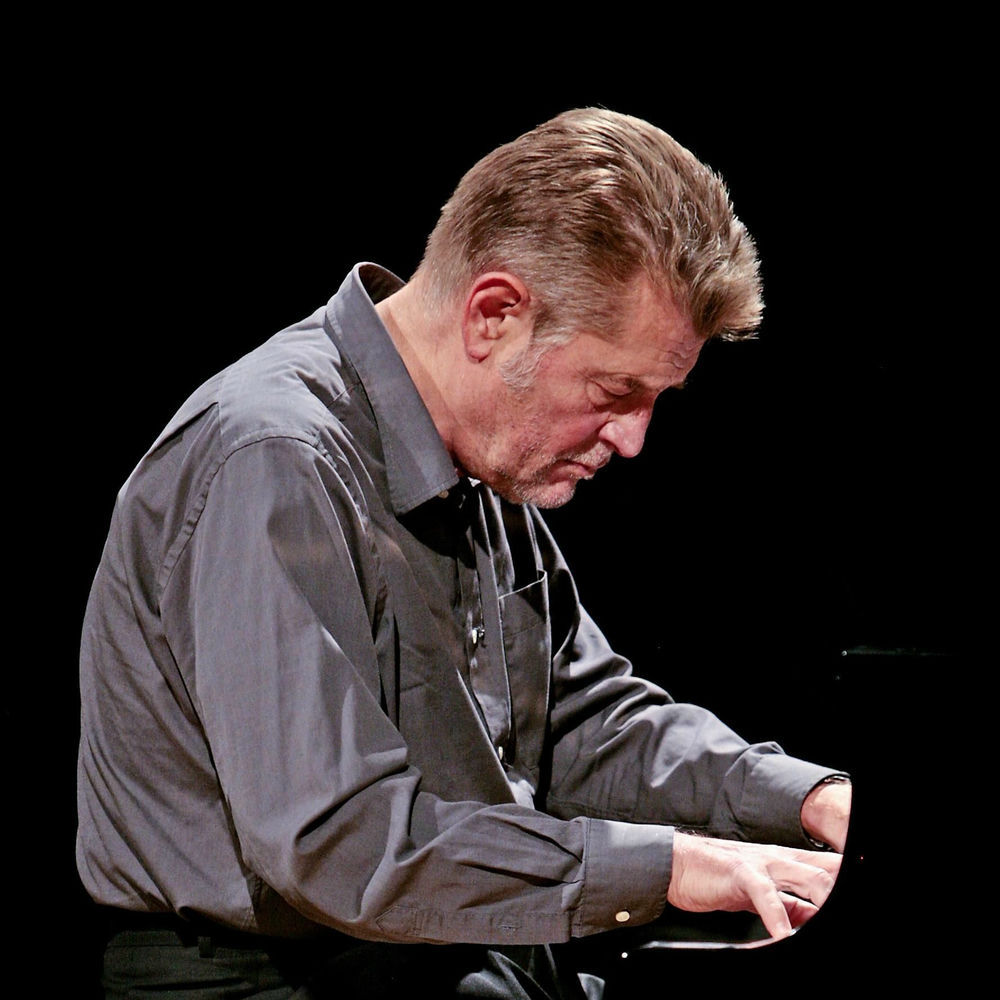
Alexander von Schlippenbach is a German pianist, composer, and bandleader central to the development of European free improvisation. From his base in Berlin, his primary achievement is the decades-long leadership of the Globe Unity Orchestra, a seminal large ensemble that has shaped avant-garde jazz since the late 1960s.
Early career
Born in Berlin in 1938, Alexander von Schlippenbach studied music in Cologne. His early professional work in the 1960s saw him performing with American jazz luminaries like Albert Mangelsdorff and Dexter Gordon, grounding him in tradition before a decisive turn. His first recordings as a leader, like 1966's "Globe Unity" on the SABA label, already pointed toward a radical, collective European sound.
Breakthrough
The true breakthrough came with the 1966 composition "Globe Unity," commissioned by the Berliner Jazztage festival. This work led directly to the formation of the Globe Unity Orchestra in 1967, a large ensemble featuring leading European improvisers like saxophonist Evan Parker and trumpeter Manfred Schoof. While not a charting entity, the orchestra's early albums on the FMP and Japo labels, such as 1973's "Live in Wuppertal," became foundational texts in free jazz.
Key tracks
Globe Unity — This 1966 composition is the catalyst that formed his historic orchestra, defining a European approach to collective improvisation.
The Forge — A pivotal track from the 1977 album "The Living Music," showcasing Schlippenbach's intense, percussive piano style within a small group setting.
Floating Ice — Featured on the 1975 album "The Hidden Peak," it exemplifies his ability to structure free playing with composed thematic material.
Monk's Mood — His deep engagement with Thelonious Monk's repertoire is crystallized in his 1997 album "Monk's Casino," a complete performance of Monk's works.
Korean Winds — A later composition for the Globe Unity Orchestra, demonstrating the enduring vitality and global scope of his large-ensemble writing.
Beyond the orchestra, Schlippenbach's long-standing trio with Evan Parker and drummer Paul Lovens, formed in 1970, is a cornerstone of European free music. His recorded output is vast, spanning labels like FMP, Intakt, and ECM, with later works like 2006's "Alarm" and 2011's "12 Tone Tales" showing undiminished energy. He has also collaborated extensively with artists like drummer Han Bennink and saxophonist Steve Lacy.
For listeners exploring this terrain, other pivotal European avant-garde artists include Peter Brötzmann whose powerful saxophone work shares a similar explosive energy. Evan Parker is a frequent collaborator known for his unparalleled circular breathing techniques. The innovative compositions of Willem Breuker also blend jazz with theatrical and classical elements. Furthermore, Irène Schweizer stands as a key pianist in European free jazz with a similarly percussive and inventive approach.
RADIO ROTATION: The exploratory sounds of Alexander von Schlippenbach find a dedicated audience on specialist radio. His recordings are regularly featured on free jazz radio stations, avant-garde online radio streams, and public radio programs dedicated to experimental music, reaching listeners who seek music beyond conventional boundaries.
The pioneering free jazz and compositions of Alexander von Schlippenbach continue to be broadcast worldwide. You can discover his vast catalog and listen to his groundbreaking work with the Globe Unity Orchestra through the avant-garde and jazz radio stations available on onairium.com.