
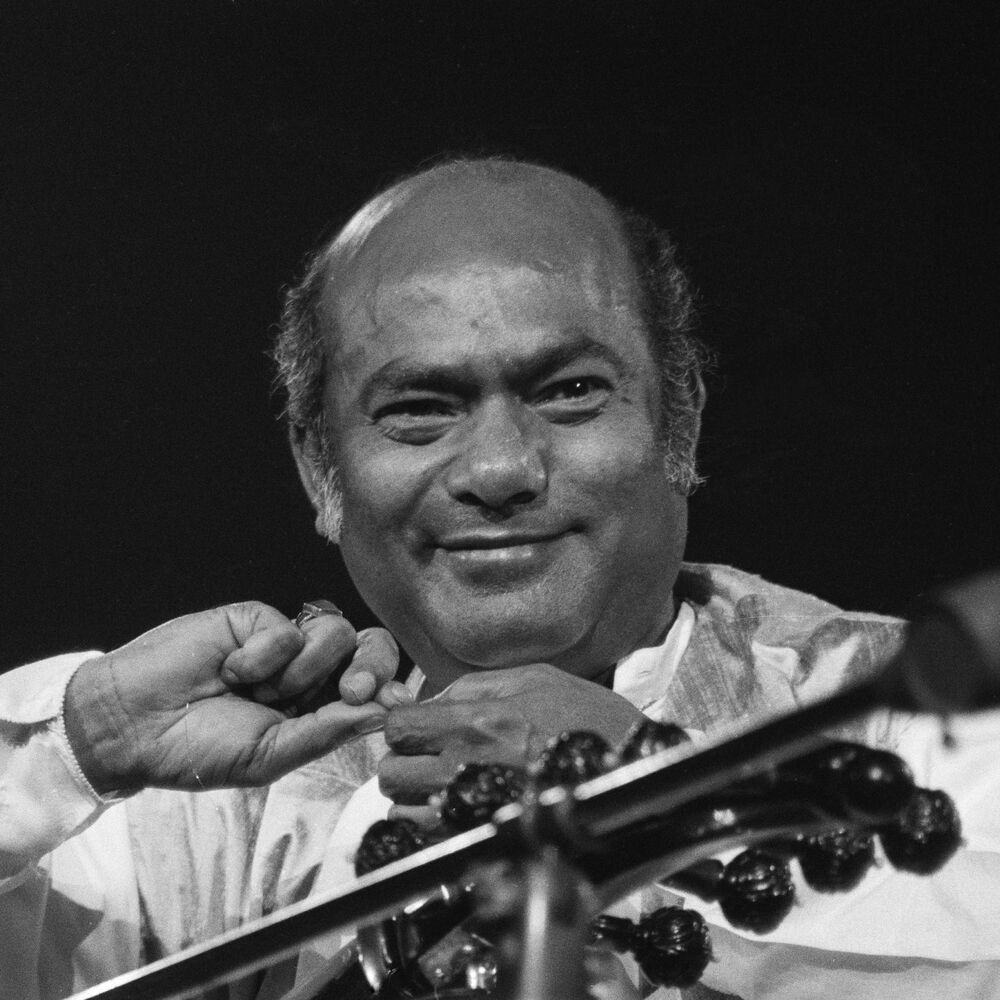

Ali Akbar Khan: The Maestro of Indian Classical Music
Ali Akbar Khan was a legendary Indian musician who mastered the sarod, a complex string instrument. Hailing from Bengal, his primary achievement was introducing North Indian classical music to Western audiences through landmark concerts and recordings.
Early career
Born in 1922 in present-day Bangladesh, Ali Akbar Khan was immersed in music from childhood. He began rigorous training under his father, the revered maestro Allauddin Khan, a discipline that shaped his entire artistic life.
His first major performance was at a music conference in Allahabad in 1935, astonishing elders with his skill. For years, he served as a court musician for the Maharaja of Jodhpur before the kingdom's dissolution in 1949.
Breakthrough
Ali Akbar Khan's international breakthrough occurred in 1955 with a groundbreaking concert in New York. This was followed by his first American album, Music of India: Morning and Evening Ragas, released on the Angel Records label in 1956.
This album, featuring ragas Sindhu Bhairavi and Pilu Baroowa, became a definitive introduction to Hindustani classical music in the West. While not achieving pop chart positions, its critical acclaim and sales established a dedicated listener base for the genre.
Key tracks
Raga Sindhu Bhairavi — This morning raga from his 1956 debut album became one of his most recognized pieces in the West.
Raga Manj Khamaj — A frequently performed piece showcasing his emotive depth and technical brilliance on the sarod.
Raga Chandranandan — A haunting night raga created by Khan himself, demonstrating his innovative spirit within the classical tradition.
Misra Kirwani — A popular composition often featured in his duets with sitarist Ravi Shankar, highlighting their legendary musical dialogue.
Later career and legacy
In 1967, Ali Akbar Khan founded the Ali Akbar College of Music in Calcutta, later establishing a permanent campus in San Rafael, California in 1968. This institution became a global hub for teaching Indian classical music.
He recorded extensively for labels like Connoisseur Society, Ammp, and his own AMMP Records. His 1970 album Journey on Apple Records, produced by George Harrison, marked a significant cross-cultural moment.
Throughout his life, Khan collaborated with Western artists like violinist Yehudi Menuhin and composed for films, including Chetan Anand's Aandhiyan. His prolific output includes dozens of albums preserving a vast repertoire of ragas.
Artists exploring the depth of Hindustani instrumental music include Ravi Shankar, who similarly brought the sitar to global prominence. Hariprasad Chaurasia commands the bansuri flute with comparable mastery and emotional range. Nikhil Banerjee represents the next generation of sitar virtuosos with a distinct lyrical style. Shivkumar Sharma revolutionized the santoor, taking it from a folk instrument to a classical solo vehicle.
The music of Ali Akbar Khan holds a permanent place on dedicated world music and classical radio stations. His recordings are staples on specialty FM programs and online streams focused on traditional and spiritual music from around the globe.
Listeners can explore the profound artistry of Ali Akbar Khan through the radio stations featured on onairium.com. Tune in to discover his timeless ragas and experience the legacy of a true maestro of Indian classical music.
