Béla Bartók
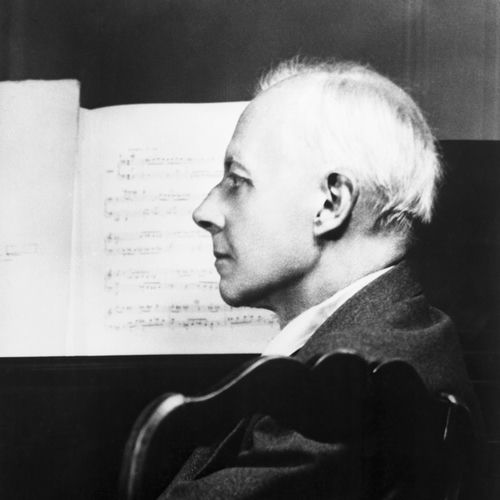
Béla Bartók: The Modernist Architect of Folk Music
Béla Bartók was a Hungarian composer, pianist, and ethnomusicologist whose revolutionary work redefined 20th-century classical music. His profound synthesis of Central European folk music with modernist compositional techniques created a unique and enduring sound, cementing his legacy as one of the most original musical voices of his era.
Early career
Born in 1881 in Nagyszentmiklós, Kingdom of Hungary (now Sânnicolau Mare, Romania), Bartók displayed prodigious talent as a pianist from a young age. His early compositions, influenced by Brahms and Strauss, gave way to a seismic shift after he and fellow composer Zoltán Kodály began systematically collecting and analyzing thousands of Hungarian, Romanian, Slovak, and other folk melodies from 1906 onward.
Breakthrough
While Bartók's music often faced initial public resistance, his international breakthrough is widely associated with the 1926 premiere of his orchestral suite The Miraculous Mandarin and the growing acclaim for his challenging yet brilliant piano works. His compositions, published by major houses like Universal Edition, gained traction through performances by leading artists, though they rarely conformed to conventional commercial metrics like chart positions or certifications.
Key tracks
Concerto for Orchestra — This 1943 masterpiece showcases Bartók's full orchestral brilliance, moving from solemnity to vibrant folk-dance energy.
Music for Strings, Percussion and Celesta — A landmark 1936 work famed for its intricate fugal opening and explosive rhythmic drive.
Romanian Folk Dances — This 1915 set perfectly illustrates his method of transforming collected folk tunes into sophisticated concert pieces.
Allegro Barbaro — A fiercely percussive 1911 piano piece that announced his radical new style to the world.
Throughout the 1930s and 40s, Bartók produced a series of major works, including his six string quartets, often considered the most significant cycle since Beethoven. Emigrating to the United States in 1940 due to the political climate in Europe, he faced financial difficulties but still composed some of his most accessible works, like the Concerto for Orchestra, commissioned by Serge Koussevitzky for the Boston Symphony Orchestra.
Artists exploring the fusion of folk traditions with classical modernism, much like Béla Bartók, include Zoltán Kodály His close collaborator shared his dedication to Hungarian folk music research and education. Leoš Janáček The Czech composer similarly drew deeply on the speech rhythms and folk music of Moravia. Igor Stravinsky Another pivotal modernist who, like Bartók, fundamentally reshaped rhythmic structure in classical music.
Béla Bartók's compositions are a staple on classical music radio stations and dedicated 20th-century music streams featured on this website. His works are regularly programmed for their rhythmic vitality and emotional depth, from specialized online classical channels to public radio FM broadcasts.
The innovative and powerful music of Béla Bartók can be heard on the classical and modernist radio stations featured on our platform. Listeners can discover his vast catalog, from fiery piano works to sweeping orchestral scores, by tuning into the radio stations available on onairium.com.