
Carl Nielsen: The Danish Symphonic Master
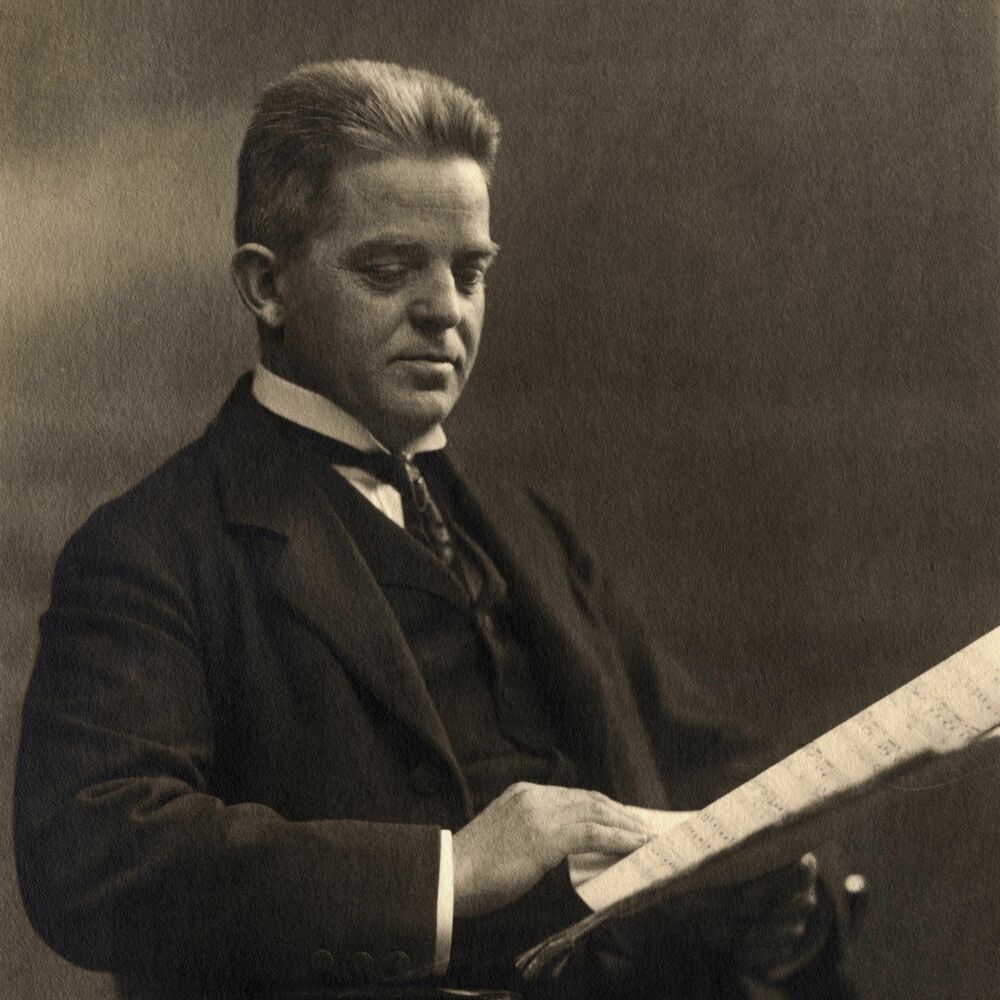
Carl Nielsen was a Danish composer whose profound influence on classical music extends far beyond his Scandinavian origins. His six symphonies and concertos are celebrated worldwide, cementing his status as a national icon and a pillar of 20th-century orchestral repertoire.
Early career
Born in 1865 on the island of Funen, Nielsen's musical journey began as a military musician before he studied at the Royal Danish Academy of Music in Copenhagen. His official debut came in 1888 with his Opus 1, the Little Suite for Strings, which hinted at the distinctive voice he would develop.
Breakthrough
While his earlier works gained attention in Denmark, his international breakthrough is widely attributed to his Symphony No. 4, "The Inextinguishable", composed between 1914 and 1916. This powerful work, written during World War I, showcased his mature style of progressive tonality and dramatic conflict, capturing the attention of conductors and audiences across Europe.
Key tracks
Symphony No. 4, "The Inextinguishable" — This symphony is a monumental work of conflict and resolution, famous for its climactic duel between two timpanists.
Symphony No. 5, Op. 50 — A radical and modernist masterpiece, it features a snare drum instructed to improvise "as if at all costs to obstruct the music."
Clarinet Concerto, Op. 57 — Written for a specific clarinetist, this late concerto is a demanding and deeply expressive cornerstone of the wind instrument's repertoire.
Maskarade Overture — The overture to his beloved comic opera remains his most instantly recognizable and frequently performed piece.
Wind Quintet, Op. 43 — Composed for his wind-playing friends, this quintet is a staple of chamber music literature, highlighting his gift for melodic invention.
Nielsen's later career saw him ascend to the directorship of the Royal Danish Academy of Music while composing major works like the Symphony No. 5 and the Flute and Clarinet Concertos. His music, often characterized by bold harmonic shifts and a sense of struggle toward affirmation, evolved independently of mainstream European trends, securing his unique legacy.
Listeners exploring the sound of Carl Nielsen will also appreciate the Nordic grandeur of Jean Sibelius. His symphonies share a similar organic growth and connection to landscape. The dramatic orchestral narratives of Gustav Mahler provide another compelling parallel in scope and emotion. For a Danish contemporary with a different, more neoclassical voice, discover Vagn Holmboe, who continued the symphonic tradition in Nielsen's wake.
The powerful symphonies and vibrant concertos of Carl Nielsen are a staple on classical radio stations worldwide. From dedicated classical FM broadcasters to online streams focusing on orchestral masterworks, his music is regularly featured in programming that highlights foundational 20th-century composers.
You can experience the dynamic range of Carl Nielsen's compositions on the classical radio stations featured on our website. Tune in via onairium.com to discover his iconic symphonies and concertos as part of our curated classical music rotation.