
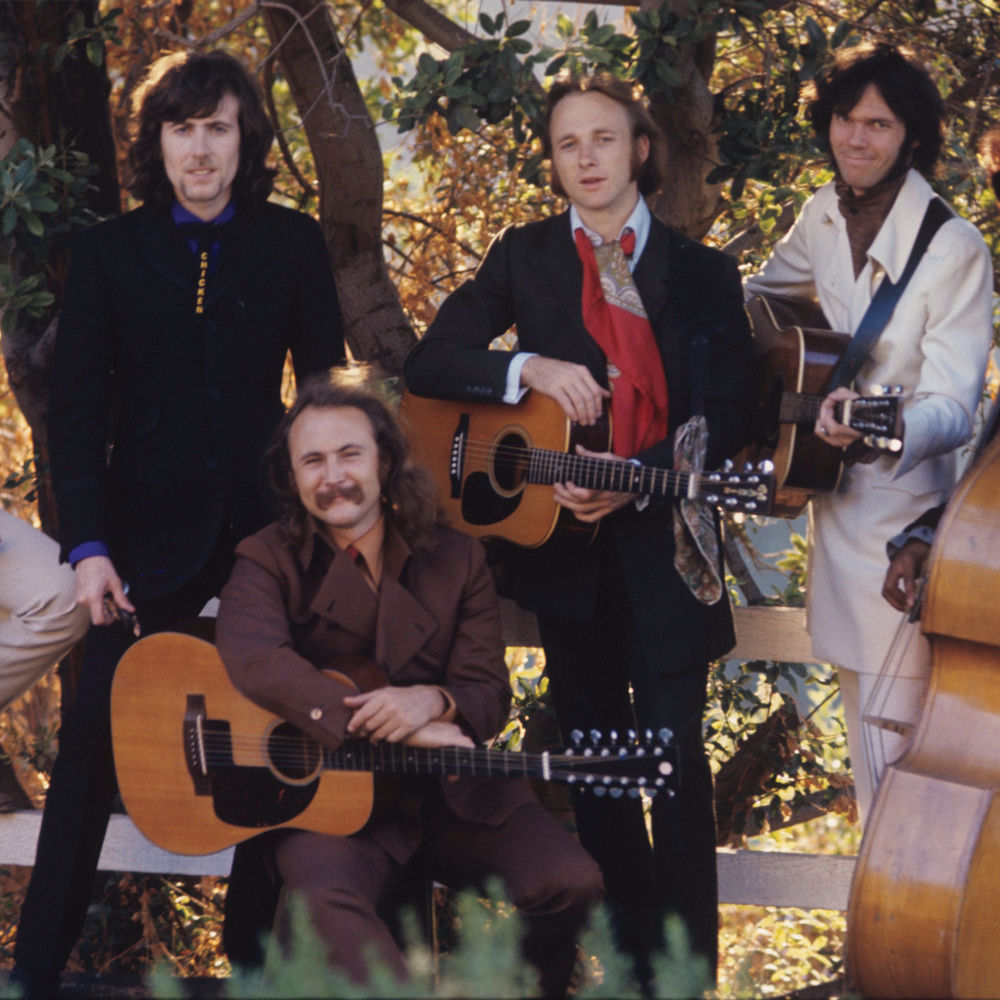
Crosby, Stills, Nash & Young
Crosby, Stills, Nash & Young: The Pioneers of Folk Rock Harmony
Crosby, Stills, Nash & Young are an American and British-Canadian supergroup who defined the sound of folk rock in the late 1960s and 1970s. Their intricate vocal harmonies and politically charged songwriting captured the spirit of their generation, leading to multi-platinum album sales and induction into the Rock and Roll Hall of Fame.
Early career
The group formed in 1968 from the ashes of three successful bands: David Crosby of The Byrds, Stephen Stills of Buffalo Springfield, and Graham Nash of The Hollies. Their self-titled debut album, Crosby, Stills & Nash (1969), was an immediate success, featuring the hit Suite: Judy Blue Eyes and earning a Grammy Award for Best New Artist.
Breakthrough
The addition of Neil Young, also a former member of Buffalo Springfield, in 1969 transformed the trio into a powerhouse quartet. Their first project together, the 1970 album Déjà Vu, became a cultural landmark, topping the Billboard 200 chart and eventually being certified 8x Platinum in the United States. The album's success was fueled by the social unrest of the era and singles like the protest anthem Ohio.
Key tracks
Suite: Judy Blue Eyes - This intricate, multi-part suite from their debut album showcased their flawless three-part harmonies and established their signature sound.
Ohio - Written by Neil Young in response to the Kent State shootings, this raw, powerful track became one of rock's most definitive protest songs.
Our House - A gentle, piano-driven portrait of domestic life by Graham Nash, highlighting the group's ability to craft timeless, melodic pop.
Teach Your Children - Featuring Jerry Garcia on pedal steel, this Graham Nash song became a radio staple and an anthem for intergenerational understanding.
Helpless - A quintessential Neil Young contribution, this haunting ballad from Déjà Vu added a rustic, Canadian folk atmosphere to the album.
The group's career has been defined by intermittent reunions and legendary tensions, resulting in a sporadic but impactful discography. Following Déjà Vu, they released the live album 4 Way Street (1971) and later reconvened for studio projects like American Dream (1988). Their influence remains profound, with their harmonies being a direct precursor to the sound of 1970s California rock. Artists operating in a similar space of vocal harmony and introspective songwriting include The Byrds, who pioneered the folk-rock fusion. The smooth, country-tinged rock of Eagles also carries the harmonic torch. For the poetic and personal lyricism, listeners often explore the work of Joni Mitchell, a key figure in the same scene. The enduring legacy of Crosby, Stills, Nash & Young is their unparalleled blend of distinct voices into a singular, iconic sound that continues to resonate on rock radio formats dedicated to classic and album-oriented rock. Their music remains a fixture on stations that celebrate the rich tapestry of 1970s rock, ensuring new generations discover their timeless catalog.
