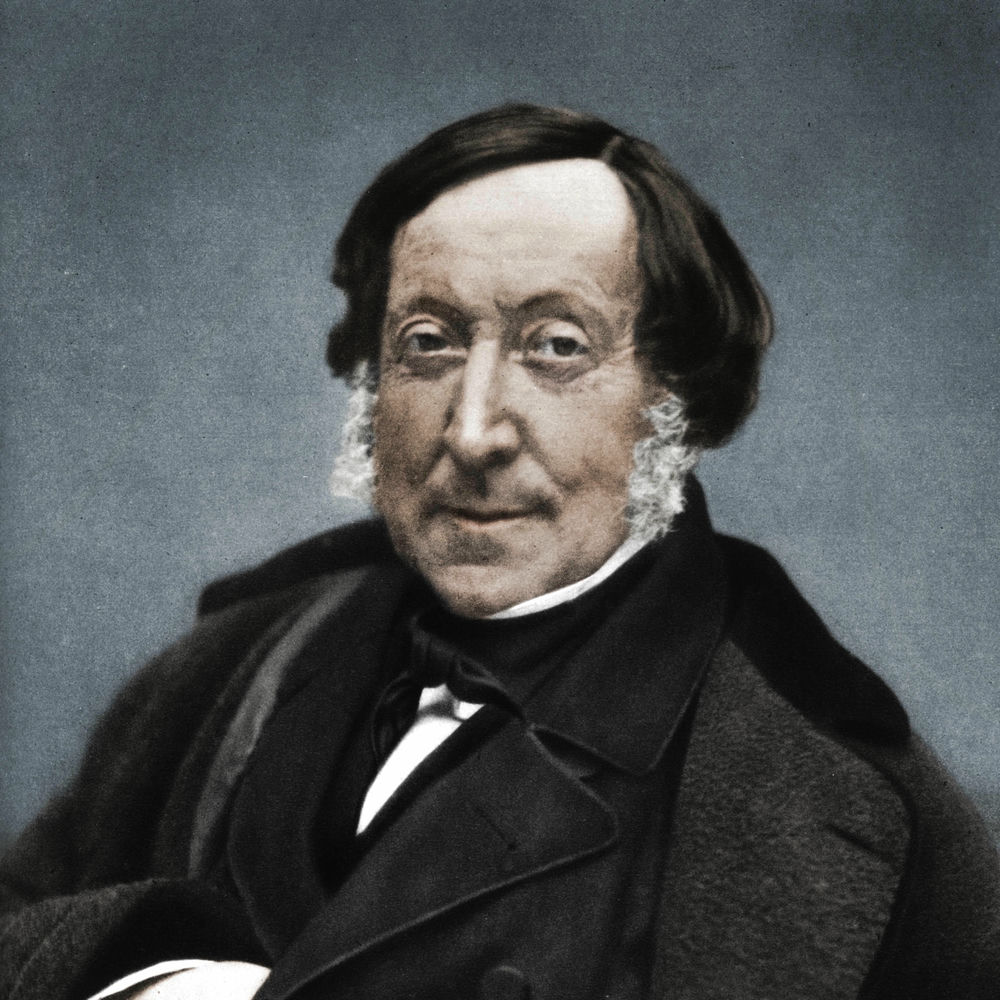
Gioachino Rossini
 Italy
Italy
Listen Gioachino Rossini on radio stations:

Gioachino Rossini: The Master of Italian Opera
Gioachino Rossini was a 19th-century Italian composer who dominated the world of opera. His prolific output and melodic genius led to unprecedented success, with works like The Barber of Seville achieving timeless popularity and continuous global performance for over two centuries.
Early career
Born in Pesaro, Italy in 1792, Rossini displayed musical talent early and studied at the prestigious Liceo Musicale in Bologna. His first opera, La cambiale di matrimonio, debuted in Venice in 1810, quickly establishing a pattern of rapid composition for Italy's major opera houses.
Breakthrough
Rossini's true breakthrough arrived with the 1813 premiere of Tancredi in Venice, followed immediately by the comic smash L'italiana in Algeri. These twin successes, published by the leading Casa Ricordi, cemented his fame across Italy and set the stage for his international domination of the operatic genre.
Key tracks
Il barbiere di Siviglia (The Barber of Seville) — This 1816 comic opera is arguably his masterpiece, defining the bel canto style with its brilliant arias and enduring as one of the most performed operas worldwide.
Guillaume Tell (William Tell) — His 1829 French grand opera finale is famed for its overture and showcased a dramatic, innovative shift in his compositional style.
La Cenerentola (Cinderella) — This 1817 opera showcases his skill in blending heartfelt melody with comic sensibility, absent the supernatural elements of the fairy tale.
Stabat Mater — A significant later work, this 1841 composition proved his major success in sacred music outside the operatic theater.
Following the immense success of Il barbiere di Siviglia, Rossini entered a period of intense productivity, creating a series of works for Naples and Milan. He revolutionized opera seria with dramatic works like Otello and Mosè in Egitto, while continuing to excel in opera buffa. In 1829, after the premiere of the ambitious Guillaume Tell, the 37-year-old composer retired from operatic composition, a move that stunned the music world. He lived for nearly four more decades, composing smaller pieces but leaving the opera stage entirely.
Artists working in the Italian operatic tradition who share Rossini's focus on bel canto melody and dramatic structure include Gaetano Donizetti, who continued and expanded upon the bel canto style Rossini perfected. Another key figure is Vincenzo Bellini, known for his long, expressive vocal lines that owe a debt to Rossini's innovations. Later in the century, Giuseppe Verdi built upon the dramatic foundations Rossini established, particularly in his early works.
RADIO ROTATION: The music of Gioachino Rossini remains a staple on classical music radio stations and dedicated opera streams. His overtures and famous arias are frequently featured in daily rotations, on weekend opera broadcasts, and during special thematic programming focusing on the bel canto period.
Listeners can explore the vibrant world of Gioachino Rossini through the classical and opera stations available on onairium.com, where his iconic overtures and celebrated arias are regularly featured in programming dedicated to the masters of the genre.