
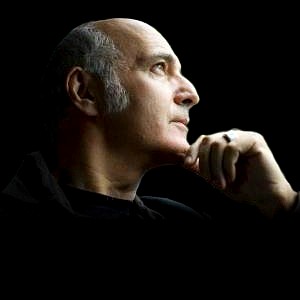

Harold Budd
Listen Harold Budd on radio stations:
Harold Budd: The Ambient Pianist and Composer
Harold Budd was an American composer and pianist renowned for his minimalist and atmospheric contributions to ambient music. Hailing from Los Angeles, California, his career was defined by ethereal, textural works that often blurred the lines between composition and improvisation.
Early Career
Born in 1936, Harold Budd's early musical path was not straightforward. He initially played drums in jazz bands before formally studying composition at the University of Southern California. His early works in the 1960s and 70s were influenced by abstract modernism, but a profound shift occurred as he began exploring more serene, spacious soundscapes.
Breakthrough
Harold Budd's breakthrough arrived in 1978 with the album "The Pavilion of Dreams," released on the avant-garde label EG Records. This work, produced by Brian Eno, introduced his signature style of delicate piano melodies suspended in lush, reverberant atmospheres, establishing him as a central figure in the burgeoning ambient genre. His subsequent collaboration with Eno on 1980's "The Plateaux of Mirror" (part of Eno's "Ambient" series) cemented his reputation, bringing his contemplative music to a wider audience.
Key Tracks
The Plateaux of Mirror - This title track from his seminal collaboration with Brian Eno epitomizes his style of treated, lingering piano notes within a hushed electronic atmosphere.
Flowered Knife Shadows - A piece showcasing his later work's romantic and slightly more structured approach to melody while maintaining a dreamlike quality.
Against the Sky - From his 1984 album "The Pearl," again with Brian Eno, this track is a masterclass in minimalist, haunting beauty.
Throughout the 1980s and beyond, Harold Budd collaborated with a range of artists beyond Eno, including Robin Guthrie of the Cocteau Twins and John Foxx. His discography is extensive, featuring solo piano works as well as ensemble pieces, all united by a pursuit of calm, introspective beauty. Harold Budd's ambient music avoids dramatic narrative, instead creating immersive environments for contemplation.
Listeners familiar with the textural work of Brian Eno, the dream-pop soundscapes of Robin Guthrie, or the minimalist approaches of composers like John Cage may find a deep affinity with Harold Budd's output. His influence is quietly heard in generations of ambient, electronic, and post-classical artists who prioritize mood and space over traditional song structure.
Harold Budd passed away in 2020, leaving behind a profound and influential body of work that continues to define the essence of ambient piano music.
