

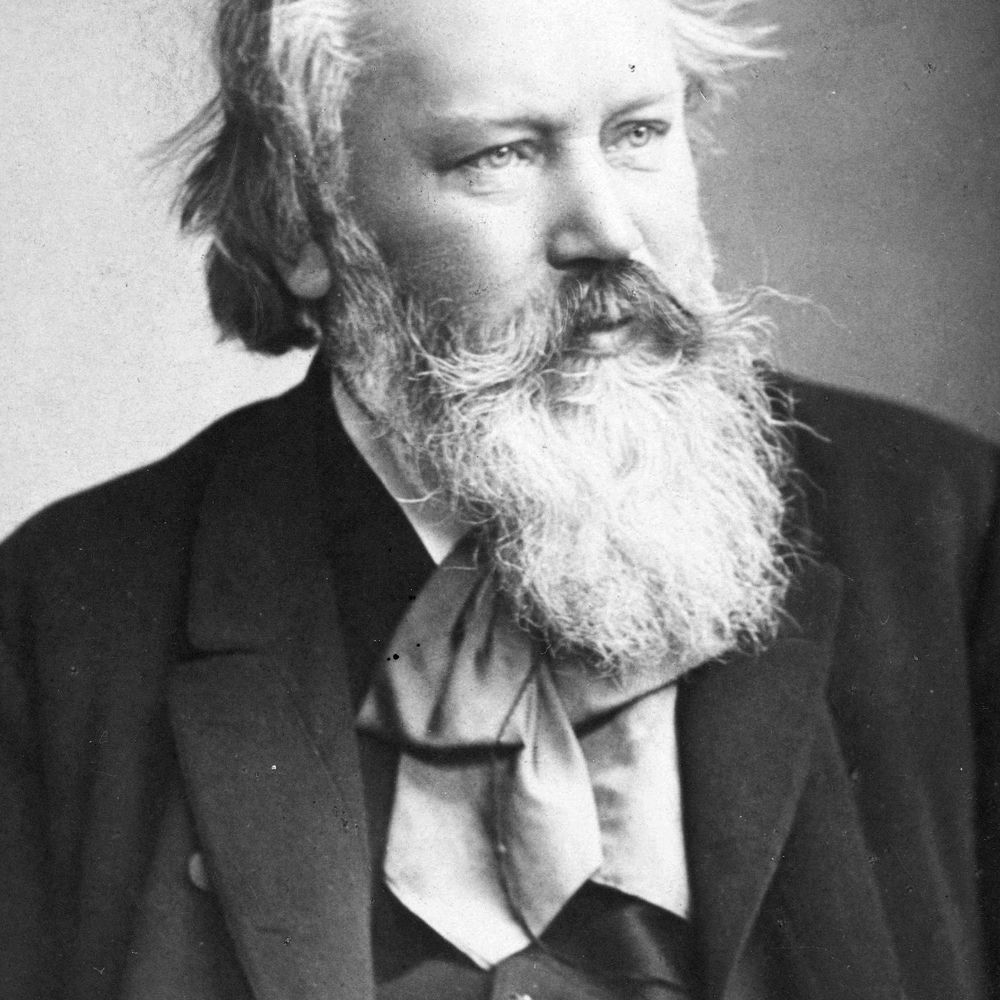
Johannes Brahms
Listen Johannes Brahms on radio stations:







Johannes Brahms: The Architect of German Romanticism
Johannes Brahms was a German composer and pianist whose work forms a cornerstone of the Romantic period in classical music. Hailing from Hamburg, his major achievement was synthesizing the classical forms of Beethoven and Bach with the expressive depth of Romanticism, leaving a profound legacy through his symphonies, chamber music, and choral works.
Early Career
Born in Hamburg in 1833, Brahms showed prodigious musical talent from a young age, initially learning music from his father and later studying piano. His early career involved performing in local venues and undertaking concert tours, which brought him into contact with the influential violinist Joseph Joachim, who would later introduce him to Robert and Clara Schumann.
Breakthrough
Brahms's artistic breakthrough is often linked to his move to Vienna in the early 1860s and the 1868 premiere of his monumental choral work, Ein deutsches Requiem (A German Requiem). This piece, focusing on comfort for the living rather than the fear of the dead, established him as a leading composer of his generation and solidified his reputation across the German-speaking world.
Key Tracks
Ein deutsches Requiem, Op. 45 - This large-scale work for chorus, orchestra, and soloists marked Brahms's arrival as a master of profound emotional and structural depth.
Symphony No. 1 in C minor, Op. 68 - After decades of anticipation, his First Symphony was hailed as a worthy successor to Beethoven's symphonic tradition.
Hungarian Dances, WoO 1 - This set of lively dances, originally for piano four hands, became some of his most popular and widely recognized pieces.
Violin Concerto in D major, Op. 77 - A cornerstone of the violin repertoire, this concerto blends technical demands with lyrical beauty.
Intermezzo in A major, Op. 118, No. 2 - A perfect example of the introspective and autumnal character of his late piano works.
Throughout his later career, Brahms composed across genres, including four symphonies, two piano concertos, the Academic Festival Overture, and extensive chamber music. He maintained a complex, lifelong friendship with Clara Schumann and was a central figure in the musical life of Vienna until his death in 1897.
Artists working in a similar vein of Germanic Romanticism include composers such as Robert Schumann, his mentor and champion, and Antonín Dvořák, whom Brahms supported. The later works of Franz Schubert also deeply influenced Brahms's melodic and harmonic language.
