
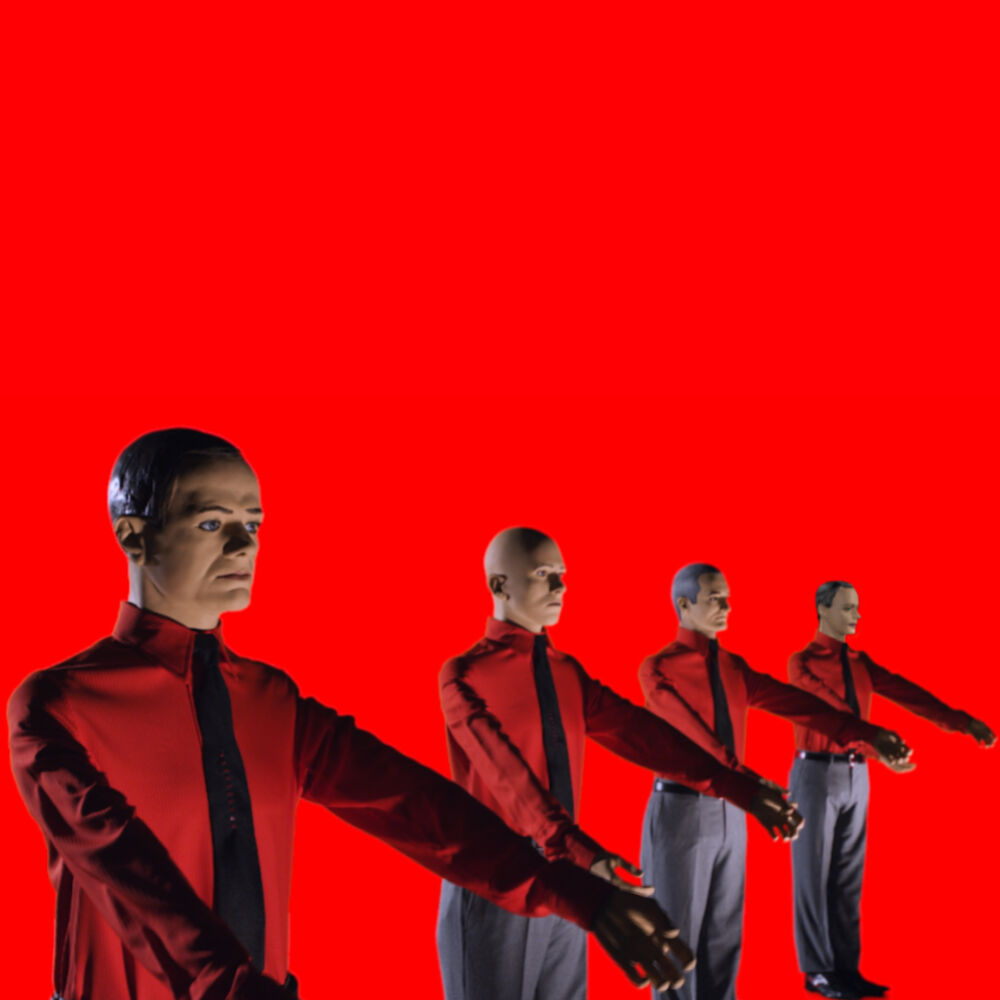
Kraftwerk
 Germany
Listen Kraftwerk on radio stations:




Kraftwerk: The Pioneers of Electronic Music
Kraftwerk is a pioneering German electronic music group from Düsseldorf, widely regarded as one of the most influential acts in the history of popular music. Their conceptual, minimalist approach to sound, built entirely on synthesizers and drum machines, fundamentally shaped the development of genres like synth-pop, techno, and hip-hop.
Early career
Formed in 1970 by Ralf Hütter and Florian Schneider, Kraftwerk emerged from the experimental krautrock scene in West Germany. Their early albums, such as "Kraftwerk" (1970) and "Kraftwerk 2" (1972), were largely instrumental and explored tape manipulation and rudimentary electronic rhythms, setting them apart from their guitar-based contemporaries.
Breakthrough
The group's international breakthrough came with their 1974 album "Autobahn." The 22-minute title track, featuring melodic synthesizers and electronically treated vocals, became a surprise hit, particularly in the United States where an edited version reached the pop charts. This success on the Philips label introduced their "robot pop" aesthetic to a global audience and marked a decisive turn towards pure electronic music.
Key tracks
Autobahn - This track was Kraftwerk's commercial breakthrough, condensing their vision of a motorik electronic journey into a radio-friendly single.
Trans-Europe Express - A seminal title track from their 1977 album, its hypnotic rhythm and metallic beats became a foundational sample in early hip-hop and electro.
The Robots - From 1978's "The Man-Machine," this song perfectly encapsulates Kraftwerk's stage persona and lyrical themes of human-machine integration.
Computer Love - A melancholic synth-pop ballad from 1981's "Computer World," it presaged the age of digital communication and relationships.
Tour de France - Originally a 1983 single, this track's use of breath rhythms and cycling-themed electronics showcased their obsession with human movement and technology.
Throughout the late 1970s and 1980s, albums like "Radio-Activity" (1975), "Trans-Europe Express" (1977), "The Man-Machine" (1978), and "Computer World" (1981) solidified Kraftwerk's status as electronic music innovators. Their work on the Kling Klang label, essentially their own self-built studio, allowed for complete artistic control. The influence of Kraftwerk is immeasurable, directly inspiring generations of artists across electronic, pop, and dance music.