

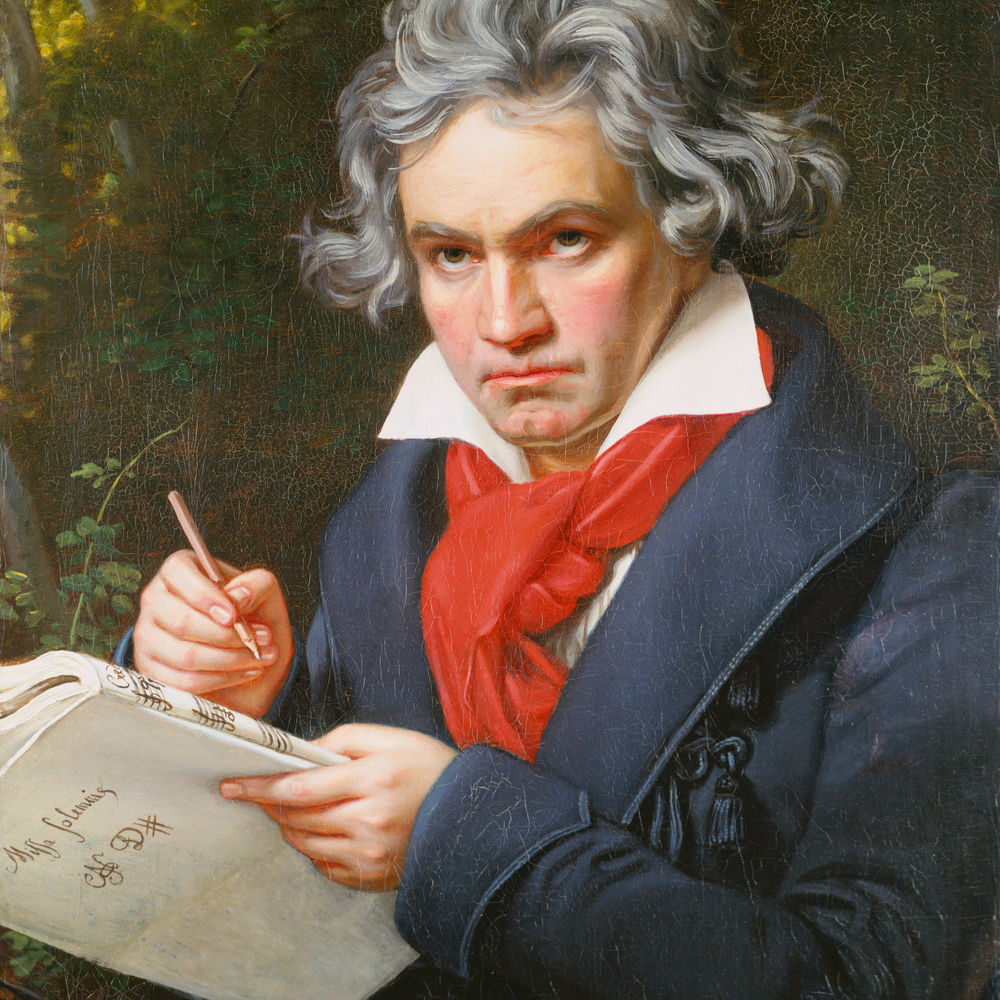
Ludwig van Beethoven
Listen Ludwig van Beethoven on radio stations:








Ludwig van Beethoven: The Architect of Classical and Romantic Music
Ludwig van Beethoven was a German composer and pianist whose work forms a crucial bridge between the Classical and Romantic eras in Western art music. His compositions, including nine symphonies, five piano concertos, and numerous sonatas and string quartets, remain foundational to the concert repertoire and have achieved timeless recognition.
Early career
Born in Bonn in 1770, Beethoven displayed musical talent early under the tutelage of his father and local musicians like Christian Gottlob Neefe. By his late teens, he had secured a position as a violist in the Bonn court orchestra and published his first compositions, a set of keyboard variations, before moving to Vienna in 1792 to study with Joseph Haydn.
Breakthrough
Beethoven established himself in Vienna first as a virtuoso pianist, with his early Piano Concertos and the Pathétique Sonata gaining acclaim. His true artistic breakthrough, however, came with his Symphony No. 3 in E-flat major, Op. 55, the Eroica, premiered in 1805, which dramatically expanded the scale, emotional depth, and structural ambition of the symphonic form.
Key tracks
Symphony No. 5 in C minor, Op. 67 - Its iconic four-note opening motif is one of the most recognizable in all music, representing Beethoven's mastery of dramatic tension and thematic development.
Symphony No. 9 in D minor, Op. 125 - This groundbreaking work incorporated a full choir and soloists in its final movement, setting Friedrich Schiller's "Ode to Joy," and redefined the possibilities of the symphony.
Piano Sonata No. 14 in C-sharp minor, Op. 27, No. 2 - Known as the Moonlight Sonata, its atmospheric first movement remains one of his most popular and influential piano works.
Für Elise - This bagatelle for solo piano, though not published in his lifetime, became a globally recognized piece and a staple of piano pedagogy.
Despite facing progressive hearing loss that began in his late twenties and led to near-total deafness, Beethoven entered a period of intense innovation, producing late works like the Missa Solemnis and his final string quartets that explored profound philosophical and musical complexity.
Artists working in the German classical tradition who followed his path include Johann Sebastian Bach, whose contrapuntal mastery influenced Beethoven's later style. Wolfgang Amadeus Mozart was the immediate Viennese predecessor whose forms Beethoven initially adopted then transformed. Later, Johannes Brahms worked under the immense shadow of Beethoven's symphonic legacy. The emotional scope of his music also paved the way for Richard Wagner, who saw Beethoven's Ninth Symphony as a direct precursor to his own concept of musical drama.
Beethoven's music is a cornerstone of classical music programming worldwide. His symphonies, concertos, and sonatas are regularly featured in rotations on dedicated classical music stations, ensuring his work reaches new generations of listeners. These stations provide a vital channel for experiencing the power and nuance of his compositions as they were meant to be heard.
The music of Ludwig van Beethoven continues to be a essential part of the classical canon and can be experienced through various broadcast channels. His enduring compositions remain a testament to his revolutionary spirit and artistic vision within the history of music.
