

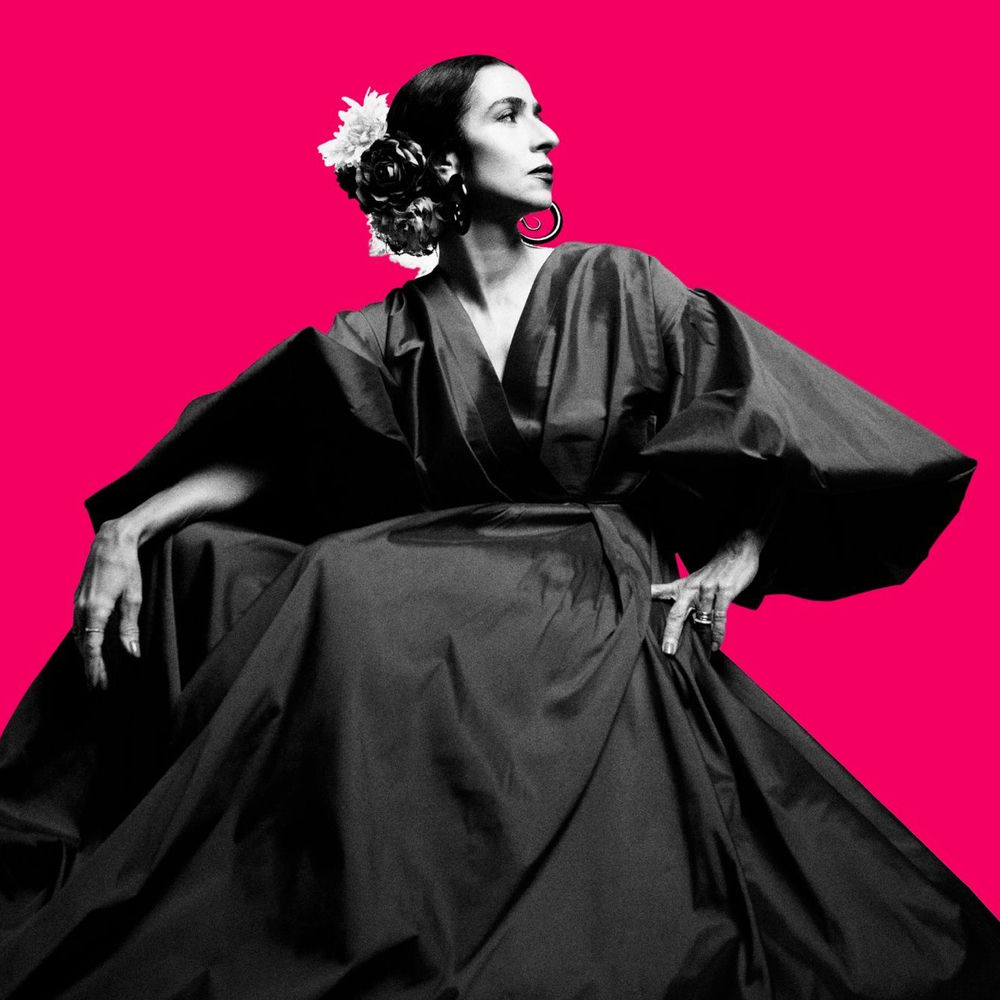
Marisa Monte
Listen Marisa Monte on radio stations:









Marisa Monte: The Voice of Brazilian Musical Innovation
Marisa Monte is a celebrated Brazilian singer, songwriter, and producer known for her sophisticated blend of MPB (Música Popular Brasileira), samba, and global pop influences. Hailing from Rio de Janeiro, her career is defined by critical acclaim and substantial commercial success, with multiple platinum-selling albums that have solidified her status as a leading figure in contemporary Brazilian music.
Early career
Born in 1967 in Rio de Janeiro, Marisa Monte's musical journey began with classical voice studies before she turned to popular music. Her professional debut came in the late 1980s, and she quickly gained attention for her impeccable vocal technique and eclectic artistic vision, leading to her first self-titled album in 1989.
Breakthrough
Marisa Monte's breakthrough into mainstream Brazilian consciousness was solidified with her 1994 album Rose and Charcoal (Verde, Anil, Amarelo, Cor de Rosa e Carvão). The album, a collaboration with Arnaldo Antunes and Carlinhos Brown, was a critical and commercial triumph, selling over 1.2 million copies and earning a Diamond certification in Brazil. This project established her as a central force in a new, genre-blending Brazilian sound.
Key tracks
Bem Que Se Quis - This reinterpretation of a classic samba-canção became one of her signature early hits, showcasing her deep connection to Brazilian roots.
Segue o Seco - A track from the landmark "Tribalistas" project, it highlights her talent for collaborative, minimalist, and deeply melodic songwriting.
Amor I Love You - A sophisticated pop song blending Portuguese and English lyrics, it exemplifies her ability to modernize MPB for a global audience.
Não Vá Embora - This soulful ballad demonstrates the emotional depth and vocal purity at the core of her artistry.
Ainda Bem - A quintessential example of her later work, offering an optimistic and beautifully arranged slice of contemporary Brazilian pop.
Following this peak, Monte co-founded the supergroup Tribalistas with Antunes and Brown in 2002, whose album became a hemispheric phenomenon. Throughout the 2000s and 2010s, she continued to release ambitious solo works like Infinito Particular (2006) and O Que Você Quer Saber de Verdade (2011), the latter winning a Latin Grammy for Best Brazilian Contemporary Pop Album. Her work consistently avoids repetition, exploring new production ideas while maintaining a refined musical identity rooted in Brazilian rhythms and poetic lyricism.
Listeners who appreciate Marisa Monte's artistry often enjoy the work of similar Brazilian innovators. Caetano Veloso shares her intellectual approach to songwriting and genre fusion. Maria Bethânia represents the powerful vocal tradition and deep samba roots that inform Monte's style. The collaborative spirit and experimentalism of Tribalistas is, of course, central to her story. Furthermore, the cool, jazz-inflected MPB of Bebel Gilberto resonates with Monte's own sophisticated, globally-minded productions.
Marisa Monte's rich discography, from her early samba interpretations to her later intricate productions, forms an essential chapter in modern Brazilian music. Her commitment to artistic quality over trends has earned her a lasting and respected place in the international music landscape.
