

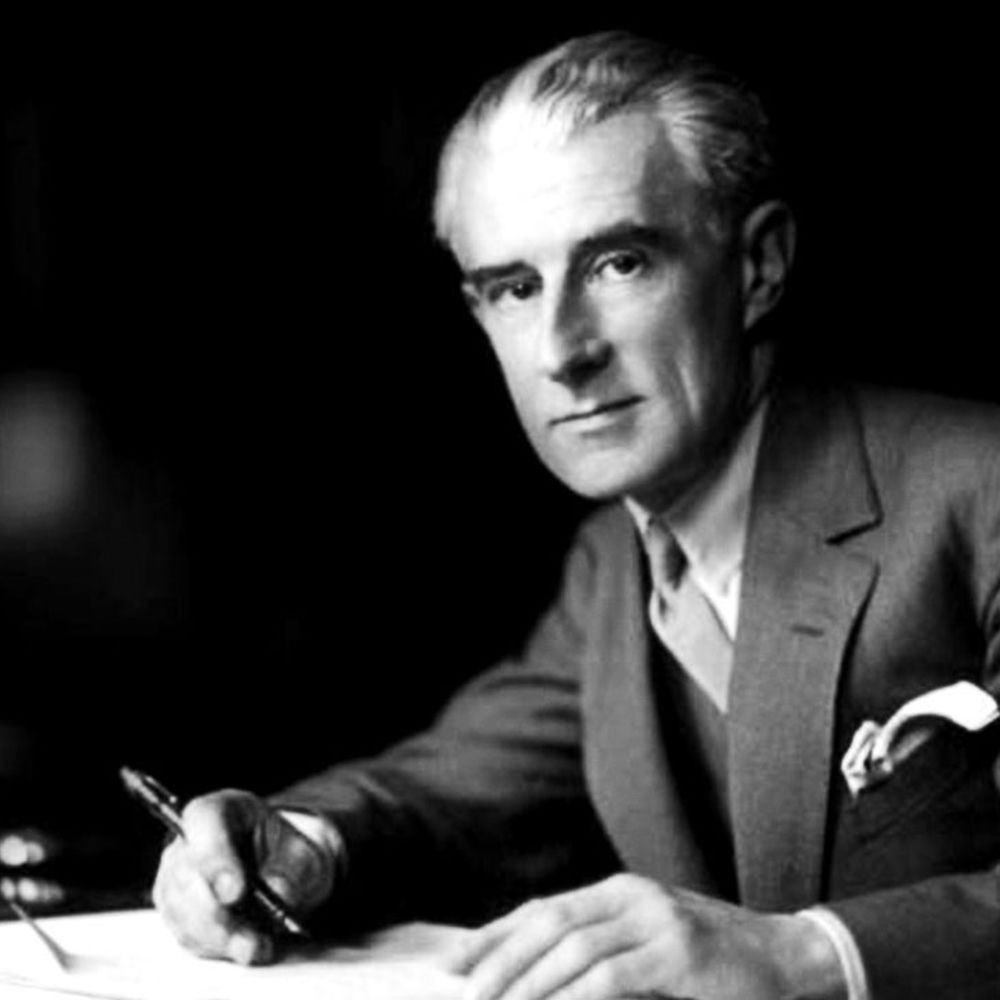
Maurice Ravel
Listen Maurice Ravel on radio stations:




Maurice Ravel: Master of French Impressionist Music
Maurice Ravel was a French composer and pianist, widely regarded as one of the most significant figures in early 20th-century music. Alongside Claude Debussy, he is a central pillar of the Impressionist movement, known for his meticulous craftsmanship, innovative harmonies, and evocative orchestral works.
Early career
Born in 1875 in the Basque region of France, Joseph-Maurice Ravel entered the Paris Conservatoire at the age of 14. His early compositions, such as the Pavane pour une infante défunte (1899), already displayed his distinctive style, though his repeated failures to win the prestigious Prix de Rome caused public controversy and highlighted his independent artistic path.
Breakthrough
Ravel's mature period began in the early 1900s, solidifying his reputation with masterpieces of piano and orchestral writing. Works like Miroirs (1905) and Gaspard de la nuit (1908) pushed piano technique to new limits, while his orchestral brilliance became fully apparent with the Rapsodie espagnole (1908) and the celebrated ballet Daphnis et Chloé (1912), commissioned by Sergei Diaghilev for the Ballets Russes.
Key tracks
Boléro - This 1928 composition, built on a single relentless crescendo, became Ravel's most famous and commercially successful work, though he considered it a simple orchestral experiment.
Pavane pour une infante défunte - An early solo piano work (later orchestrated) that established his reputation for elegant, nostalgic melody and refined classicism.
Daphnis et Chloé - A sprawling, richly colored ballet score that is considered a summit of Impressionist orchestration, often performed as a symphonic suite.
Le Tombeau de Couperin - A neoclassical piano suite composed between 1914 and 1917, each movement dedicated to a friend killed in World War I, blending Baroque forms with modern harmony.
String Quartet in F major - His only string quartet, composed in 1903, shows the clear influence of Debussy yet asserts Ravel's own structural clarity and rhythmic vitality.
Following World War I, Ravel's style evolved towards greater clarity and neoclassicism, evident in works like La Valse (1920), a chilling, orchestral depiction of a decaying waltz, and his two piano concertos. The Piano Concerto in G major (1931) blends jazz influences with Mozartian lightness, while the Piano Concerto for the Left Hand (1930), written for pianist Paul Wittgenstein, is a powerful, single-movement tour de force.
Ravel's output, though not vast, is defined by its technical perfection and diverse influences, ranging from Basque folk music and Spanish motifs to American jazz and Asian aesthetics. His life was cut short by a progressive neurological illness, and he died in Paris in 1937 following unsuccessful brain surgery. His legacy endures through his profound influence on subsequent generations of composers and his enduring presence in the concert hall repertoire.
