
Mauro Giuliani: Virtuoso of the Classical Guitar
Mauro Giuliani was a pioneering Italian composer and performer who fundamentally elevated the guitar's status in the classical music world of the early 19th century. Hailing from Bisceglie, his major achievement was establishing the six-string guitar as a serious solo concert instrument across Europe, with his prolific output of concertos, sonatas, and beloved studies remaining essential repertoire today.
Early career
Born in 1781 in Southern Italy, Giuliani received early training on the cello and possibly the violin before fully dedicating himself to the guitar. He moved to Vienna in 1806, a bold move that placed him at the epicenter of European musical culture where he would launch his professional career. His first published works, including his Opus 1, quickly gained attention for their melodic invention and technical demands.
Breakthrough
Giuliani's breakthrough came swiftly in Vienna, where by 1808 he was celebrated as a virtuoso performer and in-demand teacher. His concert performances, particularly the premiere of his Guitar Concerto No. 1 in A major, Op. 30, were major events that demonstrated the instrument's orchestral potential. Publications from leading houses like Artaria & Co. spread his fame, with his music achieving significant commercial success and widespread circulation.
Key tracks
Grand Overture, Op. 61 — This ambitious work showcases Giuliani's skill in writing large-scale, symphonic structures for the solo guitar, moving beyond simple salon pieces.
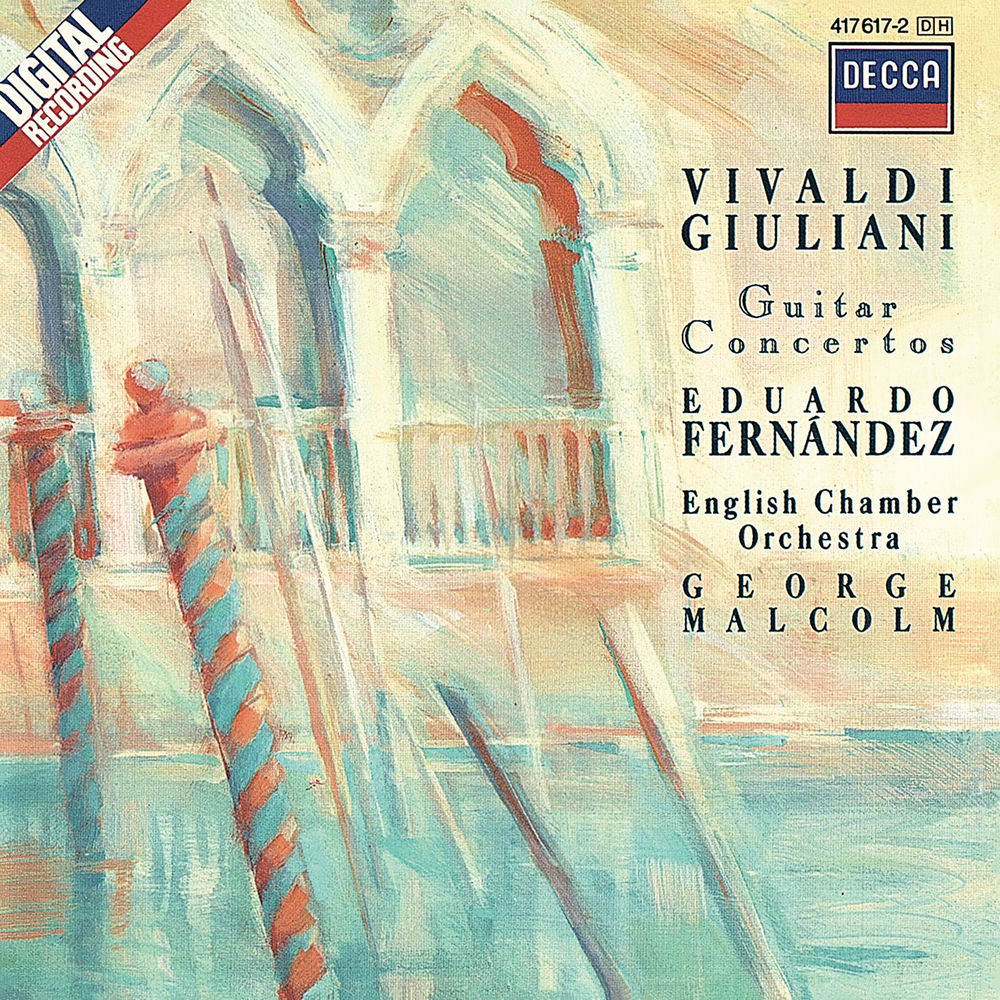
Guitar Concerto No. 1 in A major, Op. 30 — The concerto that cemented his reputation, proving the guitar could command attention in a formal concert hall alongside an orchestra.
Rossiniana No. 1, Op. 119 — Part of a series that illustrates his popular and inventive arrangements of opera themes, particularly from Gioachino Rossini, connecting him to contemporary Viennese tastes.
Variations on a Theme by Handel, Op. 107 — A brilliant set of variations demonstrating his contrapuntal mastery and deep understanding of classical form applied to the guitar.
Giuliani's later years saw him return to Italy, continuing to compose and perform until his death in 1829. His pedagogical works, especially the progressive studies in his Studio per la chitarra, Op. 1, have trained generations of guitarists. His collaborations, though not in the modern sense, involved close musical relationships with famed contemporaries like Johann Nepomuk Hummel and Gioachino Rossini, whose themes he frequently arranged.
For listeners exploring the foundations of classical guitar, similar figures include Fernando Sor, a Spanish composer known for his elegant and lyrical compositions for the instrument. Matteo Carcassi is another essential Italian guitarist and composer whose method and studies are standard pedagogical material. Luigi Legnani, a later Italian virtuoso, continued Giuliani's technical innovations and also composed extensively for guitar. Dionisio Aguado, a Spanish guitarist and friend of Sor, represents the parallel Iberian school of playing and composition from the same era.
RADIO ROTATION: The timeless compositions of Mauro Giuliani are a staple on dedicated classical music radio stations, particularly those focusing on guitar and instrumental repertoire. His works are regularly featured in the playlists of online classical radio streams and public radio stations that champion historical performance, ensuring his music reaches both connoisseurs and new audiences daily.
The music of classical guitar pioneer Mauro Giuliani can be heard across the spectrum of radio stations featured on our website. Listeners can discover his influential concertos and studies by tuning into the classical stations available on onairium.com.