
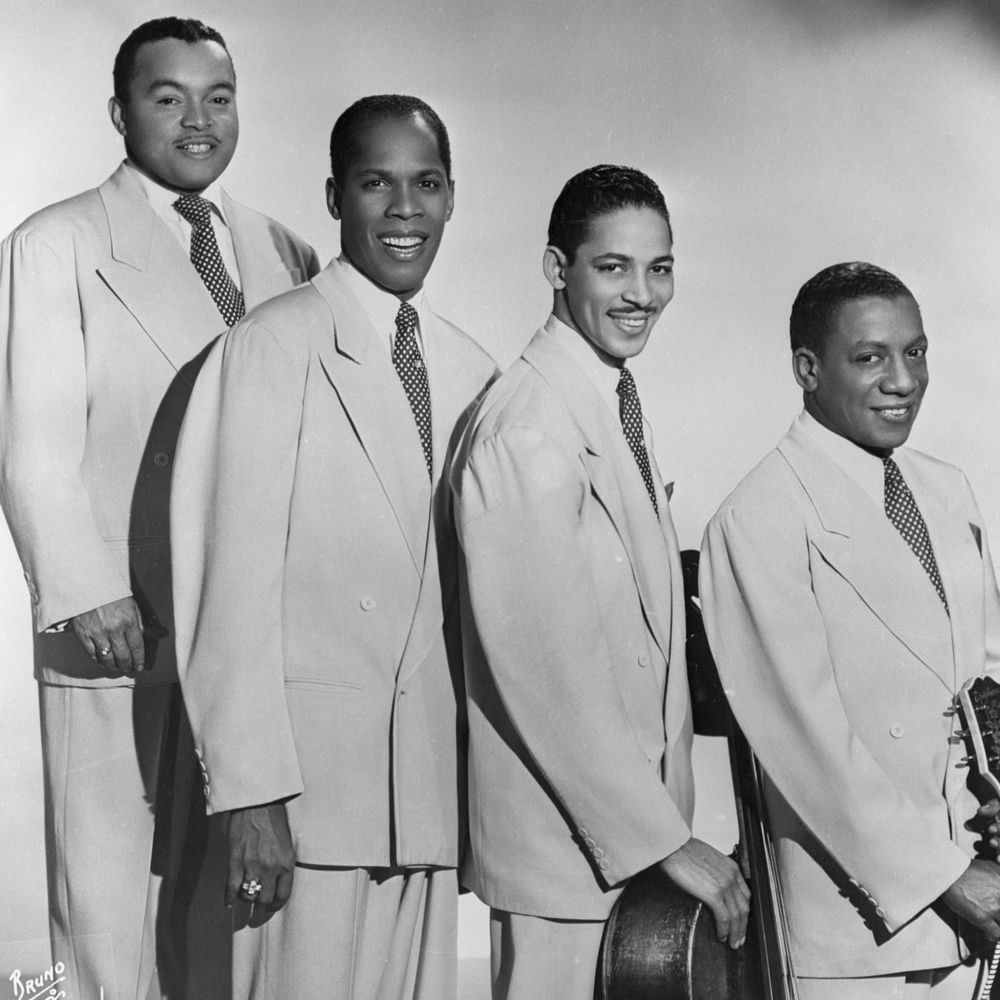
The Ink Spots
Listen The Ink Spots on radio stations:
The Ink Spots: Pioneers of Vocal Harmony and Early Rhythm & Blues
The Ink Spots were an American vocal group whose sophisticated harmonies and influential style helped bridge the gap between pre-war jazz and the rise of rhythm and blues. Formed in Indianapolis in the early 1930s, the quartet became one of the first African-American groups to achieve mainstream, cross-racial success, scoring a string of million-selling hits that left a permanent mark on popular music.
Early Career
The original Ink Spots formed around 1931, with the early lineup featuring Jerry Daniels, Charlie Fuqua, Orville "Hoppy" Jones, and Bill Kenny. They began as a street-corner jazz and swing vocal act, honing their tight harmonies before securing their first professional engagement at New York's famed Apollo Theater. Their initial recordings in 1935 for Victor Records, including "Swingin' on the Strings," showed promise but did not yet capture the iconic formula that would soon make them famous.
Breakthrough
The group's fortunes changed dramatically with the 1939 release of "If I Didn't Care" on Decca Records. This record perfected the "Ink Spots sound": Bill Kenny's soaring, operatic tenor lead contrasted with Hoppy Jones's deep, spoken-word bass interludes, all set over a simple guitar accompaniment. The song became a massive hit, selling millions of copies and establishing the template for countless doo-wop and R&B ballads that followed. This success solidified their status and led to a prolific and successful recording career throughout the 1940s.
Key Tracks
If I Didn't Care - The group's definitive 1939 breakthrough, a million-seller that established their signature vocal format.
I Don't Want to Set the World on Fire - A hugely popular 1941 hit that further cemented their romantic ballad style and became a cultural touchstone.
Java Jive - A 1940 novelty track showcasing the group's lighter, more playful side and their smooth harmonic blend.
We Three (My Echo, My Shadow and Me) - A 1940s hit that exemplifies their melancholic, introspective ballad style.
The Gypsy - A 1946 number-one hit on the Billboard charts, demonstrating their lasting commercial appeal.
Their influence extended far beyond their own recordings, as their harmonic approach was directly emulated by early R&B and rock and roll groups. The Ink Spots' sound provided a crucial blueprint for the doo-wop genre that emerged in the 1950s. While lineup changes occurred over the years, the classic quartet's recordings remain the definitive body of work for this foundational vocal group.
Artists with a similar foundational influence in vocal group harmony include The Mills Brothers, another pioneering African-American quartet from the same era known for intricate jazz-influenced harmonies. The smooth, romantic style of The Platters in the 1950s owes a clear debt to the Ink Spots' ballad formula. For the early bridge between quartet singing and rock and roll, The Ravens are a key group, often cited as one of the first "bird groups" to blend deep bass leads with tenor harmonies.
