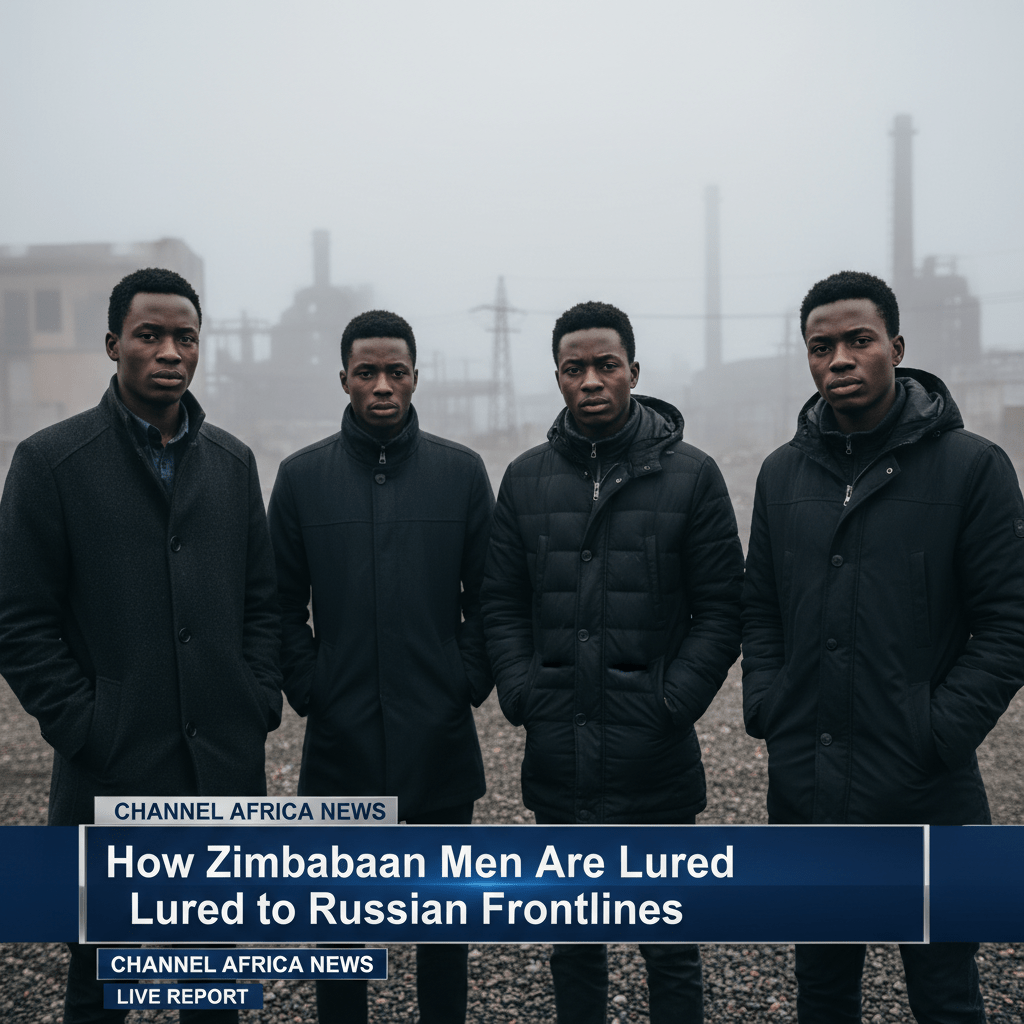
How Zimbabwean Men Are Lured to Russian Frontlines
Author: African Elements
May 14, 2026
Duration: 9:35
Zimbabwean families plead for the return of men lured to Russia with false job promises, only to find themselves trapped as soldiers on the Ukrainian frontlines.
How Zimbabwean Men Are Lured to Russian Frontlines
By Darius Spearman (africanelements)
Support African Elements at patreon.com/africanelements and hear recent news in a single playlist. Additionally, you can gain early access to ad-free video content.
Deception on the Global Stage
Families across Zimbabwe are issuing desperate pleas to the governments in Harare and Moscow. They are demanding the safe return of their sons, brothers, and husbands. These men departed for Russia expecting lucrative civilian employment. Instead, they found themselves trapped in the brutal trenches of Eastern Ukraine. The promises of high-paying jobs in security and construction were entirely false. This situation represents a profound international crisis built on deception.
The tragedy continues to unfold as the conflict in the Donbas region escalates. As of early 2026, government officials acknowledge that dozens of citizens are trapped in active combat zones. Reports confirm that at least eighteen Zimbabwean men have already lost their lives. Desperate families wait for news from loved ones who have had their passports confiscated. The pathway leading these men to a foreign warzone relies on highly sophisticated and predatory trafficking networks (eurasiareview.com, heraldonline.co.zw).
The Roots of a Revolutionary Alliance
The pathway carrying modern Zimbabweans to Russia originally developed through revolutionary ideology. During the mid-twentieth century, the Soviet Union provided immense support to African liberation movements. In January 1961, political leader Tarcisius George Silundika traveled to Moscow to secure backing for his cause. This visit established the Soviet Union as the primary patron for the Zimbabwe African People’s Union, also known as ZAPU (wikipedia.org).
Throughout the following decades, thousands of young African revolutionaries traveled to the Soviet Union. They received sophisticated military training, including instruction in guerrilla warfare and intelligence gathering. Prominent future leaders returned home to fight against colonial rule. The historical bond was forged through shared struggles against oppression. Those early travelers were ideologically motivated freedom fighters shaping their own destinies, vastly different from today's recruits (wikipedia.org).
The Legacy of the Rhodesian Bush War
Understanding the depth of the Zimbabwean-Russian relationship requires examining the Rhodesian Bush War. The white supremacist government of Rhodesia declared independence from Britain in 1965 to maintain minority rule. A tiny fraction of the population controlled the majority using brutal force and systemic dispossession. To combat this oppression, the military wing of ZAPU utilized advanced Soviet weaponry, including tanks and surface-to-air missiles (saiia.org.za).
The Soviet Union demonstrated its commitment by sending officers to train revolutionary fighters at camps in neighboring Angola. In 1979, the Rhodesian military conducted devastating air raids on these specific training facilities. During one attack, a Soviet warrant officer named Grigory Skakun was killed alongside African fighters. This spilled blood solidified a narrative of brotherhood that modern political leaders continue to highlight today (youtube.com).
Shield and Sword Diplomacy
Relations between the two nations cooled slightly during the late twentieth century before reigniting under new diplomatic strategies. Following intense international scrutiny over land reform programs, Zimbabwe faced heavy economic isolation. Western nations imposed strict penalties, forcing the government to adopt a formal strategy to seek new allies. This approach intentionally pivoted the nation toward Eastern powers to ensure economic survival.
A defining moment occurred in July 2008 at the Unite