The Remarkable Journey of the Winter Olympic Games in Sarajevo

The Remarkable Journey of the Winter Olympic Games in Sarajevo

Author: David Pejčinović-Bailey MBE February 18, 2024 Duration: 14:16

Hello, I’m David and I write about my life and adventures in Bosnia and Herzegovina. Subscribe for free to enjoy occasional posts, podcasts and vlogs from this much misunderstood heart shaped country in the western Balkans.

The National Anthem of the Socialist Federated Republic of Yugoslavia - “Hej Slaveni”

The Olympic Games in Sarajevo in February 1984, brought together 1,272 athletes from 49 countries as well as the most eminent figures from the world's sporting, cultural, and socio-political life in one place.

The 14th Winter Olympic Games were held in Sarajevo from February 8-19, 1984, and marked a significant milestone in the history of the city and the entire country of what was then The Socialist Federated Republic of Yugoslavia (SFRY).

What started as a dream eventually became a reality through determination, hard work, and unwavering enthusiasm.The story of the Sarajevo Winter Olympics began some 20 years before in the late 1960s and early 1970s, when discussions about the development of skiing and winter tourism in the Socialist Republic of Bosnia and Herzegovina (one of the 6 republics that made up Yugoslavia) took place. It was during these conversations that the potential of Sarajevo to host the Games was recognised.

However, the road to candidacy was not going to be without its challenges.A significant turning point came in April 1971 when the first analyses of the social justification and possibilities for organising the Winter Olympic Games in Sarajevo were completed. Despite not being officially presented to the public at that time, it laid the foundation for creating an atmosphere of trust and motivation to move forward with the ambitious goal of hosting the Games.

The journey to secure the Games continued with the formation of a Preparatory Committee, committed to showcasing the potential of Sarajevo as a host. With the support and consent of various authorities, including the Federal Executive Council, the candidacy was officially announced to the public on October 14, 1977.The road to securing the Winter Olympics for Sarajevo was not easy. Several other countries, including France, Japan, Sweden, and Czechoslovakia, also vied for the opportunity to host the "White Olympiad." Many believed that Sarajevo and Yugoslavia had little chance of success. However, the creators of the Olympic project remained undeterred. Their belief in their vision led them to continue working tirelessly towards their goal.

Finally, on January 3, 1978, the candidacy of Sarajevo arrived at the International Olympic Committee office in Lausanne. Months of inspections and evaluations followed, with international experts assessing the city's capabilities and evaluating the promises made. The choice of Sarajevo to host the XIV Olympic Games was announced on May 18th the following year, during the 80th session of the International Olympic Committee (IOC) in Athens. The city's opponents were the Japanese city of Sapporo and the Swedish city of Gothenburg. After two rounds of voting, Sarajevo won the organisation by the majority of votes.

With the honour of hosting the Games, Sarajevo became a bustling construction site. Over the years leading up to the event, magnificent sporting facilities sprung up: the "Zetra" complex, bobsleigh and sledding tracks, ski jumps, halls, "white tracks," cable cars, hotels, the Olympic Village, and a journalist's village with 2,640 apartments, as well


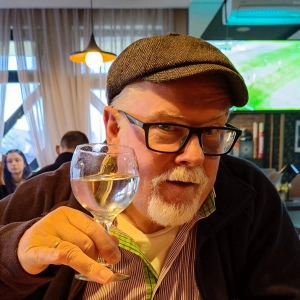
David Pejčinović-Bailey MBE hosts An Englishman in the Balkans, a series that moves beyond travelogue clichés to offer a grounded, personal account of building a life in Bosnia and Herzegovina. This isn't a tour guide; it's a collection of audio journals from someone who has chosen to make his home there. Listeners hear candid reflections on the nuances of daily life, from navigating bureaucracy and language to finding unexpected comfort in local traditions. The podcast often features conversations with the fascinating individuals David encounters-artists, neighbors, historians, and everyday people-whose stories add rich layers to the understanding of a region frequently defined by its past conflicts. Episodes might delve into the complex tapestry of Balkan history over a coffee, or explore the simple joy of a shared meal, all framed through the perspective of an immigrant learning to see a place not as a visitor, but as a resident. The result is a thoughtful, sometimes humorous, and always humanizing portrait of a country and its culture, recorded from the inside. For anyone curious about the realities of displacement, belonging, or the specific textures of life in Southeast Europe, this podcast provides an authentic and engaging listen.
Author: Language: English Episodes: 50

An Englishman in the Balkans.
Podcast Episodes
The Future of Folklore in Bosnia and Herzegovina [not-audio_url] [/not-audio_url]

Duration: 36:56
In this episode of the podcast, ! we are delving into the vibrant world of folklore in Bosnia and Herzegovina, a country where culture and tradition play an essential role in its identity. Dita Bajrami-Vrbanjac, the curr…
Living in Croatia with Mark Whitfield - Part 2 [not-audio_url] [/not-audio_url]

Duration: 47:30
Welcome to this edition of "An Englishman in the Balkans," where I am continuing a micro-series about life in Croatia through the eyes of another Englishman, Mark Whitfield.This is the second instalment of a three-part s…
Achieving Self-Sustainability in Bosnia [not-audio_url] [/not-audio_url]

Duration: 42:25
Join me in this captivating episode as we delve into the fascinating world of self-sustainability in Bosnia and Herzegovina with Ivy Šibinčić. Ivy is at the forefront of the self-sustainability movement in her region, wo…
Exploring Travnik - Where History Comes Alive [not-audio_url] [/not-audio_url]

Duration: 19:32
In this episode, David goes on a mesmerising journey to the charming town of Travnik in central Bosnia and Herzegovina. This time he travels solo, leaving behind Tamara, and shares the wonders he encounters along the way…
The Italians of Mahovljani [not-audio_url] [/not-audio_url]

Duration: 39:13
Hello and welcome to the podcast, where in this episode we look at the legacy of a group of some 55 Italian families that came to the village of Mahovljani back in the late eighteen hundreds.Today all that remains of tha…
Living in Croatia with Mark Whitfield - Part 1 [not-audio_url] [/not-audio_url]

Duration: 56:54
Welcome to this edition of "An Englishman in the Balkans," where I am starting a micro-series about life in Croatia through the eyes of another Englishman, Mark Whitfield.This is the first instalment of a three-part seri…
Breaking Barriers: Jelisaveta Gluvić-Wragg's Musical Journey [not-audio_url] [/not-audio_url]

Duration: 1:10:16
Welcome to another episode of "An Englishman in the Balkans Podcast," where we traverse the rich cultural landscape of the Western Balkans.In this edition, recorded outside in our garden here in the village of Čardačani,…
Recharged and Revitalised - Our Comeback from a 2 Month Break [not-audio_url] [/not-audio_url]

Duration: 21:13
Where have I been for the past two months of not posting a podcast episode?In this episode I bring you up to date an recent events and what you can expect going forward.As an English language podcaster in Bosnia and Herz…
David Sammel - An ATP Coach Visiting Banja Luka [not-audio_url] [/not-audio_url]

Duration: 20:53
In this episode I’m sat in the reception area of the Marriott hotel in downtown Banja Luka. Why? Because at the moment the first ATP 250 Tennis Tournament is under way in Banja Luka.This tournament is also called the Srp…
The Banja Luka Dajak - Preserving Cultural Heritage. [not-audio_url] [/not-audio_url]

Duration: 23:09
In this episode of the Podcast, I talk to Nebojša Ruzicic from The Banja Luka Dajak Club and take a Deep Dive into an aspect of the rich cultural heritage of Banja Luka, the second city in Bosnia and Herzegovina. Nebojša…
